Selective Compliance Is Not a Ceasefire: Thailand Must Honour the Entire December 27 Agreement
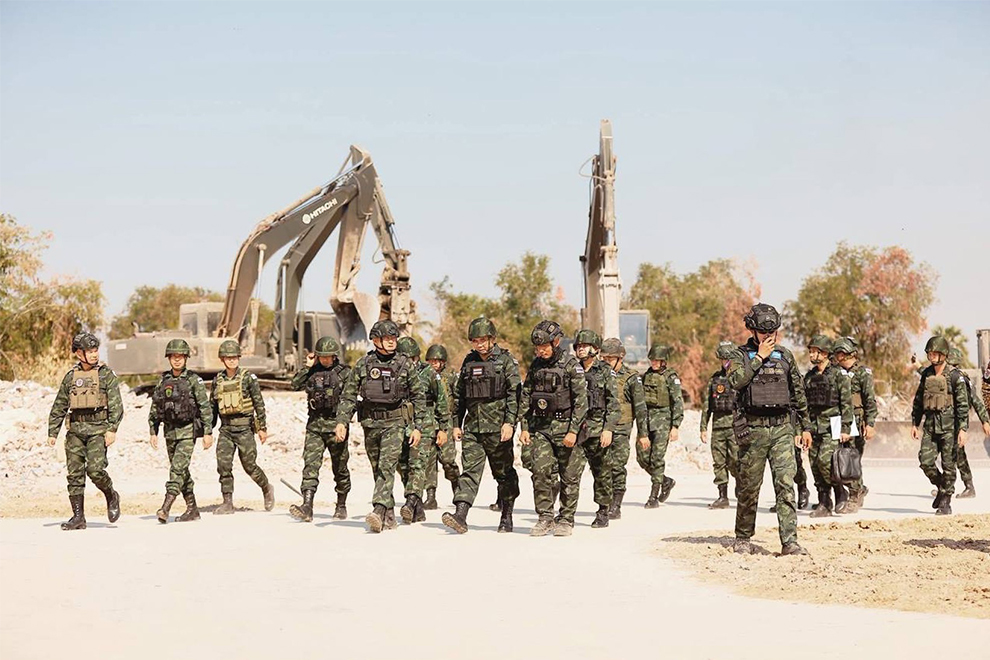 IMAGE: Thai soldiers and heavy machinery near the Cambodian border. Supplied
#opinion
When Cambodia and Thailand issued their joint statement on December 27, the document was welcomed across the region as a step toward stabilising a dangerous situation along the border. The declaration was not ambiguous: it called for restraint, avoidance of actions that could escalate tensions and reliance on existing bilateral mechanisms to manage unresolved boundary areas.
Since then, however, Thai authorities have increasingly pointed to Point 2 of the statement to justify continued activities on the ground in contested zones. Yet invoking one clause cannot excuse conduct that appears inconsistent with the agreement’s overall purpose. Joint statements are not menus from which parties may choose convenient provisions while sidelining others. They are packages of commitments whose credibility depends on comprehensive compliance.
A ceasefire is not merely the absence of gunfire. It is a political undertaking to freeze conditions, prevent unilateral advantage and create space for technical and diplomatic processes to function. Activities that alter physical realities in disputed areas — whether through construction, redeployment or other permanent changes — risk doing the opposite. They harden positions, erode trust and undermine the very confidence the declaration sought to rebuild.
Cambodia has consistently affirmed that unresolved boundary questions must be addressed through established bilateral mechanisms, including the Joint Boundary Commission and technical survey bodies tasked with demarcation. These mechanisms were created precisely to avoid unilateralism. They rest on evidence, maps and mutual consent — not on actions taken while negotiations remain incomplete.
International law reinforces this logic. States engaged in territorial disputes are obliged to refrain from acts that aggravate or extend the dispute during ongoing talks. ASEAN’s diplomatic culture is built on the same foundation: restraint, consultation and peaceful settlement.
Thailand’s reliance on one provision of the joint declaration while actions on the ground appear to contradict its broader spirit therefore raises legitimate concern. Respect for agreements is measured not by selective legal interpretations, but by behaviour that sustains stability and preserves diplomatic space.
Cambodia does not seek confrontation. Phnom Penh has urged calm, avoided retaliatory measures and called for renewed technical engagement. But restraint must be mutual. A ceasefire honoured unevenly ceases to be a stabilising instrument and instead becomes a source of friction.
What is required now is straightforward and consistent with the December 27 commitments themselves. Thailand should suspend unilateral activities in disputed areas.
Both governments should urgently reconvene their joint survey and demarcation mechanisms and empower technical experts to do their work transparently.
ASEAN partners should continue encouraging strict adherence to the full set of obligations contained in the joint declaration — not just those most convenient to either side.
The Cambodia–Thailand border has known tension before, and history offers a clear lesson: progress has come not from changing facts on the ground, but from patient negotiation and respect for agreed frameworks.
The December 27 statement remains a viable path forward — but only if it is implemented in its entirety. Selective compliance is not peace. Fidelity to every commitment is.
Roth Santepheap is a geopolitical analyst based in Phnom Penh. The views and opinions expressed are his own.
-Phnom Penh Post-