Denial Is Not Defence: Thailand’s Claims Collapse Under Facts on the Ground
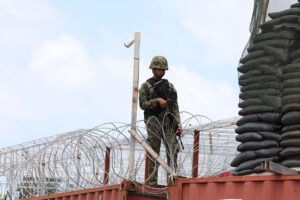
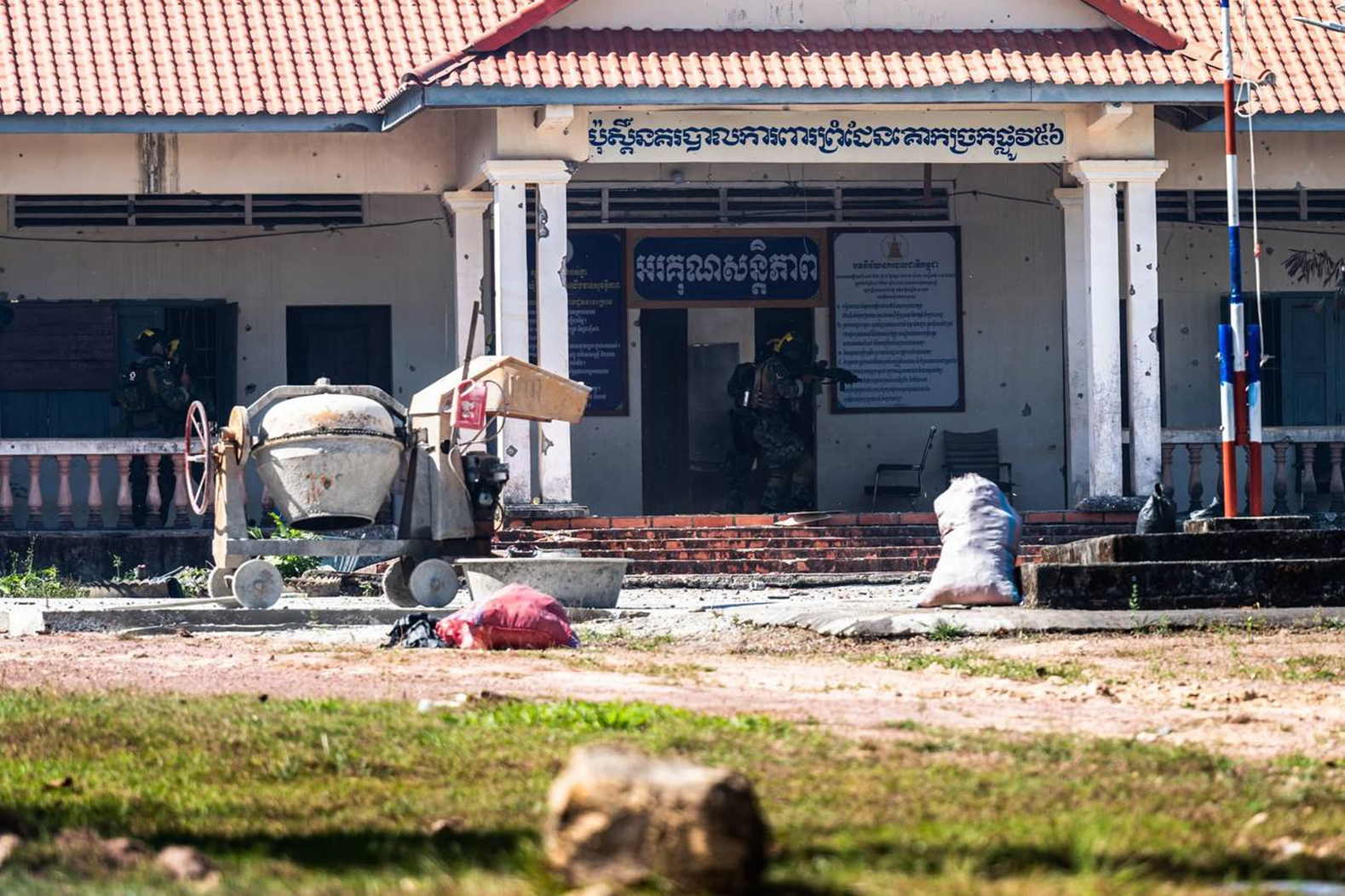 A Cambodian Border Police station was recently destroyed and reportedly illegally occupied by the Thai military. Thai Press
#National
Thailand’s attempt to deny its military aggression against Cambodia—by claiming it “did not invade” during the past 21 days of fighting—is not only unconvincing, it is an insult to international law, basic logic, and the eyewitness accounts of journalists and civilians on the ground.
On 2 January 2026, a Thai military spokesperson asserted that Thailand merely “defended and reclaimed its own territory”, while accusing Cambodia of hosting illegal activities and military installations. This narrative collapses the moment facts replace rhetoric.
First, territory is not defined by bulldozers, containers, flags, or barbed wire. Borders between Cambodia and Thailand are governed by internationally recognised treaties and agreements, including maps jointly acknowledged by both states—not by unilateral interpretations of a 1:50,000 map selectively invoked to justify force. The deployment of troops, heavy machinery, and the physical destruction of civilian homes inside disputed—or clearly Cambodian—villages cannot be rebranded as “defence”.
Second, Thailand’s claim that its objectives included “destroying Cambodian military bases” is, by its own admission, a declaration of cross-border military action. One does not destroy another country’s military bases without entering that country’s territory. This alone dismantles the argument that Thailand was merely acting within its sovereign boundaries.
Third, the destruction of civilian houses in villages such as Prey Chan and Chork Chey—reported by residents and witnessed by international media—cannot be dismissed as collateral or misidentified locations. Civilian infrastructure was flattened, not dismantled for safety, and residents were displaced under the presence of armed forces. These actions violate the most basic principles of international humanitarian law, including the protection of civilians and civilian property during armed conflict.
Thailand further claims it acted to suppress illegal online gambling. Even if such activities existed, law enforcement concerns do not grant a licence for military invasion. There is no provision in international law that allows a state to send troops, destroy homes, and occupy land in another country under the pretext of crime prevention. If that logic were accepted, global order would collapse into permanent militarised chaos.
Most troubling is Thailand’s attempt to shield itself from international scrutiny by urging the global community “not to misunderstand”. The international community does not misunderstand—it observes. Journalists, satellite imagery, displaced villagers, and the physical alteration of the border landscape all tell the same story: facts were created on the ground through force, not through law.
Cambodia has consistently called for restraint, adherence to ceasefire commitments, and resolution through the Joint Boundary Commission and international legal mechanisms. Thailand’s actions—military deployment, destruction of civilian property, and unilateral territorial claims—run directly counter to these principles.
Denial does not erase responsibility. Repetition does not turn aggression into defence. And invoking “international principles” while violating them in practice only deepens Thailand’s credibility crisis.
If Thailand truly respects international law, the solution is simple: withdraw its forces, halt all unilateral actions, allow independent investigations, and return to lawful, bilateral boundary mechanisms. Anything less is not defence—it is aggression disguised as denial.
Ros Darath is a political analyst based in Phnom Penh. The views and opinions expressed are his own.
-The Phnom Penh Post-