Fences, Flags, and Containers: Thailand’s Quiet Encroachment on Cambodia,
 Fences, Flags, and Containers: Thailand’s Quiet Encroachment on Cambodia,
#opinion
Thailand claims its recent actions along the Cambodian border are defensive. The reality on the ground tells a different story—one of deliberate, unilateral militarization of Cambodian sovereign territory, carried out to change facts on the ground in violation of international law, bilateral agreements, and ASEAN norms.
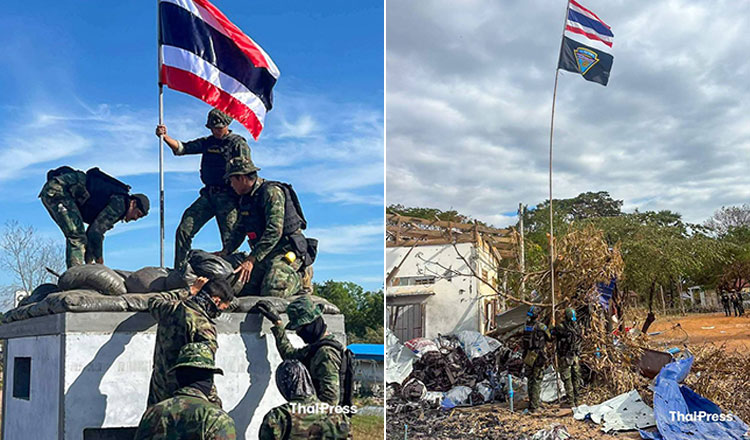
In Banteay Meanchey, Pursat provinces, Thai military forces have installed military containers, planted Thai flags, and erected barbed-wire fencing inside Cambodian territory. These are not temporary precautions or misunderstandings. They are physical acts of control. No state installs military infrastructure, raises national flags, and fences land it does not intend to claim.
These actions cannot be justified as self-defense. There was no imminent threat requiring containers, fences, or forward military positioning. What Thailand has done is attempt to manufacture territorial reality through force, rather than resolve border issues through law.
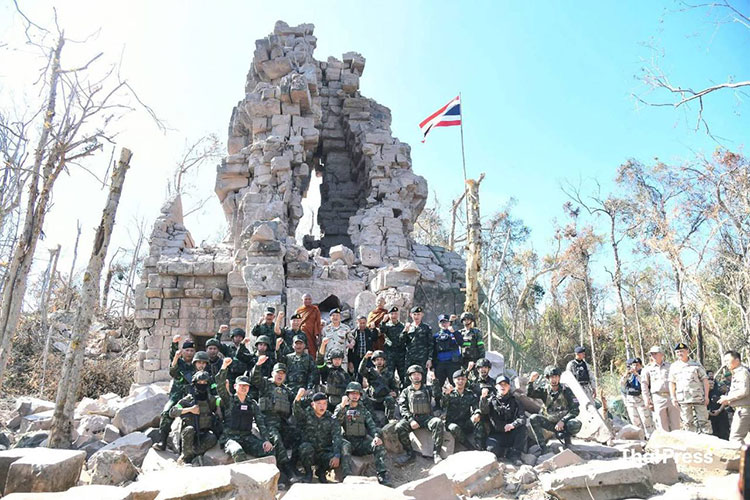
International law is clear: states may not unilaterally alter the status quo in disputed or undemarcated border areas. Sovereignty is not established by metal containers, barbed wire, or flagpoles. It is determined by treaties, maps, and mutually agreed demarcation processes. Thailand’s actions directly violate this principle and undermine the peaceful settlement of disputes.
Worse still, Thailand is violating its own commitments. Joint statements and ceasefire arrangements explicitly prohibit troop movements, patrols toward the other side’s positions, and unilateral actions. All measures were agreed to be without prejudice to border demarcation. Installing semi-permanent military structures and fencing territory does precisely the opposite: it prejudices the process and signals an attempt to predetermine outcomes before negotiations can resume.
If Thailand genuinely respected bilateral mechanisms, it would remove these installations and return immediately to the Joint Boundary Commission (JBC). Instead, it has chosen coercion over cooperation.
Thailand’s conduct also undermines ASEAN itself. The Treaty of Amity and Cooperation obliges member states to exercise restraint, avoid the use of force, and resolve disputes peacefully. Unilateral militarization between ASEAN members erodes trust and sets a dangerous precedent. If one member can impose claims through military presence while invoking “defense,” ASEAN’s credibility as a peace-building framework is at risk.
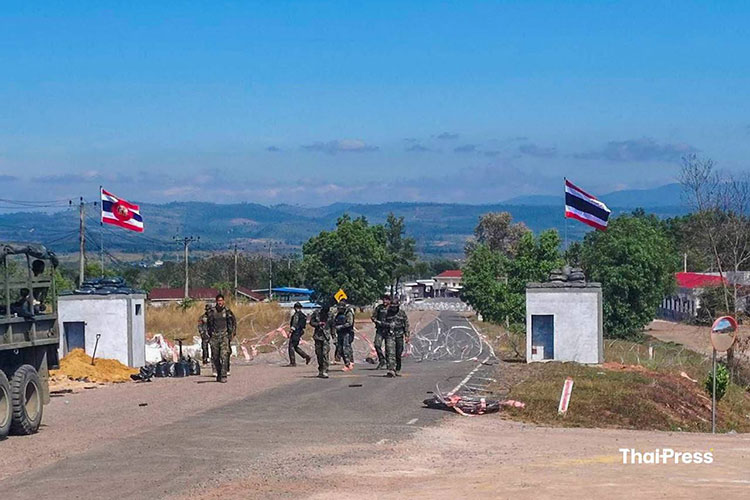
Cambodia has acted with restraint. It has avoided escalation, respected ceasefire commitments, and consistently called for lawful resolution through established mechanisms. Cambodia has not responded by erecting fences or planting flags on foreign soil. The contrast is stark: one side relies on law, the other on force.
This is not a technical border issue or a misunderstanding. It is a clear case of encroachment. Containers, flags, and barbed wire do not create sovereignty; they expose its violation.
Cambodia’s position is unequivocal. Borders must be determined through law and demarcation, not militarization. Thailand must dismantle its illegal installations, cease unilateral actions, and return—without conditions—to the Joint Boundary Commission. Anything less signals that force, not law, is being used to decide borders in Southeast Asia.
Roth Santepheap is a geopolitical analyst based in Phnom Penh. The views expressed are his own.
-Khmer Times-