Humanitarian Boasts in a Time of Shelling: The Thai Foreign Minister’s Curious Sense of Memory
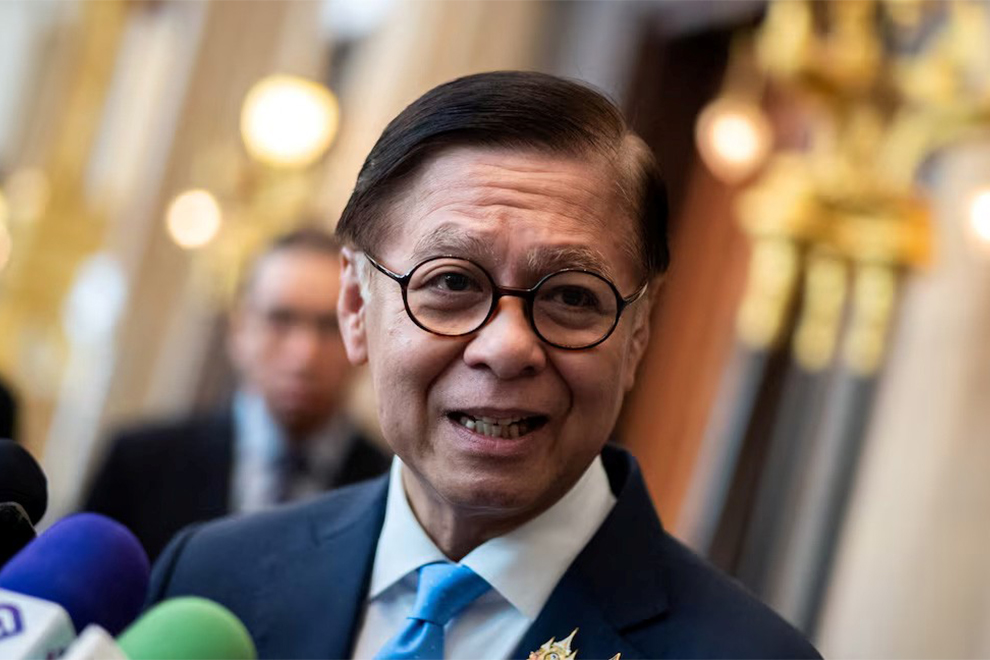 Thai Foreign Minister Mr Sihasak Phuangketkeow. Supplied
#Opinion
In response to remarks made by the Thai Foreign Minister on December 22, extolling Thailand’s humanitarian record toward Cambodia, there is something profoundly unsettling — almost discordant — about celebrating humanitarian virtue while civilians are once again fleeing for their lives.
Thai foreign minister, Sihasak Phuangketkeow, assures the world that his country has “always acted in good faith” toward Cambodia — opening borders, sheltering refugees, restoring peace — delivering a polished recital with the confidence of a settled narrative, as though history were closed and the present merely an inconvenient footnote.
Yet humanitarianism is not established by eloquence, nor sanctified by repetition. It is tested at precisely those moments when restraint is hardest and power most easily abused. On that test, Thailand’s narrative does not merely weaken — it fractures, both in memory and in real time.
The historical record is neither obscure nor contested. In the late 1970s and early 1980s, as Cambodia emerged from catastrophe, large numbers of civilians fled toward the Thai frontier seeking survival. Many encountered force instead.
In 1979, tens of thousands of Cambodian civilians were expelled from border areas near the Dangrek range and driven back into mined and inhospitable terrain. Death followed — not as misfortune, but as consequence: from explosions, starvation, exhaustion and exposure. Amnesty International, the ICRC and contemporaneous UN reporting documented killings, forced returns and the denial of basic humanitarian assistance.
These practices were not aberrations confined to a single episode. Throughout the early 1980s, UNHCR, UNBRO and later Asia Watch recorded systematic pushbacks, shootings at the frontier and the coercive management of refugee populations.
Camps now invoked as evidence of generosity were, in reality, tightly controlled spaces where humanitarian access was restricted and aid politicised. Food and medical supplies intended for civilians were diverted or manipulated, compromising the neutrality of relief operations. Compassion existed — but largely through the courage of individual aid workers who acted despite state policy, not because of it.
To compress this record into the language of “goodwill” is not simplification; it is sanitisation. It is the rhetorical laundering of history — the repainting of a façade while leaving the foundations untouched.
Even such selective nostalgia might have passed with little response were it not for the present. But the present refuses to remain silent.
As the Thai foreign minister revisits a carefully curated humanitarian past, Cambodian civilians today are again bearing the consequences of Thai military action. Independent reporting and humanitarian monitoring record civilians killed and injured, homes damaged, schools closed, communities displaced and civilian infrastructure struck. These are not archival grievances dusted off for diplomatic theatre; they are contemporary facts, unfolding in real time.
Here, disappointment supplants indignation. What kind of humanitarian tradition requires such enthusiastic self-praise while civilians flee shelling? What kind of “good faith” demands applause while its own conduct dismantles the claim in real time? One might expect restraint — perhaps even humility. Instead, reassurance is projected outward, while reflection inwardly remains conspicuously absent.
The continuity is difficult to ignore. In the late twentieth century, civilians were pushed into danger as a matter of policy. Today, civilians are again exposed to danger as a matter of choice. The vocabulary has softened, the weapons modernised, but the civilian consequences remain grimly familiar. History is not repeating itself by accident; it is being sustained by denial, recast as dignity.
International humanitarian law is famously indifferent to rhetoric. It does not ask how confidently a minister speaks, but whether civilians were protected; whether distinction and proportionality were respected; whether lives, homes, schools and cultural sites were spared. These standards applied in the 1980s. They apply now. On these questions — past and present — outcomes speak more clearly than speeches ever could.
There is something faintly surreal in invoking refugee protection while generating fresh displacement; in praising shelters once offered while civilians now seek shelter from fire; in celebrating peace while military operations empty villages. This is not humanitarianism remembered. It is humanitarianism reframed.
Cambodia does not ask the world to choose between history and the present. It asks only that both be seen without cosmetic revision. The archives of the UN, Amnesty International and the ICRC document forced expulsions and death. Contemporary reporting documents fear, flight and destruction. Together, they form a record that resists embellishment — and renders humanitarian boasts, in a time of shelling, not merely unconvincing, but painfully hollow.
Dara In is the permanent representative of Cambodia to the UN and other International Organisations in Geneva. The views and opinions expressed are his own.
-The Phnom Penh Post-