When One Blast Ends a Peace: Anutin, the Army and Cambodia’s Border Villagers
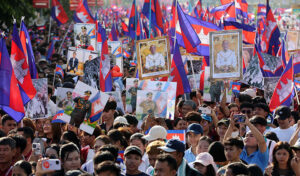
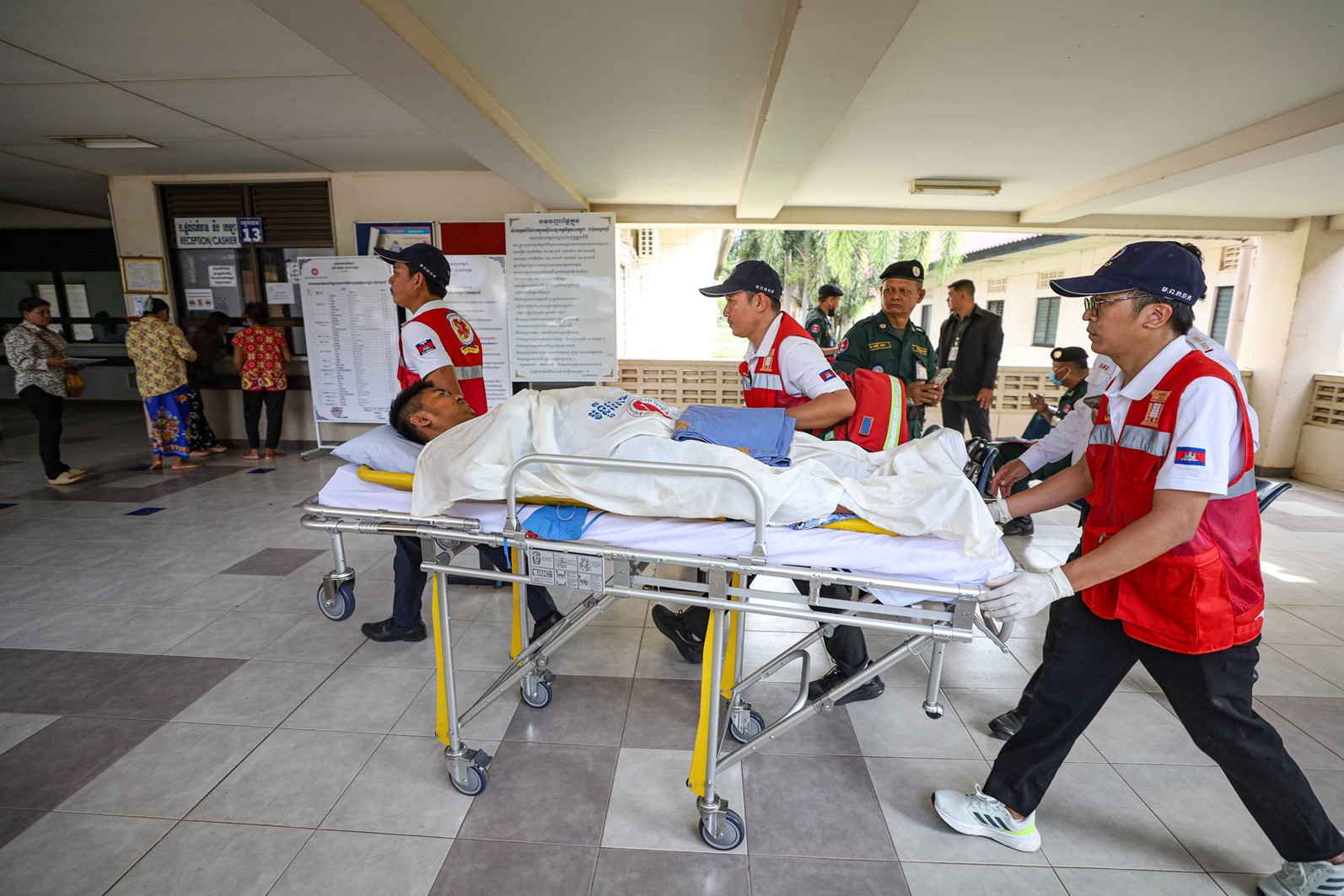 [The Prey Chan villagers who were wounded in yesterday’s shooting were transferred to Phnom Penh for treatment today. AKP]
-Opinion-
When a landmine exploded in Thailand’s Sisaket province on November 10, injuring Thai soldiers on patrol near the Cambodian border, Bangkok moved quickly not to establish what had actually happened, but to signal punishment.
Within twenty-four hours, Prime Minister Anutin ordered the suspension of the implementation of the recently signed Kuala Lumpur peace accord with Cambodia, a US- and Malaysia-brokered agreement that had barely begun to operate after the brutal fighting of July.
Two days later, gunfire erupted near a disputed village. Cambodia reports that Thai troops opened fire near Prey Chan village in Banteay Meanchey, killing one civilian and injuring at least three more, while Thailand insists its soldiers merely responded with warning shots after Cambodians fired across the border. Whatever the exact sequence of shots, the conclusion is stark: a peace agreement designed to protect civilians has been sidelined at precisely the moment they needed it most.
The Kuala Lumpur accord was never a transformative settlement. It was a ceasefire framework layered onto longstanding territorial disputes, nationalist narratives and a heavily militarised frontier.
It capped the five-day border war of July that killed dozens and displaced hundreds of thousands, forcing families to flee artillery rounds and airstrikes in areas already scarred by decades of conflict. Under heavy external pressure, including the explicit threats of steep US tariffs, Thailand and Cambodia agreed to withdraw heavy weapons from sensitive zones, cooperate on landmine clearance, and eventually release the 18 Cambodian POWs held in Thai custody.
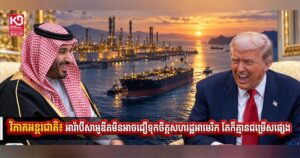
US President Donald Trump flew in to stage-manage the signing, presenting the accord as proof of his global peacemaking credentials. Handshakes in Kuala Lumpur were sold as a diplomatic breakthrough by Washington and Malaysia, the ASEAN chair.
Yet analysts warned from the outset that a ceasefire imposed to service Washington’s trade agenda, rather than to address core issues on the ground, would be fragile. The fallout from the Sisaket blast has proved them right.
The explosion was serious. A Thai patrol reportedly stepped on mines in an area the army says it had recently cleared and fenced with barbed wire, leaving at least one soldier without a foot and others wounded.
Thai commanders quickly blamed intruders, who they claim removed the wire and planted new mines. They accused Cambodia of bad faith and an “insincere” attitude toward the truce. Phnom Penh flatly denied laying new mines, describing the blast as a tragic legacy of old ordnance along one of Southeast Asia’s most heavily contaminated borders. They urged Thai troops to avoid known minefields and cooperate in joint surveys in line with Cambodia’s Ottawa Convention commitments. Crucially, there has been no independent investigation by ASEAN observers, neutral demining experts or UN mechanisms, and the origin of the mine remains unverified.
That absence of verification goes to the heart of how ceasefires are supposed to work. In a rules-based system, incidents are first verified through agreed mechanisms and independent experts, responsibility is then assessed on the basis of evidence, and only after that do states calibrate their response.
Anutin has inverted that logic. By suspending implementation of the accord before any independent findings, he has chosen to treat contested claims as fact. An unverified mine incident has been turned into a political trigger to freeze not just one clause, but the entire peace architecture painstakingly assembled after July.
Suspending all agreements with Cambodia is more than a symbolic snub. It stalls the withdrawal of artillery and rocket systems from sensitive areas. It postpones the release of 18 Cambodian POWs, whose continued detention feeds resentment. It disrupts the phased de-mining work that had only just begun under the enhanced ceasefire. In effect, the very institutions and habits that might have contained future incidents are being dismantled just as the border edges back toward volatility.
For Thailand’s security establishment, this hard line serves several purposes. It signals toughness to a military still resentful over July’s losses and instinctively suspicious of concessions to Phnom Penh. It allows civilian leaders to reclaim a sense of agency vis-à-vis Washington and Kuala Lumpur, asserting that Bangkok will not let US tariff threats dictate when it forgives Cambodia. It reinforces long-standing nationalist narratives that cast Cambodia as the perennial aggressor, despite a history of reciprocal violations along this frontier.
Domestically, Anutin governs in a deeply polarised landscape where the armed forces have long enjoyed a dominant voice in Thailand’s Cambodia policy. The 2025 crisis has already toppled one prime minister. In that climate, a leader whose soldiers have just been maimed cannot easily afford to look soft on the border. A dramatic suspension of the accord offers an easy way to display resolve to hawks in uniform and ultra-nationalist constituencies, even if it undermines Thailand’s long-term interest in a predictable, demilitarised frontier.
The human cost of this political gamble is most visible in places like Prey Chan, where daily life depends less on communiqués and more on whether bullets fly.
After the suspension, guns opened up near the disputed settlement. Cambodian officials say Thai troops fired into the village, killing one civilian and injuring several others. Villagers describe sustained firing lasting ten to fifteen minutes and insist they did nothing to provoke it. Thailand maintains that its troops followed the rules of engagement and merely fired warning shots after Cambodian forces shot first.
From a humanitarian and legal perspective, the picture is troubling regardless of which version is closer to the truth. Firing live rounds near populated border villages in response to ambiguous threats, just days after suspending a peace deal, massively increases the risk of civilian casualties. The spirit of the Kuala Lumpur accord was to insulate ordinary people from exactly this kind of escalation, replacing sporadic violence with structured communication and monitored pullbacks. Once implementation is paused, that insulation disappears. The text may still exist, but the habits of restraint and coordination that give it life vanish almost overnight.
Another casualty of Anutin’s decision is ASEAN’s credibility. Malaysia, as ASEAN chair, invested heavily in brokering both the July truce and the Kuala Lumpur Accord.
ASEAN observers were meant to monitor withdrawals, verify incidents and offer a measure of impartiality. By unilaterally freezing implementation without waiting for joint verification or regional findings, Bangkok sends a blunt message: ASEAN mechanisms matter less than the Thai military’s narrative of events. That lesson will be heard far beyond this border in any future crisis where ASEAN hopes to mediate.
There was nothing inevitable about this path. A leadership genuinely focused on security rather than optics could have demanded an urgent, independent investigation by ASEAN and professional deminers, maintained core humanitarian provisions of the accord while temporarily freezing specific military steps, and strengthened real-time communication with Cambodian commanders. Cambodia, for its part, can and should continue documenting incidents, inviting observers to sites like Prey Chan and insisting on independent verification.
Anutin’s defenders will say Thailand cannot ignore wounded soldiers and suspected violations of the accord. They are right that the Sisaket blast demands answers. But suspending an entire peace deal and licensing a more aggressive military posture before those answers exist is a choice, not an automatic reaction.
It is a choice that sacrifices Cambodian villagers and Thai conscripts to the imperatives of domestic survival and nationalist theatre, undermines regional mechanisms that took months to assemble, and exposes the shallowness of externally imposed peacemaking that never tackled the root causes of the border dispute. A peace that can be switched off by a single unverified incident is, in truth, no peace at all.
Seng Vanly is a Phnom Penh-based Geopolitical Analyst. The views and opinions expressed are his own.
-The Phnom Penh Post-