The implications of endorsing unethical conduct
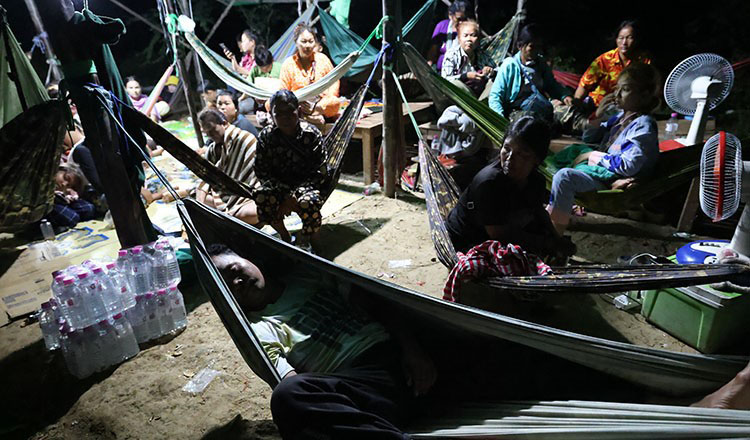 [Prey Chan villagers forced out of their homes by the Thai army at the border have had to endure sleepless nights because of sinister and deafening noises broadcast by Thai forces. KT/Khem Sovannara]
Thai Prime Minister Anutin Charnvirakul’s recent statements regarding the disturbances stemming from “ghost sounds,” barking dogs, and airplane noises in the Prey Chan village of Cambodia have raised significant concerns not only about his leadership but also about Thailand’s place in the international community. By framing these actions against villagers as a demonstration of territorial rights, he has inadvertently opened a Pandora’s box of ethical dilemmas that could have far-reaching consequences.
While asserting territorial claims is a legitimate aspect of national sovereignty, the methods employed to do so matter immensely. The Prime Minister’s defence of these disturbances indicates a troubling willingness to prioritise national interests over human dignity. By praising Gun Jompalang—a figure tied to these disruptive activities—as a respected member of Thai society, Anutin sends a message that violence and intimidation can be justified in the name of nationalism. This endorsement risks normalising behaviours that are widely regarded as unethical and inhumane, consequently undermining the very principles of respect and coexistence that the global community strives to uphold.
Such actions not only threaten the peace and stability of the region but also tarnish Thailand’s reputation on a larger scale. The endorsement of aggressive territorial posturing invites criticism and scrutiny from neighbouring countries and the broader international community, casting Thailand as a nation willing to flout international norms for the sake of perceived territorial integrity. This could exacerbate existing tensions between Thailand and Cambodia, further destabilising an already fragile relationship.
But the responsibility of curbing such actions does not rest solely on Thailand’s shoulders. The ASEAN community must respond proactively rather than adopting a passive stance in the face of such violations of regional and international laws. Silence in the presence of inhumanity is complicity, and it is imperative for ASEAN member states to unite to condemn these actions unequivocally. Failure to do so not only puts the integrity of ASEAN at risk but also undermines the collective goals of peace, stability, and prosperity that the association seeks to promote.
It is essential for ASEAN to maintain a commitment to ethical governance and respect for human rights among its member states. Collective action against inhumane practices must be prioritised, fostering an environment where national sovereignty is not wielded as a weapon against the basic rights of individuals. By standing firm against unethical behavior, ASEAN can reinforce its role as a champion of cooperation and mutual respect, ultimately securing a more stable and just region for all its members.
Prime Minister Anutin’s endorsement of troubling conduct sends a concerning message to both Thai citizens and the international community. It is time for a re-evaluation of what it means to assert national rights in a world that increasingly values human dignity and ethical governance. ASEAN’s response could determine not only the future of its member states but also the trajectory of regional cooperation in Southeast Asia.
The author is a member of ECOSOCC. The views expressed here are the writer’s own.
-Khmer Times-