Border communities must rebuild their homes and livelihoods that were destroyed by Thai forces
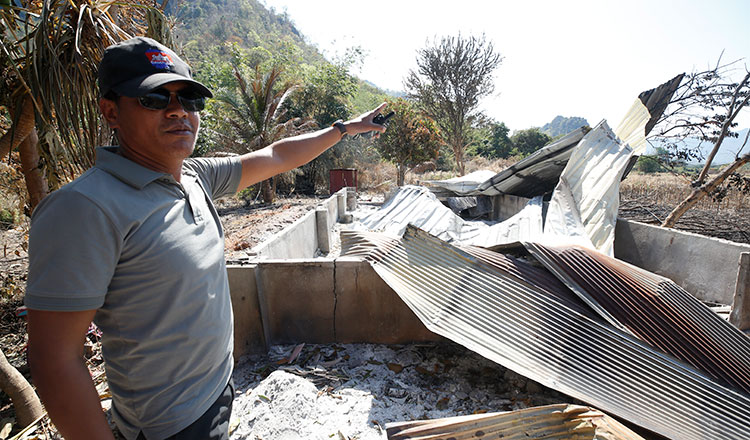 Weeks of shelling and aerial bombardment have devastated civilian areas in Battambang province. KT/Chor Sokunthea
#National
Synopsis: Thailand’s weeks-long bombardment of Cambodia’s border provinces has left houses, pagodas, schools, hospitals and infrastructure in ruins, displacing hundreds of thousands and contaminating swathes of land with unexploded ordnance.
Oddar Meanchey/Battambang province – Standing among the ashes of razed homes and the silent ruins of pagodas and schools, people living near Cambodia’s northwestern border are struggling to rebuild their lives. Weeks of shelling and aerial bombardment have devastated civilian areas in the border provinces, leaving hundreds of thousands homeless, livelihoods destroyed and entire villages contaminated with unexploded ordnance.
Houses, pagodas, schools, hospitals, roads, bridges and other public infrastructure were reduced to rubble by the Thai military during the outbreak of hostilities from December 7 to December 27 last year.
The destruction was a blatant violation of Cambodia’s sovereignty, carried out without regard for international law, said the residents.
Nhip Sarath, 58, a resident of Kon Kriel commune in Samraong City, expressed sorrow and condemnation over the indiscriminate bombing by the Thai military. She said her family had spent decades saving money to build their home, only to see it swiftly destroyed.
“This house represents our entire life’s savings,” she said, standing amid the ruins. “Now we have nothing left but life.”
She said her house, along with her grocery shop, was destroyed by indiscriminate bombardment. “They targeted civilian infrastructure.”
The house of her neighbour, Chan Pisal, 31, was also destroyed by Thai shelling.
“My entire effort was destroyed by Thai shelling,” Pisal said amid the rubble. “I came home, but now my family has no shelter,” he added.
Venerable Sang Sey, Abbot of Wat Kiri Vorn and Chief Monk of Samraong City, showed reporters the destruction of a monk’s residence.
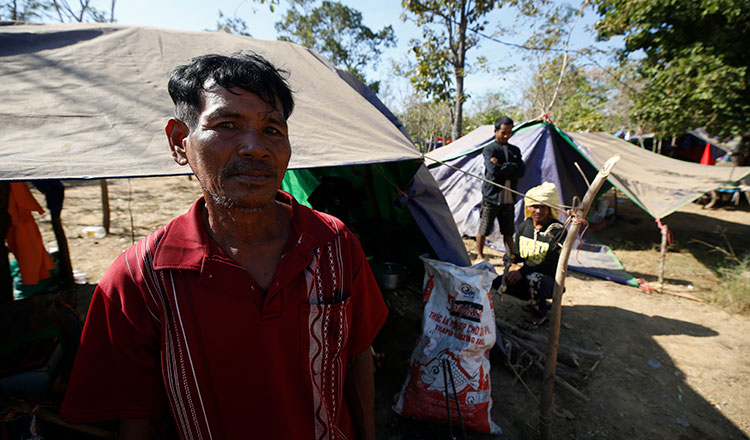
Local authorities said assessment of the damage was ongoing. Many families remain displaced and essential community infrastructure has been severely affected by the attacks.
In an interview this week, Oddar Meanchey Governor Mean Chanyada said displaced civilians wishing to return home must do so cautiously and in line with security assessments and humanitarian considerations.
He said that while the ceasefire allows civilians to return, such movements can only take place when safety is assured, as indiscriminate Thai airstrikes and shelling have left countless unexploded ordnance (UXOs) and cluster munitions.
He cited “four points” of the ceasefire agreement, which call for facilitating returns under secure conditions, but noted that the post-war situation remains insecure.
As of yesterday, displaced residents sheltering at Wat Bat Thkao Refugee Camp in Chongkal district of Oddar Meanchey province had begun returning to their villages, according to provincial authorities.
Officials have classified return areas into three categories: red zones, yellow zones and white zones, based on security and safety conditions.
Red zones, which include border areas and strategic road networks stretching more than 200 kilometres, remain highly dangerous and are strictly off-limits.
Yellow zones are areas contaminated with unexploded ordnance and cluster munitions and require clearance by the Cambodian Mine Action Centre (CMAC) before civilians can return, while white zones are deemed safe for resettlement.
“People are returning in two ways,” Chanyada said. “Some briefly return to check on their homes and livestock, while others return officially under the guidance of authorities, based on safety assessments.”
In Samraong City, limited economic activity has resumed, with some residents reopening small businesses on a trial basis. Samraong Market in the city centre has partially reopened to serve residents who have recently returned, but security alerts remain, as the city is just 55 kilometres from the Thai border.
However, authorities have restricted the return of full families in sensitive areas, allowing mainly men to enter affected zones, while women and children remain at safety centres.
For families from red zones, the return process may take longer. Provincial officials are currently identifying long-term accommodation and suitable land for farming or small businesses to help displaced families sustain their livelihoods while demining operations and border assessments continue.
Humanitarian assistance remains in place, with displaced families continuing to receive shelter, healthcare, food supplies and education services for children.
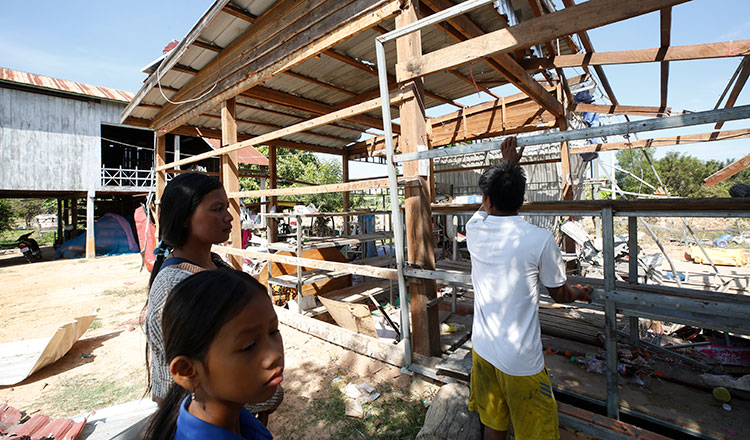
KT/Chor Sokunthea
Governor Chanyada acknowledged support from philanthropists and civil society organisations, as well as guidance from First Lady Pich Chanmony, aimed at promoting self-reliance among displaced communities.
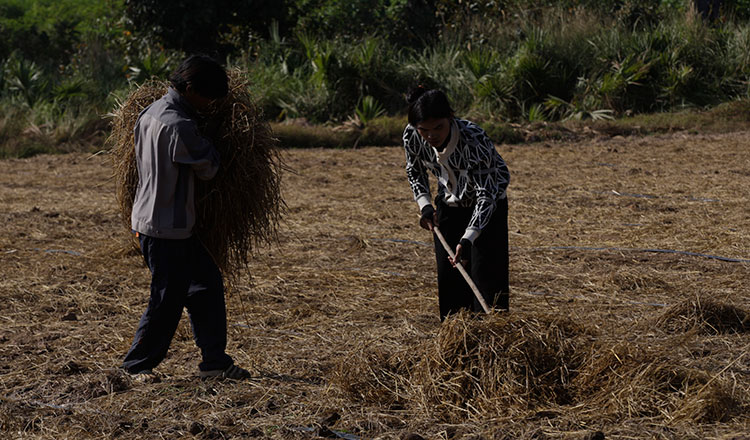
The provincial administration has prepared nearly three hectares of land to grow vegetables to support families in displacement centres, as residents of red zones remain unable to return home due to security concerns along the Cambodia-Thailand border.
The vegetable plots at a displacement centre at Wat Bat Thkav in Chong Kal commune, Chong Kal district, ensures food for the displaced. Large areas of the province are classified as high-risk zones, preventing residents from returning to their villages.
Chanyada said that although some residents have begun returning home, those living in red zones will need to stay at the camps until it is deemed safe for them to return.
He said the vegetables will be sufficient to feed the families at the Wat Bat Thkav centre, reducing the need for purchases during the prolonged displacement.
Those staying at the centre welcomed the initiative, saying they are happy to plant the vegetables, both to support their own families and to help others. They said the activity also allows them to cooperate with the government and local authorities during a difficult period.
The initiative followed guidance from Chanmony, who is Permanent Vice-President of the Cambodian Red Cross (CRC). She had called on ministries, provincial administrations and local authorities to grow food for frontline troops defending the country and civilians.
Chhlet Chi, 28, a refugee from the O’Smach area sheltering at the Wat Bat Thkav camp, took part in the planting.
“This farming programme at the refugee camp will help sustain displaced families,” she said. “There are many refugees who may not be able to return home for a long time due to security reasons.”
Khmer Times travelled to two districts—Sampov Loun and Phnom Proek in Battambang province—which border Thailand’s Sa Kaeo and Chanthaburi provinces, where several residential homes, government buildings, hospitals, schools, pagodas and infrastructure were destroyed by indiscriminate bombardment.
“As you see, the houses were burnt to the ground, our rice and corn were also razed. How can we live?” said Un Thorn, a 70-year-old farmer, pointing to his destroyed home and farmland in Toeuk That village of Angkor Ban commune, Sampov Loun district.
Despite some refugees having returned home and some public services having resumed, fear of renewed attacks remains, with residents saying they were treated inhumanely by the Thai army.
Ou Tha, the O’Chort village chief in O’Barang Thlek commune, Phnom Proek district, said most of his villagers are reluctant to return, citing fear of renewed attacks and UXOs.
“They are still frightened by the inhumane acts of the Thai army,” he said, adding that those who had returned from the refugee camps were men to check their properties.
Evidence of unexploded ordnance and bomb craters have been found in Sampov Loun district, Battambang province, following shelling by Thai military forces, highlighting what Cambodian authorities called a clear violation of Cambodia’s sovereignty.
According to official statements, the weapons used in the shelling included 105mm artillery rounds as well as M16 ammunition. The projectiles landed in multiple locations, including a health centre, public areas and residential villages in Samlot district.
Authorities reported that a total of 275 rounds were fired into Cambodian territory, of which eight failed to detonate and remain unexploded, posing risks to civilians. The presence of unexploded ordnance has raised serious concerns over the safety of residents and farmers working the land.
In Oddar Meanchey, 47,594 people have returned home. However, 84 villages remain inaccessible, while preparations for resettlement have been completed in 172 villages.
Banteay Meanchey has seen 110,924 returnees while 2,303 families (8,960 people) have returned in Preah Vihear.
The Ministry of Interior said it is coordinating with relevant institutions and subnational authorities to restore basic public services and create safe conditions for displaced people to return as soon as possible. Priority measures include repairing damaged houses and villages, clearing unexploded ordnance and maintaining the ban on unmanned aerial vehicles (drones) nationwide until further notice.
-Khmer Times-