
Editorial 80 – Coral Reefs Are Built by Tiny Animals
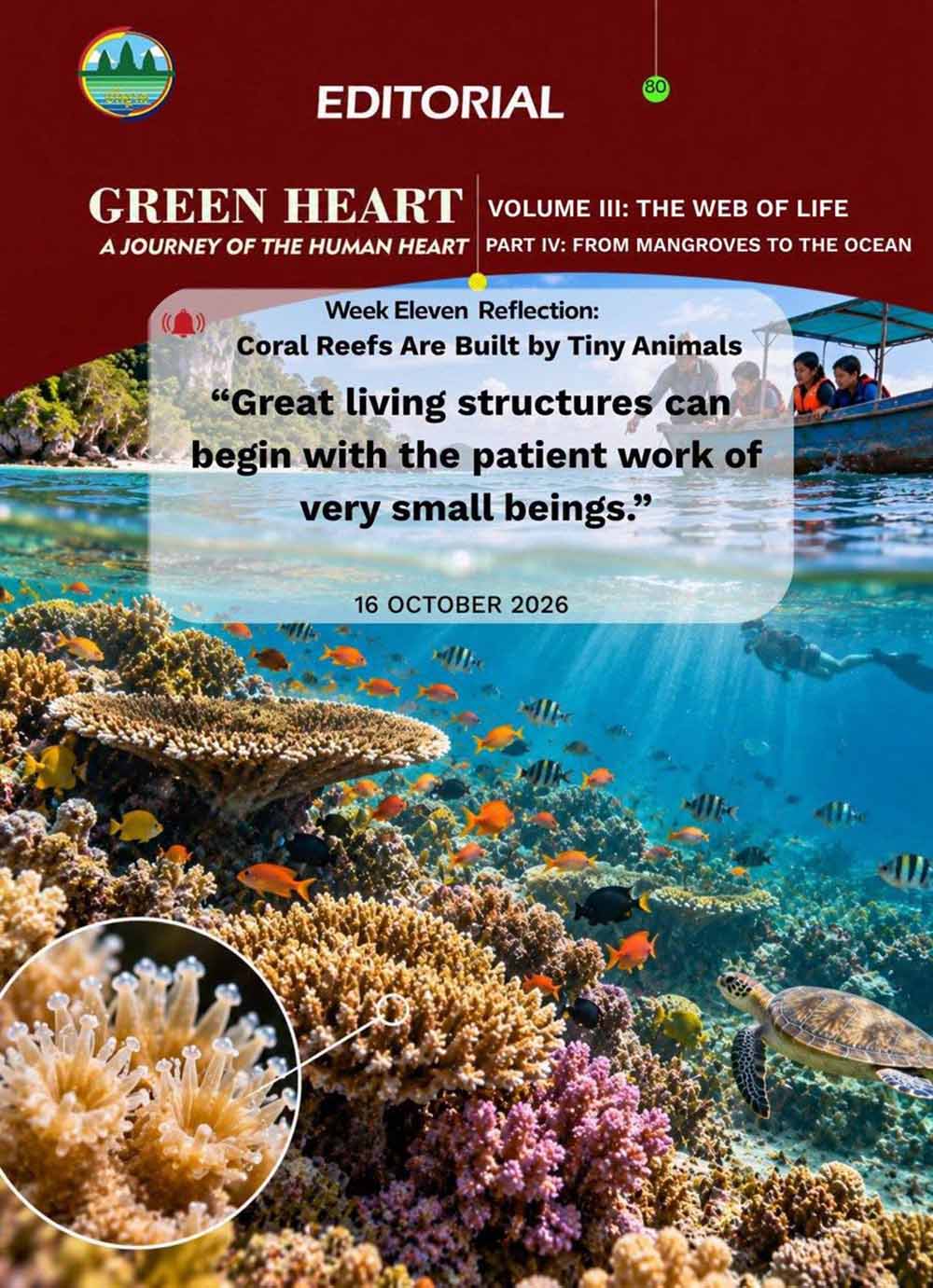 Editorial 80 – Coral Reefs Are Built by Tiny Animals
Opening Thought
“Great living structures can begin with the patient work of very small beings.”
Editorial
Corals may look like colorful rocks or plants, but reef-building corals are colonies of small animals called polyps. They produce calcium carbonate skeletons that accumulate across generations and help form reef structures.
Many reef-building corals live in partnership with microscopic algae inside their tissues. The algae use sunlight to make food and share much of it with the coral, while receiving shelter and nutrients. This relationship helps reefs thrive in clear, sunlit tropical waters.
Reefs create three-dimensional habitat for fish, mollusks, crustaceans, worms, sponges, algae, and many other organisms. They support fisheries, tourism, culture, and coastal protection.
Corals live within narrow environmental ranges. Excess heat can disrupt the partnership with algae, causing bleaching. A bleached coral is stressed and more vulnerable; it is not always dead and may recover if conditions improve.
Ocean acidification occurs as seawater absorbs additional carbon dioxide, changing its chemistry and reducing the availability of carbonate ions used by many organisms to build shells or skeletons. Combined with warming, pollution, disease, and physical damage, this creates serious pressure.
Local protection still matters even when climate change is global. Cleaner water, responsible fishing, reduced anchor damage, careful tourism, protected herbivores, and effective management can support reef resilience.
Visitors should not touch, stand on, collect, or feed reef organisms. Sunscreen, waste, boating, and diving practices should follow local guidance. Safety and respect belong together.
Restoration techniques such as coral nurseries may help particular reefs, but they do not replace reducing the causes of decline. Planting fragments into harmful conditions cannot create lasting recovery.
Reefs challenge our sense of scale. Tiny polyps, working across centuries, build structures visible from far away. Their achievement depends on partnership, stable conditions, and continuity.
The reef is not merely a beautiful destination. It is a living city whose builders are vulnerable. Protecting it requires both local care and global climate action, offered with urgency but sustained by hope.
Reef recovery is uneven. Some corals tolerate heat better, some reproduce more successfully, and some locations provide temporary refuge. Protecting diversity and connected reef networks preserves options while the world reduces the emissions driving long-term warming.
Hope should remain realistic. Local restoration can protect valuable sites and knowledge, but reefs cannot be secured without rapid global emission reductions. Acting at both scales keeps hope from becoming an excuse for delay.
Buddhist Reflection
Small repeated actions can build great structures, for benefit or harm. The coral reef invites patience in good work and responsibility for the conditions our collective actions create.
Today’s Reflection
What is the relationship between a coral polyp, its algae, and the reef structure?
Today’s Action
Create a labeled drawing of a coral polyp and list three safe behaviors for reef visitors.
Today’s Pledge
Today I will honor the tiny builders and support the conditions that allow reefs to live.
When we protect nature, we protect all beings—including ourselves.