Editorial-70: Ecosystem Functions Become Human Gifts
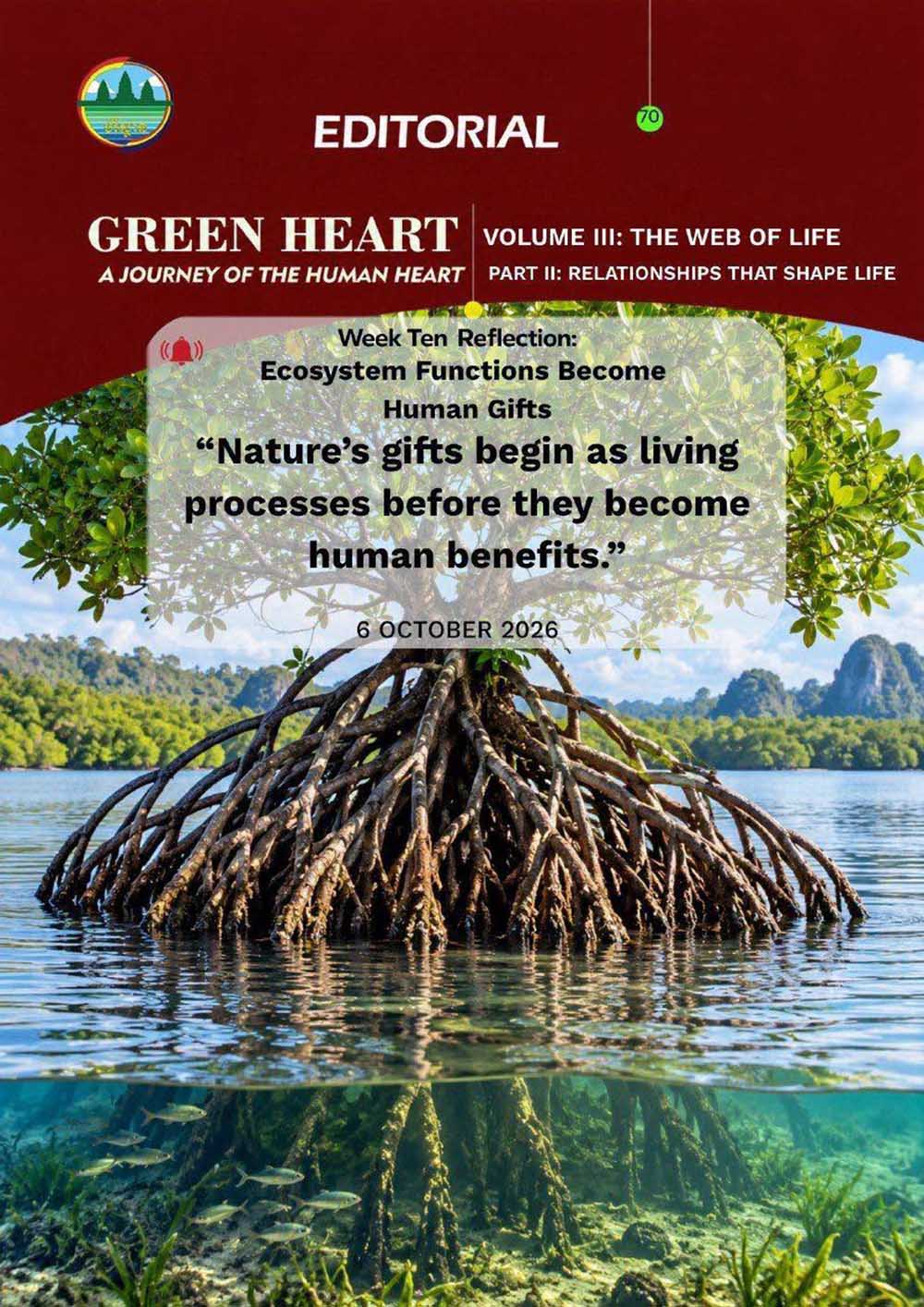 Editorial-70: Ecosystem Functions Become Human Gifts
Opening Thought
“Nature’s gifts begin as living processes before they become human benefits.”
Editorial
Forests influence water and climate. Wetlands store water and support fisheries. Pollinators help plants reproduce. Soil organisms cycle nutrients. These ecological functions occur whether or not people notice them.
When a function contributes to human well-being, it may be described as an ecosystem service. Common categories include provisioning services such as food and materials; regulating services such as flood reduction or climate regulation; cultural services such as recreation and spiritual meaning; and supporting processes underlying other benefits.
The language of services helps planners include nature in decisions. A wetland may be worth more than the land it occupies when flood protection, water processes, fisheries, biodiversity, and culture are considered.
But nature is not valuable only because it serves people. Species and ecosystems have existence beyond human use. A green heart can appreciate practical benefits while respecting life’s intrinsic worth.
Services also depend on condition and scale. One tree cools a small area; a network of urban trees can influence neighborhoods. A wetland can trap some pollutants but cannot safely receive unlimited waste. Using the term service should not encourage exploitation beyond ecological limits.
Benefits and burdens are not always distributed fairly. One community may protect a forest while distant users receive water. A development may profit from a resource while local people lose access. Fair policy should recognize stewards, rights, and unequal impacts.
Valuation may use money, but not every value should be reduced to a price. Sacred places, identity, species survival, and future possibilities may resist simple calculation.
This week, we explored soil webs, pollination, seed dispersal, predation, competition, cooperation, and recovery. These relationships become the functions that sustain both ecosystems and societies.
The gift of nature is not produced by one isolated species. It arises through the web.
When we receive clean water, food, shade, beauty, or protection from a healthy landscape, let gratitude travel backward through the processes and lives that made the benefit possible. Then let gratitude return as stewardship.
Stewardship may include payment, legal protection, community support, reduced consumption, or respectful behavior. The appropriate return differs, but the principle remains: beneficiaries should not remain invisible to the costs carried by ecosystems and the people protecting them.
Schools can practice this reciprocity by caring for shade trees, reducing pressure on local water, recognizing custodial labor, or supporting community conservation. Gratitude becomes credible when it changes behavior.
Buddhist Reflection
Gratitude recognizes the causes behind a benefit. Wisdom prevents gratitude from becoming entitlement. Receiving nature’s gifts responsibly means caring for the systems and communities that provide them.
Today’s Reflection
Which ecosystem function supports my family without being bought in a store?
Today’s Action
Choose one natural benefit and trace it back through at least five ecological processes or relationships.
Today’s Pledge
Today I will receive nature’s gifts without forgetting the living web that creates them.
When we protect nature, we protect all beings—including ourselves.