Cambodia’s Battle Against Online Scams: A Crisis Beyond the Headlines
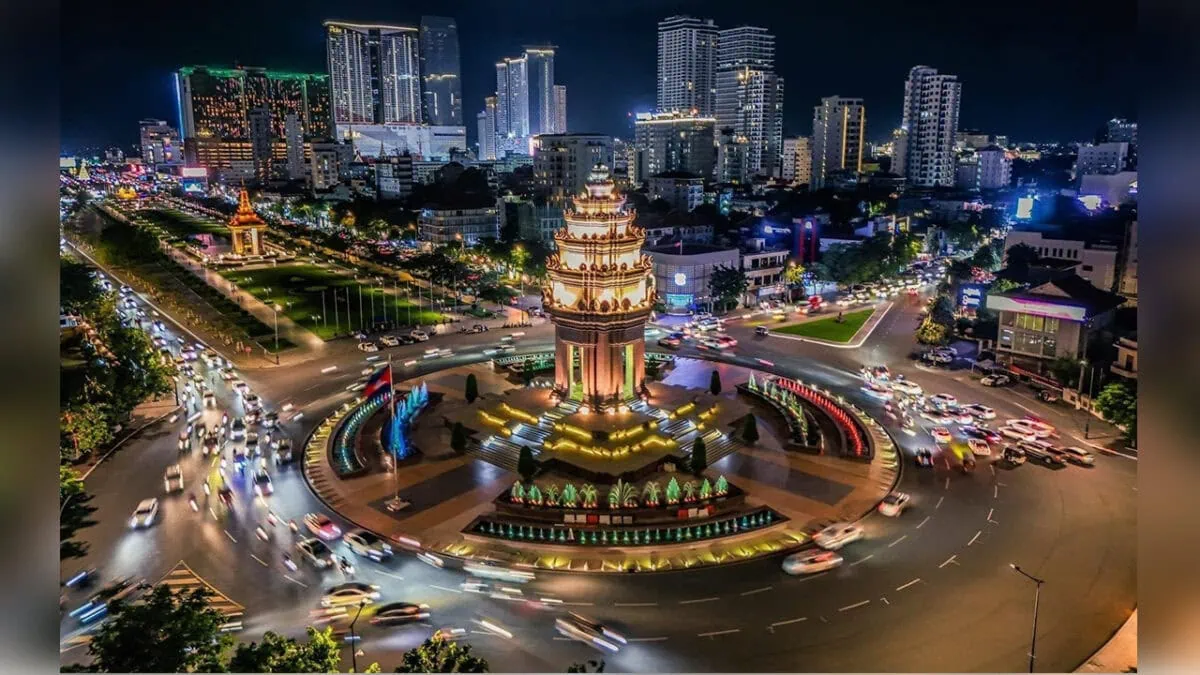 Cambodia's Independence Monument. The Kingdom is facing a barrage of claims related to online scam activities. The author maintains that independent analysis and whole-of-government action is required to repair Cambodia's reputation. The Beauty of Phnom Penh via FB
#Opinion
The latest US congressional move against Southeast Asian scam networks should concern Cambodia, but it should also be understood accurately. On September 15, two US House committee chairmen asked the State Department and Treasury Department to investigate 28 people and entities in Cambodia, Laos and Myanmar for possible sanctions. They did not announce that every named person had been sanctioned or found guilty.
If the US executive branch later imposes sanctions, targeted individuals or entities could face blocked assets under US jurisdiction, restrictions on transactions with US persons and visa restrictions. The wider danger is reputational.
Banks, investors and legitimate companies may become more cautious about dealing with businesses or institutions believed to be connected to sanctioned networks. That damage could reach Cambodia’s economy even when ordinary citizens have no connection to online fraud.
This does not mean Cambodia has done nothing. The country has created the Commission for Combating Online Scams (CCOS), adopted a Law on Combating Online Scams and conducted raids, casino-license cancellations, and deportations. Independent analysis also records cooperation with China, the US and other partners. Reuters reported Cambodian officials’ claim that, since July 2025, authorities had investigated 793 suspected locations and taken action at 624 sites.
However, enforcement numbers do not answer the most important question: has Cambodia dismantled the networks behind the compounds? Reuters reported that Cambodian officials said large-scale compounds had been eliminated, while smaller operations had moved into guesthouses, condominiums, rented houses, vehicles and coffee shops.
Amnesty International questioned whether the industry had truly been eliminated. Earlier reporting also cited allegations that victims were moved during crackdowns and that some interventions were undermined by possible collusion between compound managers and police. Cambodia rejected those findings as selective and incomplete.
This disagreement explains why some Western governments and organisations remain skeptical. They are not measuring success only by the number of raids or arrests. They are asking whether owners, financiers, recruiters, landlords, money channels and officials who allegedly protect the system are investigated and prosecuted.
The US State Department’s 2025 trafficking report alleged official complicity and weak protection for victims. Those allegations are serious, but they remain allegations that require evidence, due process and transparent investigation.
Cambodia’s international cooperation should also be described precisely. The China-initiated International Alliance Combating Telecom and Cyber Fraud was established on September 10 in Lianyungang, China. It is an intergovernmental law-enforcement platform involving representatives from 46 founding countries, 34 observer countries and four international organisations, including the UN and Interpol. It is different from Cambodia’s CCOS and from ICCOS-2026.
ICCOS-2026 is the International Conference on Combating Online Scams, which Cambodia will host in Phnom Penh on September 23 and 24 under the theme “Acting Together towards Breaking the Chain and Eradication of Online Scams”, Its partners include the Lancang-Mekong Integrated Law Enforcement and Security Cooperation Center, the UN Office on Drugs and Crime, and Interpol.
The conference is a useful opportunity, but it cannot by itself persuade the world that Cambodia’s crackdown is genuine. Credibility will come from what happens after the speeches: public reporting of cases and convictions; independent access for journalists and civil society; asset tracing; prosecution of senior enablers; and proper screening, shelter, legal assistance and repatriation for trafficking victims.
Cambodia should defend its sovereignty, but sovereignty is strongest when national institutions can show that nobody is above the law. Cooperation with China, the US, ASEAN, Interpol and the UN should not be treated as surrendering independence when it is based on evidence-sharing, mutual legal assistance and Cambodian law. At the same time, foreign governments should distinguish proven wrongdoing from accusations still under investigation and avoid language that shames an entire population (for instance, the use of the term “Scambodia”).
Cambodian citizens should not carry the blame for crimes they did not commit. Some people found inside scam compounds are victims themselves. The public has every right to demand that officials investigate corruption, protect victims and prevent Cambodia’s territory, businesses and financial system from being used by transnational criminals.
The way forward is neither denial nor despair. It is a whole-of-government and whole-of-society response: stronger financial oversight, accountable law enforcement, responsible businesses, protected victims, independent scrutiny and sustained international cooperation.
Cambodia can preserve its relationships, defend its national interest and restore its reputation, but only by reaffirming public assurances with verifiable results.
Chhorn Sok Sothy is a Cambodian civil servant who is building a career in public administration, technology, philosophy and youth development. The views and opinions expressed are his own.
-Phnom Penh Post-