Editorial 18 – The Food on My Plate Begins with the Soil Opening Thought
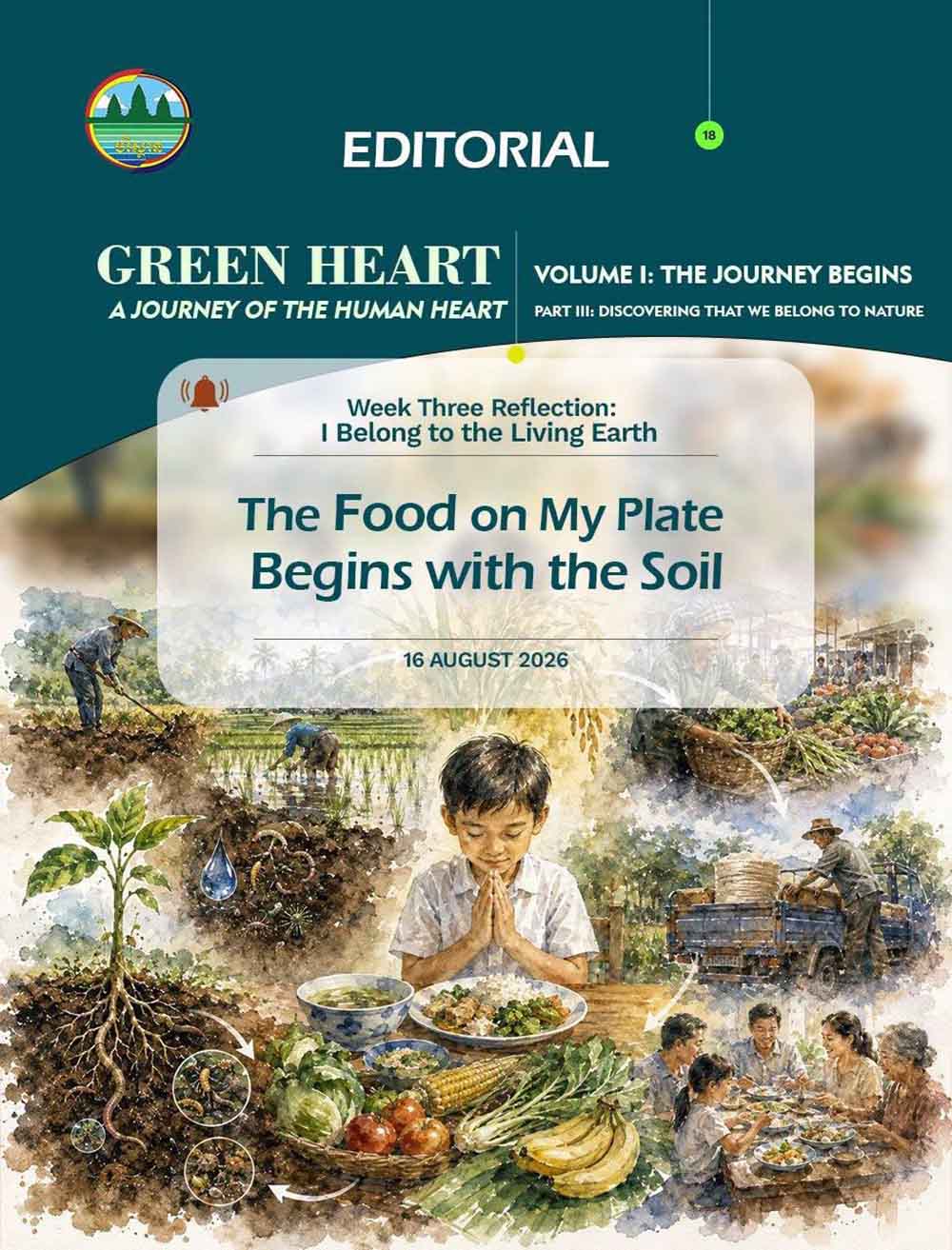 Editorial 18 – The Food on My Plate Begins with the Soil Opening Thought
“Every meal is a message from soil, water, sunlight, and human hands.”
Editorial
A meal may arrive cooked, packaged, or served on a plate, making its beginning easy to forget. Rice began as a plant. Fruit grew through roots, leaves, flowers, and time. Even foods from animals depend on plants, water, land, and care. Beneath most meals lies soil.
Healthy soil is more than dirt. It contains minerals, air, water, organic matter, and communities of living organisms. Together, these conditions support plant growth. Soil forms slowly and can be damaged by erosion, contamination, compaction, or poor management.
Farmers learn to read the land: when to plant, how water moves, what crops need, and how weather is changing. Their knowledge and labor connect natural processes to our tables. When we waste food, we also waste some of the soil, water, energy, time, and work used to produce and transport it.
Respecting food does not mean forcing ourselves to eat unsafe food or more than our bodies need. It means taking an appropriate portion, storing food carefully, sharing when possible, and planning before buying or cooking. Suitable scraps may be composted where safe systems exist.
Food also connects people culturally. Recipes carry family memories. Seasonal foods reveal local landscapes. Sharing a meal can express generosity and belonging. Protecting the natural foundation of food helps protect these human traditions.
Soil is usually beneath our feet and below our attention. Yet civilizations depend on it. A thin living layer supports fields, gardens, forests, and countless organisms. Caring for it can include keeping harmful waste away, maintaining vegetation, reducing erosion, and learning responsible growing practices.
Before your next meal, pause. Imagine the path from soil to plate and the many hands along it. Gratitude need not be complicated. Take only what you can reasonably finish. Enjoy it without hurry. Waste less.
A green heart recognizes that a meal is never “just food.” It is a meeting of Earth and human effort. When we honor that meeting, even an ordinary plate becomes a lesson in responsibility.
We can deepen that lesson by learning where local foods grow and which seasons support them. Knowledge creates appreciation, and appreciation makes waste feel less acceptable. A thoughtful meal can nourish both the body and a grateful way of living.
Buddhist Reflection
Mindful eating encourages gratitude and moderation. We recognize the many lives, elements, and efforts that make nourishment possible. This awareness helps us receive food respectfully and reduce waste without judgment.
Today’s Reflection
Which ingredient in my meal can I trace back to soil and a farmer’s work?
Today’s Action
Take a suitable portion at one meal and finish it if safe. Thank someone involved in preparing or providing the food.
Today’s Pledge
Today I will honor soil and human effort by receiving food gratefully and wasting less.
When we protect nature, we protect all beings—including ourselves.