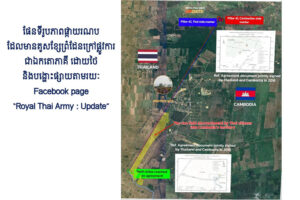
Border Fences Cannot Determine International Boundaries
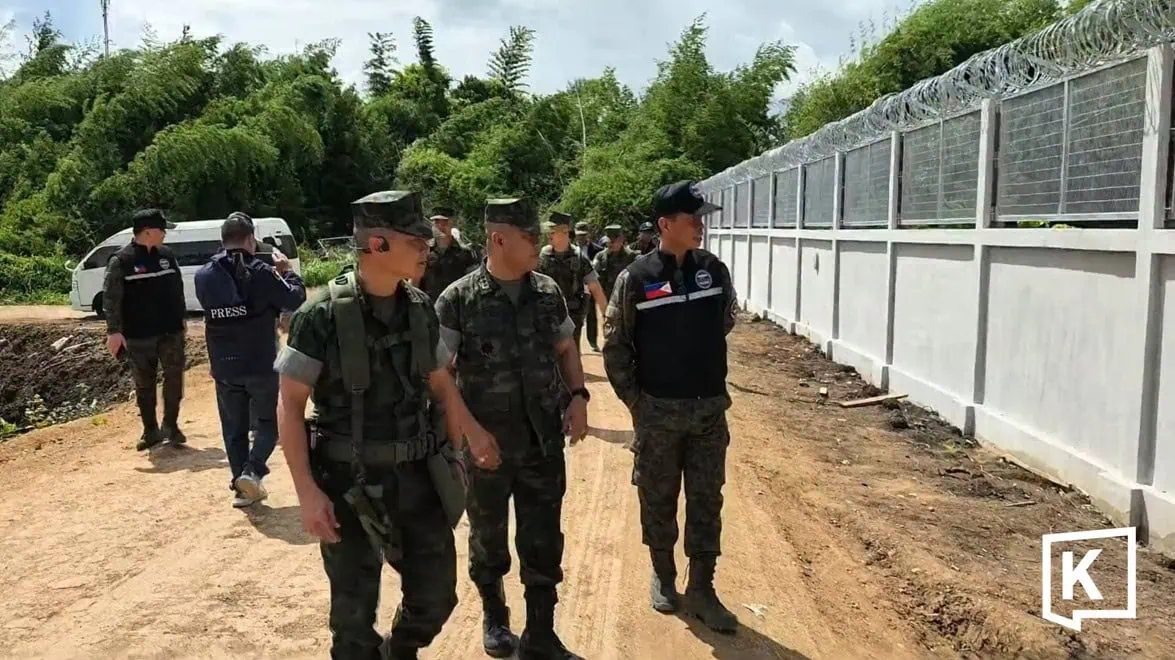 The Thai army escorted members of the AOT-Thailand to the border fence bordering Battambang province on July 1. Khaosod English
#opinion
Thailand’s decision to construct a border fence along sections of the Cambodia–Thailand frontier raises profound legal and diplomatic concerns. Every sovereign nation has the right to protect its borders and ensure the security of its citizens. However, that right does not extend to unilaterally undertaking permanent border infrastructure in areas where the international boundary has not been jointly surveyed, mutually agreed upon or conclusively demarcated.
International boundaries are established by treaties, legally recognised maps and bilateral or international boundary commissions — not by fences, walls or unilateral administrative actions. Where the location of the boundary remains subject to differing interpretations or pending demarcation, any unilateral construction risks creating a fait accompli — an attempt to establish new facts on the ground before legal issues have been resolved through peaceful means.
If ASEAN observers are invited to inspect Thailand’s border fence project, they should also consider a fundamental question: Was the fence constructed only after the boundary line had been jointly measured and verified by both Cambodia and Thailand using internationally recognised maps and agreed legal instruments?
If not, the project inevitably raises concerns about compliance with international law and the principles of good-neighbourly relations that ASEAN members have pledged to uphold.
Border security is a legitimate objective. However, security measures should never be confused with the legal determination of an international frontier. A fence may serve domestic security purposes, but it cannot establish sovereignty, redefine a boundary or prejudice the legal rights of a neighbouring state.
Peaceful coexistence depends on mutual respect, transparency and adherence to international law. The responsible course is for both governments to complete joint boundary surveys, respect existing treaties and internationally recognised maps and resolve any outstanding differences through dialogue or other peaceful legal mechanisms.
The future of Cambodia–Thailand relations should be built on law, not unilateral actions. Lasting peace is achieved through cooperation and mutual respect — not by constructing barriers before the boundary itself has been conclusively established.
Tesh Chanthorn is a Cambodian citizen who longs for peace. The views and opinions expressed are his own.
-Phnom Penh Post-