Editorial 20: What We Do to Nature Returns to Us
Opening Thought
“Every action enters a circle, even when we cannot see its return.”
Editorial
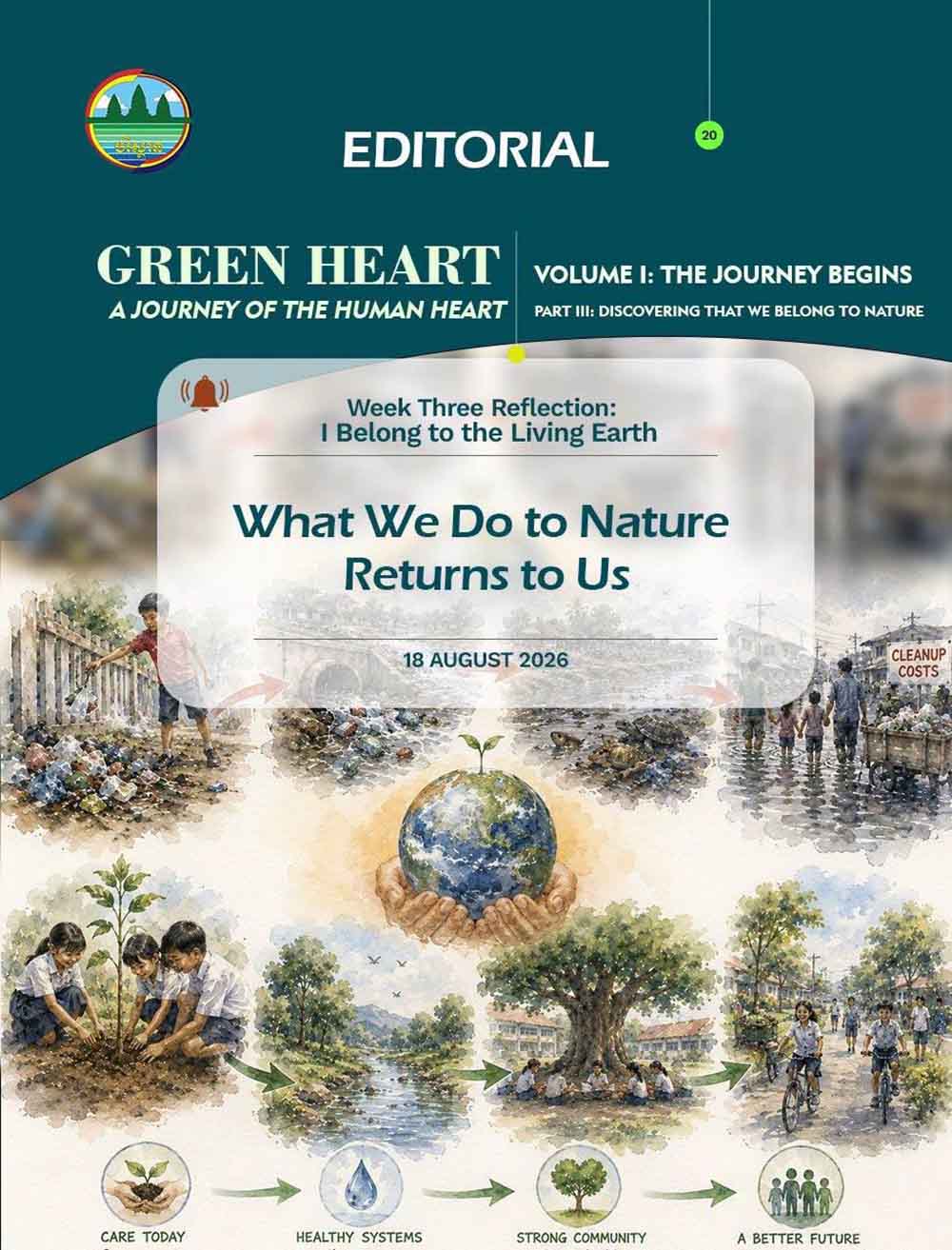
When rubbish is thrown beyond a fence, it may feel gone. Rain can carry it into a drain, where it may block water, move into a stream, or break into smaller pieces. Later, the same community may face dirtier surroundings, flooding, harm to animals, or greater cleanup costs. The action has returned in another form.
This principle is not a magical punishment. It is cause and effect. When soil is left bare, rain and wind may remove it. When water sources are polluted, treatment becomes harder and health risks may grow. When forests and wetlands are degraded, communities may lose some of the benefits those systems provided.
Positive actions also return. A cared-for tree may later shade a classroom. Waste prevented today does not need to be collected tomorrow. A protected upstream area may help support cleaner water downstream. Knowledge shared with one student can influence a family.
Consequences are not always immediate or equal. A person causing harm may not be the first to suffer from it. People with fewer resources may carry heavier burdens. This is why environmental responsibility includes fairness and concern for those beyond our immediate view.
We should avoid claiming that every storm, illness, or hardship is caused by one person’s behavior. Natural systems are complex, and many factors interact. The lesson is simpler: actions change conditions, and changed conditions influence life.
Before acting, imagine a circle. Where might this item go? Who might breathe this smoke? What could grow from this soil? Who may use this place after me? Such questions extend our vision through time.
The circle also gives hope. Goodness travels. A student’s careful action may seem to disappear, but someone notices. A habit spreads. A clean area stays clean longer. Trust grows.
We live within the consequences of countless past actions, and future people will live within ours. We cannot control every outcome, but we can choose what we send into the circle.
Let us send care. It may return as cleaner water, cooler shade, healthier soil, stronger community, or courage in another heart.
Even when the return is invisible, the action still improves the conditions from which future choices arise. We act well not because a reward is guaranteed, but because creating better conditions is itself worthwhile.
Buddhist Reflection
Karma points to the ethical importance of intentional action and consequence; it is not a simple system of instant reward and punishment. Wise action creates conditions that reduce suffering. Remembering consequences helps us act with greater care.
Today’s Reflection
What positive action could return to my community as a future benefit?
Today’s Action
Choose one “returning good”: prevent waste, care for a plant, protect water, or teach one helpful habit.
Today’s Pledge
Today I will send thoughtful actions into the world and trust that every good condition matters.
When we protect nature, we protect all beings—including ourselves.