A Call for Transparency: If Territorial Claims Are Made, Show the Evidence
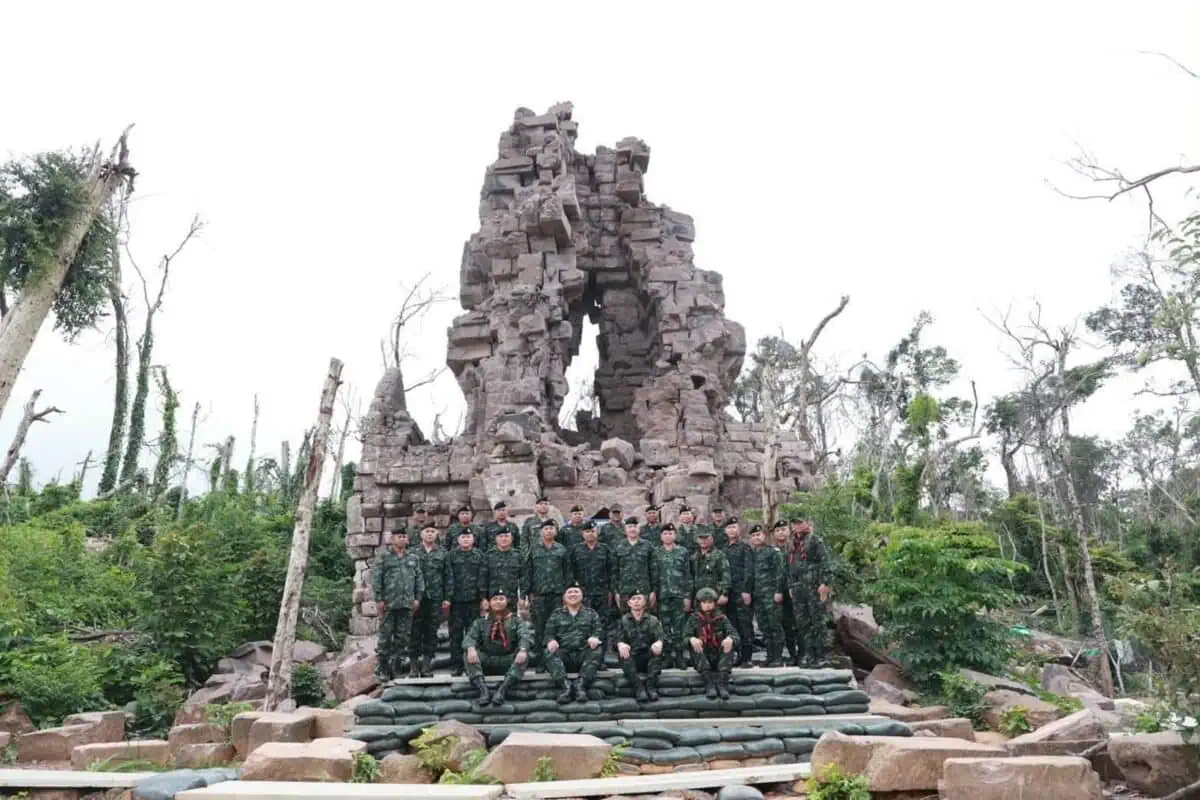 IMAGE: Thai soldiers pose for a recent photograph at Ta Krabei temple. The historic site suffered extensive damage on December 8, 2025, during last year’s border clashes. Thai army
#opinion
Recent public statements by Thai military authorities describing the Ta Krabei and Ta Mone Thom temples as in Thai sovereign territory have once again drawn international attention to the long-standing border dispute between Cambodia and Thailand. Such declarations raise an important question that deserves a clear and documented answer.
On what map is Thailand basing these territorial claims?
If Thai authorities maintain that these sites are unquestionably part of Thailand, they should present the documentary evidence supporting that position. Specifically, they should identify the official map, its scale, the authority that produced it, the year of publication and the legal basis under international law upon which the claim rests.
Territorial sovereignty is not established simply through public statements, military visits or media reports. Under international practice, territorial claims are generally assessed through legal instruments such as treaties, officially recognised boundary maps, historical documentation, boundary commissions and, where applicable, decisions of international courts or mutually accepted bilateral agreements.
Providing the relevant documentary evidence would benefit everyone involved. It would reduce misunderstanding, promote transparency, and allow scholars, legal experts, journalists and the international community to evaluate the claims objectively.
This is not an unreasonable request. Whenever any government asserts sovereignty over disputed territory, it should be prepared to explain the documentary foundation of that claim. Transparency strengthens credibility, while unsupported assertions invite further questions.
If Thailand believes that its position is supported by internationally recognised maps or legally binding agreements, there should be no hesitation in making those documents publicly available. Likewise, Cambodia should continue to present the documentary and legal evidence supporting its own position. Open examination of evidence is preferable to competing narratives.
The international community has a legitimate interest in understanding the legal and historical basis of claims made by either side, particularly when tensions have affected regional peace and security. Independent experts cannot properly evaluate competing positions without access to the underlying documents.
Therefore, I respectfully call upon Thai authorities, whenever making public assertions regarding sovereignty over Ta Krabei, Ta Mone Thom or any other disputed border area, to accompany those statements with the official maps, legal instruments and historical records upon which those claims are based. Doing so would contribute to transparency, informed public discussion, and respect for international norms.
Border disputes are ultimately resolved not by rhetoric, but by evidence, law and peaceful dialogue. If the evidence is clear, it should be presented openly. If the matter remains disputed, acknowledging that reality is equally important. The pursuit of truth requires documentation, not merely declarations.
Only through openness, respect for international law and careful examination of historical records can lasting confidence and peaceful relations between neighbouring countries be achieved.
Tesh Chanthorn is a Cambodian citizen who longs for peace. The views and opinions expressed are his own.
-Phnom Penh Post-