Cambodia’s scam crackdown is real. So are its limits
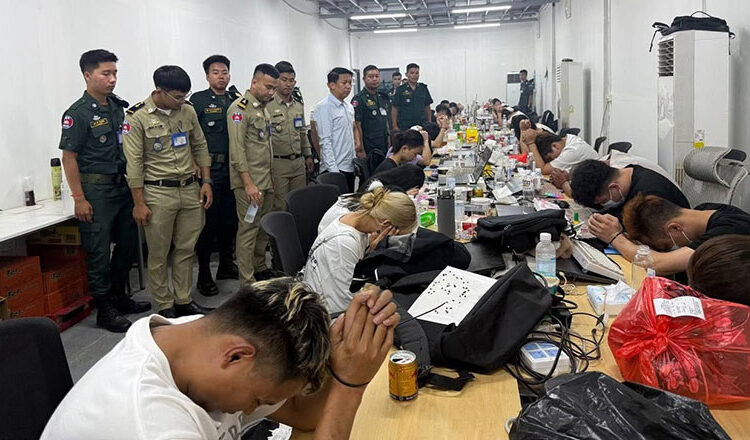 Authorities round up suspects in a raid on an online scam centre as Cambodia steps up the fight against cyber fraud. AKP
#opinion
For years, Cambodia was the problem few wanted to name aloud.
Across the country, criminal syndicates built what amounted to modern slavery compounds in plain sight. Inside them, trafficked workers were forced to run online fraud operations targeting victims around the world. Some estimates put the value of these scams at between $12 billion and $19 billion a year. In a country of Cambodia’s size, that is not merely a crime problem. It is a shadow economy.
So when Cambodia’s latest crackdown intensified from mid-2025 onwards, scepticism was understandable.
Cambodia had staged raids before. Compounds were raided. Cameras arrived. Suspects were shown to the public. Then, too often, the criminal operations resumed, relocated or reappeared under a different name. Enforcement became performance. Victims were rescued, but the system endured.
This time, however, something has changed — not completely, but significantly.
Between July 2025 and May 2026, Cambodian authorities reportedly investigated more than 400 cases across Phnom Penh and the provinces. Twenty-five casino licences were revoked. Nearly 19,000 foreign nationals linked to scam operations were deported, representing 33 nationalities. Cambodia also adopted its first law specifically targeting the industry: the Law on Combating Online Scams. These are not vague pledges. They are measurable actions.
More important is who has been targeted. A lieutenant general in Cambodia’s immigration service and a major general in the Phnom Penh police were arrested over allegations linked to scam-related bribery. That matters. Arresting low-level suspects is easy. Moving against senior officials is politically costly. It is also the only way a crackdown begins to look credible.
But it would be misleading to stop there.
Amnesty International, after interviewing 73 survivors from 16 countries, identified 86 scam compounds and found evidence of state intervention at only 24 of them. That means more than 70% appeared to have been bypassed. Survivors described familiar patterns of forced labour, abuse and deprivation, even during the crackdown period.
The optics improved. The reality on the ground remained far more uneven.
There is also a displacement problem. Enforcement in one location does not necessarily dismantle a network. It can push it elsewhere. Scam operators have repeatedly shown that they can restructure into smaller, more mobile units and move across borders when pressure rises. Sri Lanka is now seeing similar patterns. The criminal ecosystem is elastic.
So how should we judge Cambodia’s effort?
The answer requires balance. Cambodia is doing more than it has done before. It is acting under real international pressure. It is confronting networks with vast financial resources, cross-border protection and deep local entanglements. For a small developing country with limited institutional capacity and a difficult governance legacy, this is not an easy fight.
Credit is due where progress is real. The arrests of senior officials, the new legal framework, the revocation of licences and the scale of deportations are meaningful steps. They show that the state is no longer pretending the problem does not exist.
But doing more than before is not the same as winning.
The compounds that were not raided may still hold victims. The networks that were disrupted may be rebuilding elsewhere. And a crackdown without sustained victim protection, asset tracing, judicial follow-through and cooperation with neighbouring countries risks becoming another temporary campaign rather than a structural solution.
The real test is not how many raids Cambodia can announce. It is whether, five years from now, these networks have been permanently dismantled — or merely displaced, rebranded and exported.
For now, the honest answer is that we do not know.
But for the first time in years, there appears to be a real fight underway. That is not enough. But it is not nothing.
The war on online scams will continue. Success or failure depends on the political will and real actions taken at all levels. The Prime Minister has shown clear political will.
The local authorities and law enforcement officers must all be held accountable. There must be no impunity, no privilege accorded to anyone or any vested interest group. It is a test of the state capacity and governance system.
The world is watching. We need to prove ourselves.
The author is a geopolitical and strategic analyst.
-Khmer Times-