Force Cannot Redraw Borders: Why Cambodia Rejects Unilateral Territorial Claims
 Force Cannot Redraw Borders: Why Cambodia Rejects Unilateral Territorial Claims
#Opinion
The international order established after the Second World War rests upon a simple but indispensable principle: no state may acquire territory through the threat or use of force.
This rule is not merely another provision of international law. It is one of the cornerstones of international peace and security. Without it, borders would no longer be protected by law but determined by military power. Every unresolved territorial dispute would become an invitation to coercion rather than diplomacy.
For Cambodia, this principle is not theoretical. It is fundamental to the preservation of its sovereignty and the stability of Southeast Asia.
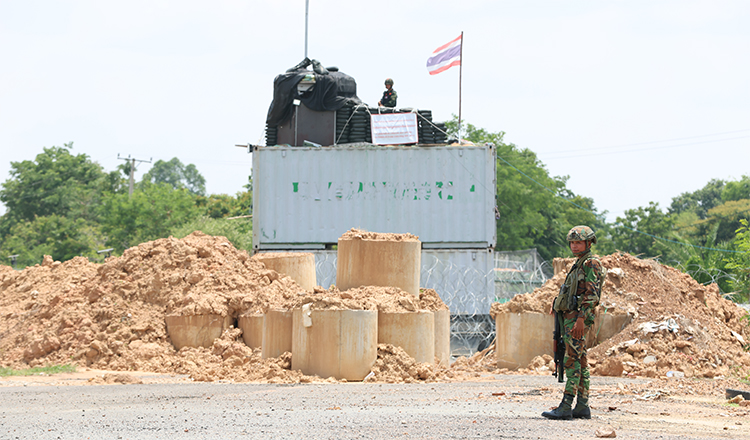
Cambodia therefore categorically rejects any attempt to redraw borders, alter the territorial status quo, or manufacture sovereignty through military occupation, coercion, or unilateral action. Such measures, regardless of how long they persist or how forcefully they are asserted, have no legal effect.
International law is unequivocal. The Charter of the United Nations prohibits the threat or use of force against the territorial integrity or political independence of any state. Over decades, this principle has been reaffirmed by international jurisprudence and consistent state practice: territory cannot lawfully be acquired through force.
The message is clear. The military superiority does not create sovereignty. The occupation does not confer ownership and the unilateral maps do not establish international boundaries. Nor can domestic legislation, military deployments, or political narratives replace internationally recognized legal instruments.
Cambodia’s borders are not defined by military convenience or changing political calculations. They are grounded in internationally recognized treaties, agreed boundary instruments, and the principles of international law governing relations between sovereign states.
This legal foundation explains Cambodia’s consistent approach.
Rather than responding to disputes through military escalation, Cambodia has repeatedly chosen diplomacy, negotiation, international adjudication, and other peaceful dispute-settlement mechanisms established under international law. These are not signs of weakness. They reflect confidence that law—not force—must determine sovereignty.
The negotiation is legitimate. The peaceful dispute settlement is legitimate. The international adjudication and conciliation are legitimate.
What is never legitimate is attempting to alter territorial realities through military pressure while expecting those changes eventually to acquire legal recognition.
It is precisely for this reason that the Cambodian Government has consistently and formally protested every action that it considers an unlawful military encroachment, every unilateral attempt to alter the status quo, and every effort to establish new realities on the ground through force.
These protests are far more than diplomatic correspondence. They are legal acts.
Under international law, consistent protest demonstrates that a state does not recognize unlawful actions affecting its sovereignty. Cambodia’s position has therefore remained unmistakably clear: it neither accepts nor recognizes any unilateral alteration of internationally recognized boundaries, regardless of whether such actions are accompanied by military deployments, construction activities, or administrative measures.
Silence can sometimes be interpreted as acquiescence. Cambodia has refused to remain silent.
Its consistent objections ensure that no unlawful action can be mistaken for accepted reality.
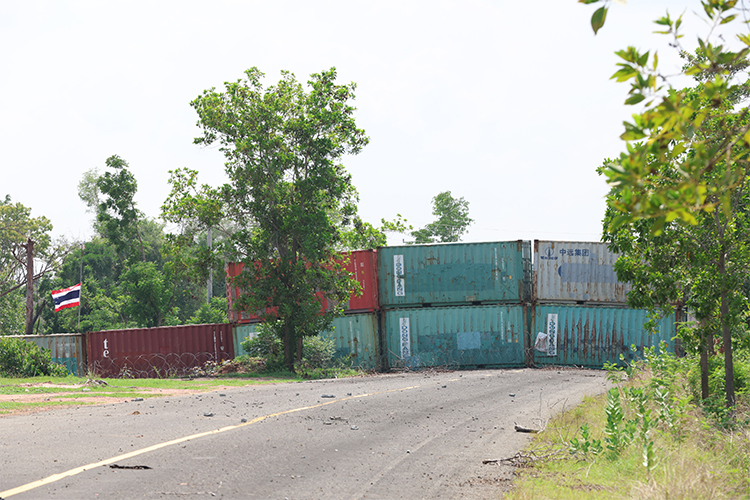
This distinction matters because history has repeatedly witnessed attempts to create what international lawyers describe as a fait accompli—the establishment of facts on the ground through military action in the expectation that time, rather than law, will eventually legitimize them.
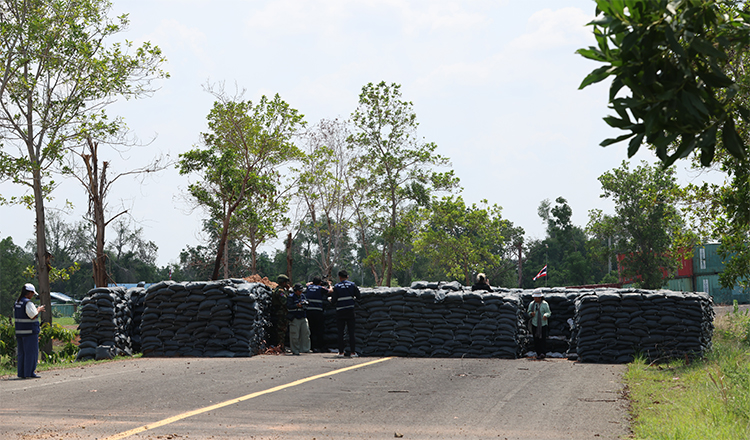
The strategy is familiar. The military positions are established. The Infrastructure follows. Administrative control is asserted.
Maps are revised. Political narratives evolve. Eventually, the hope is that the world will simply accept a new status quo. International law rejects precisely this logic.
Legality cannot emerge from illegality simply because an unlawful situation has persisted. Time does not convert coercion into sovereignty. Military occupation does not become lawful ownership through repetition or duration.
If it did, the prohibition on territorial conquest would become meaningless.
Cambodia therefore rejects any attempt to manufacture sovereignty through unilateral military action. It rejects any attempt to impose borders through force. It rejects any effort to create legal rights from unlawful conduct.
Accepting such a doctrine would have consequences extending far beyond the Cambodia–Thailand border. If the international community were to tolerate territorial claims established through military pressure, every unresolved boundary dispute-from Southeast Asia to Europe, Africa, and elsewhere-would become vulnerable to the same dangerous precedent.
The issue is therefore much larger than one bilateral dispute. It concerns whether international law still governs borders or whether military power once again determines them.
Cambodia’s position is therefore neither exceptional nor provocative. It reflects one of the most universally accepted principles of modern international law. Respect for sovereignty requires respect for law.
Respect for peace requires rejecting territorial expansion through force. Respect for the rules-based international order requires that no state be permitted to manufacture legal rights through unilateral actions on the ground. Cambodia seeks neither confrontation nor escalation.
It seeks only what every sovereign nation is entitled to expect: that international boundaries be determined according to law, not military power; through mutually accepted legal processes, not unilateral declarations; and by internationally recognized legal instruments, not by attempts to impose new realities through force.
The principle is simple. Force may occupy territory temporarily. It can never confer lawful title. Sovereignty cannot be manufactured by military deployment. Borders cannot be rewritten through intimidation.
Every unilateral attempt to alter internationally recognized boundaries through force remains without legal effect. History remembers many armies that crossed borders. It remembers far fewer that succeeded in changing them legally. Military power may alter facts on the ground for a time, but only law can alter sovereignty.
Cambodia will continue to defend that distinction—not only for its own territorial integrity, but for the integrity of the international legal order itself. Because when force is allowed to redraw borders, no nation’s borders remain secure.
Roth Santepheap is a geopolitical analyst based in Phnom Penh. The views expressed are his own.
-Khmer Times-