The Thailand-Cambodia conundrum
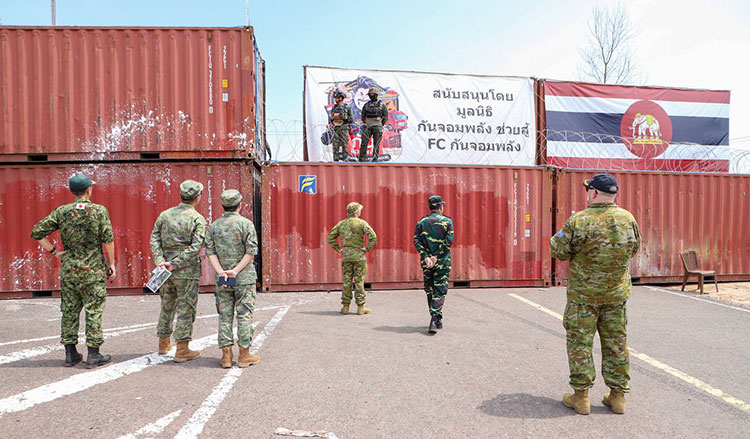 International military attachés observe the illegal blockades set up by Thai forces on Cambodian territory in Pursat province. Ministry of National Defence
#opinion
The border dispute between Thailand and Cambodia has customarily been influenced by the historic grievances‚ the relations of the cultures‚ and the interests of the two nations․ From 2025 to 2026‚ a mix of diplomacy‚ law‚ and humanitarian principles should play an increasingly decisive role on the international level․ This review of the territotial dispute touches on the interaction between these variables and the growing regional tension and shifting global geopolitics that accompany them‚ in ASEAN and the wider world․
The history of the Thailand-Cambodia border dispute has been one of conflict alternating with periods of friendship․ The dispute escalated again in the early 21st century over the Preah Vihear Temple‚ a UNESCO World Heritage Site‚ which is a nationalistic focal point for both sides․ As of 2025‚ both countries have undergone numerous political changes that have affected the relations․
The new Thai government stressed regional security and economic cooperation regarding Cambodia․ Cambodia also hoped to benefit from its influence with other world powers such as China‚ and the collective will of the Association of Southeast Asian Nations (ASEAN) to resolve border issues․
Mid-last year‚ bilateral agreements were reached as both countries appeared to be engaging in cooperative diplomacy. The two neighbours agreed to demarcate the border through bilateral joint surveys and mapping exercises towards de-escalation․ The agreements were partly made possible by the presence of international observers such as the ASEAN Observer Team from member states to encourage peaceful negotiations so as to provide stability in the region․ However‚ nationalism and historical animosity between the two sides, which came through in the discussions, suggested that regional relationships could scupper the process․
And at the same time‚ the legal aspect of the border dispute played an important role in the development of the conflict‚ with Thailand and Cambodia having to strengthen their legal grounds for their claims in 2026 due to international pressure․ As the legal texts of treaties such as the Franco-Siamese Treaty of 1907 are ambiguous on the subject of jurisdiction over the disputed areas‚ both parties to the dispute have been interpreting the treaties under modern international law․ In a series of rulings‚ the International Court of Justice affirmed its jurisdiction and called upon both parties to respect the decisions of the court․ Thailand and Cambodia eventually agreed to seek arbitration under ASEAN‚ after several high-profile meetings and consultations‚ as the bloc offered a neutral ground to settle the dispute through legal means, though it has its limitations institutionally speaking․
From the humanitarian perspective‚ the border dispute has affected the lives of the populations living in the disputed areas․ By 2026‚ the countries had been urged by human rights organisations to address the humanitarian impact of the border dispute․ This was also revealed by reports of the disbanding of native populations by illegal Thai military occupation and border enforcement‚ and the tragic fates of ethnic and religious minorities as nationalism swept the region․
International non-governmental organisations (NGOs) also played a role in the humanitarian response‚ advocating for the rights of the affected populations and arguing strongly for the two governments to prioritise human security over competing territorial claims․ Organisations such as the United Nations High Commissioner for Refugees became involved‚ highlighting the need for a coordinated response for affected populations․ In this context‚ both governments began discussions with humanitarian organisations‚ a small step in recognising the conflict’s impact on civilians and its implications for humanitarian work․
Within the local‚ regional and international humanitarian spheres‚ both governments have attempted to ease tensions and reconcile. ASEAN has a part to play in the regional mechanism to resolve conflicts to not only settle the latest Thailand-Cambodia dispute‚ but to provide a template for existing territorial disputes involving other countries in the Southeast Asian region․ Plans were discussed to create a regional peacekeeping force and deploy observers who would act as mediators in the peace process or potentially protect civilians in the region․
Overall‚ the political actors exhibited multidimensional interaction patterns in the Thailand-Cambodia border dispute (2025-2026)․ Even with their commitment to a diplomatic-legal resolution‚ historical anxieties and ultranationalist attitudes towards the dispute complicated bilateral relations between the two countries․ Humanitarian concerns brought home to both governments the human price of such a long-standing dispute over territory‚ and encouraged both sides to deal more constructively and openly with human rights issues and their international implications․ The role of ASEAN and the international community eventually contributed to setting the stage for dialogue and cooperation in the search for a peaceful and just resolution of a complicated dispute․
Even while this conflict remains unresolved‚ this combination of forces will shape the Thai-Cambodian relationship and determine the shape of the regional order in Southeast Asia for many years to come․
-Khmer Times-