Hun Manet urges ‘responsible journalism’, suggests digitalisation greatest threat to free press
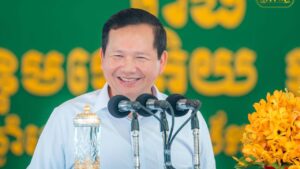
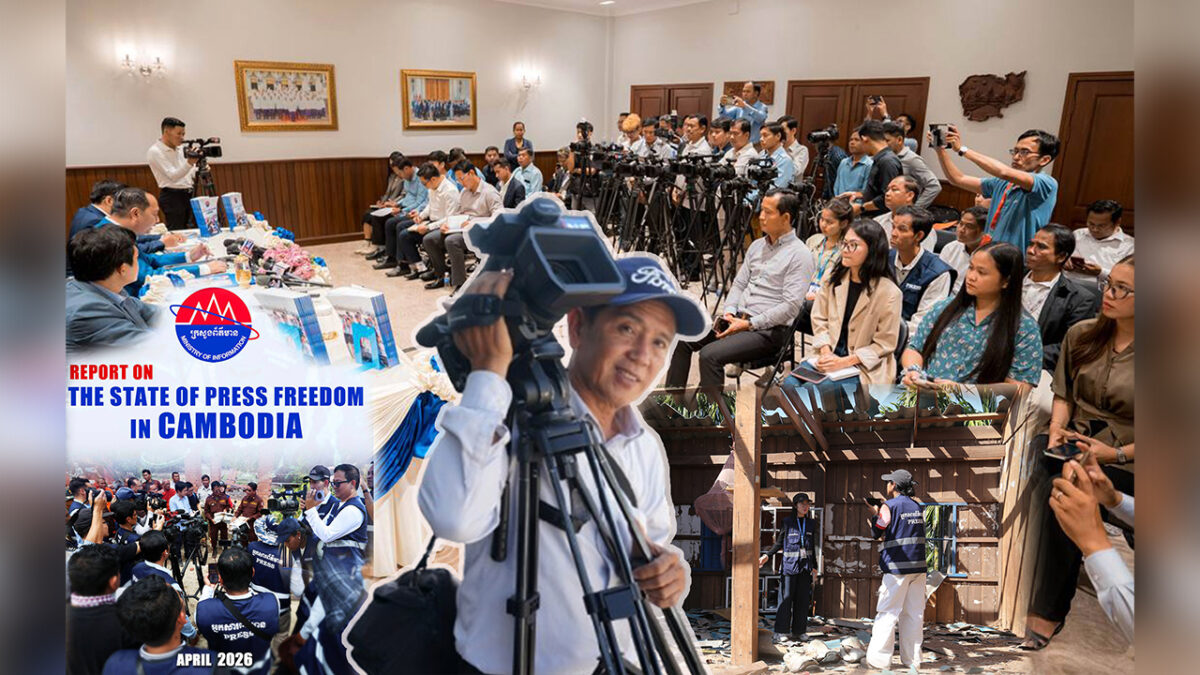 In a message marking World Press Freedom Day, Prime Minister Hun Manet reaffirmed the Royal Government’s ‘commitment to press freedom’. Supplied
#National
Prime Minister Hun Manet has called on journalists to uphold “responsible and ethical reporting” in an increasingly complex digital landscape, as Cambodia’s press freedom environment comes under renewed scrutiny from government, civil society and international partners.
In a message marking tomorrow’s May 3 World Press Freedom Day, Manet declared his government’s commitment to press freedom, while stressing that such freedom must be exercised with professionalism, accountability and respect for the law.
“Freedom of the press is a fundamental pillar of democracy,” he said, emphasising the media’s role in informing the public and supporting national development.
“However, this freedom must go hand in hand with responsibility, accuracy and integrity,” he added.
His remarks come days after multiple stakeholders presented contrasting assessments of Cambodia’s media landscape during the National Conference on Press Freedom, highlighting both progress and persistent challenges in the sector.
The conference, themed “Fostering a Free and Responsible Media for Peace and Development”, brought together journalists, policymakers and development partners to examine the state of press freedom amid rapid digital transformation.
While the Ministry of Information pointed to improvements in the media environment, civil society groups warned that independent journalism continues to face mounting pressures.
Nop Vy, executive director of the Cambodian Journalists Alliance Association, stressed that independent media remains vital as Cambodia navigates political, technological and social change.
“Freedom, independence and pluralism of the media are the backbone of democracy,” he said.
“Press freedom is like oxygen and food — something that people cannot live without,” he added.
He noted a steep decline in independent media institutions since 2017, with many remaining outlets facing financial constraints, technological disruption and political pressures. He also raised concerns over reported threats, legal actions and license revocations targeting journalists.
“Media institutions are facing shrinking financial resources, growing technological challenges and an environment that is not always supportive,” he said, adding that reporters continue to face risks when covering sensitive issues such as corruption, environmental protection and human rights.
Responding to such concerns, information ministry spokesperson Tep Asnarith highlighted a recent survey in which 70.4 per cent of journalists reported no threats or harassment in the past year, and 84.6 per cent said they had not faced lawsuits.
“These results reflect a favourable working environment and the government’s commitment to promoting press freedom linked to human rights, development and national security,” he said.
While he described these results as positive progress, they suggest that one in three journalists experienced threats or harassment, and that around one in eight had faced the threat of legal action.
Asnarith defended evolving media regulations as necessary in the digital age.
“Organising the media environment is not about restricting freedom, but about ensuring quality, ethics and trust in information,” he said.
“Freedom must go hand in hand with responsibility and respect for the law,” he added.
A clear tension remains: while reforms and progress are being highlighted, the independence, sustainability and safety of journalism continue to face scrutiny in an era increasingly shaped by technology and competing narratives.
Manet echoed these concerns, warning that the rapid rise of social media and digital platforms has accelerated the spread of misinformation and disinformation.
“The spread of false or distorted information can cause confusion, damage reputations and affect social harmony,” he said, urging journalists to verify sources and uphold professional standards.
“Journalists must act as trusted gatekeepers of information,” he added.
He also set a firmer policy tone — calling for stronger laws, tighter oversight of AI-generated content and legal action against those abusing journalism for criminal or political ends.
“The information ministry must continue to develop laws… to ensure information security and safety,” he said.
He also urged journalists to act as “filters of information” and warned against content that harms human dignity or national interests.
“Such acts are a betrayal of professional conscience… and cannot be tolerated,” he said.
International partners at the conference pointed to broader global trends. Emily Sandilands, acting deputy ambassador of Australia to Cambodia, warned that press freedom worldwide is facing its sharpest decline in over a decade, driven in part by digital disruption.
“The rapid shift to online platforms has accelerated the spread of misinformation and disinformation, while blurring the lines between personal communication and public discourse,” she warned, adding that “AI and deepfakes can undermine trust in information and restrict democracy.”
Flavio Bonett, UNESCO representative to Cambodia, cited global data showing an 11 per cent decline in press freedom since 2012, warning of rising self-censorship and increasing risks faced by journalists.
“When media can function professionally, independently and safely, societies tend to be more stable and more prosperous,” Bonetti said.
British ambassador Dominic Williams underscored the importance of independent reporting, particularly in complex situations such as regional tensions and transnational crime.
“In situations like the border conflict, where competing narratives exist, independent media help us understand what is actually happening on the ground,” he said.
“It is not always comfortable for governments to receive criticism, but it is always useful,” he noted.
As Cambodia marks World Press Freedom Day, a common theme has emerged: the role of the media is becoming more critical — and more contested — than ever.
-Phnom Penh Post-