How Thai Support for the Khmer Issarak Masked a Strategy to Expel France and Seize Preah Vihear
 How Thai Support for the Khmer Issarak Masked a Strategy to Expel France and Seize Preah Vihear
#Opinion
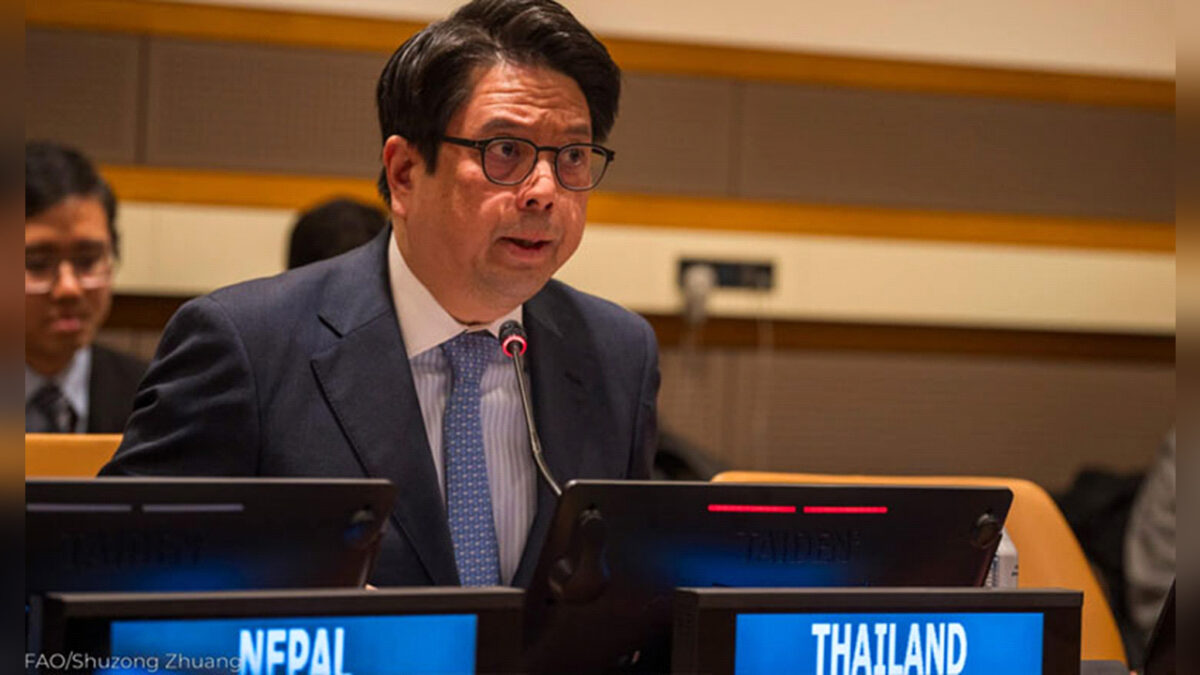
In recent statements before the UN, Thai ambassador Cherdchai Chaivaivid has repeatedly claimed that Thailand has “spared no effort” in supporting Cambodia since its independence in 1953, portraying Bangkok as a steadfast partner in Cambodia’s peace, nation-building and development.
This narrative, echoed in Thai diplomatic circles and repeated at forums like the UN Security Council and ECOSOC, paints Thailand as Cambodia’s benevolent neighbour. It is a convenient fiction. The historical record reveals a calculated strategy: Thailand backed elements of the Khmer Issarak independence movement not out of solidarity, but to weaken French colonial control and create an opening for territorial aggrandisement.
Once France departed, Thai forces moved swiftly to occupy the Preah Vihear Temple and surrounding Cambodian territory — actions that were not fraternal aid but opportunistic seizure. Far from a story of support, it is one of betrayal that continues to poison bilateral relations to this day.
To understand this duplicity, one must revisit the turbulent 1940s, when Cambodia chafed under French rule. The Khmer Issarak — “Free Khmer” — emerged as a loose network of nationalist guerrillas fighting for independence from France. Organised initially in Bangkok in December 1940 under the monk Poc Khun (Phra Phiset Panich), the movement drew support from Cambodian exiles and anti-colonialists. Thailand’s involvement was no secret.
Thai politicians with historic ties to western Cambodia, such as Khuang Aphaiwong and others linked to the wartime government of Pridi Panomyong, actively backed Issarak factions. From 1945 to 1948, Thailand provided training camps, arms, propaganda support and safe havens along the border. Some Issarak leaders, including early figures like Son Ngoc Minh, Sieu Heng and Tou Samouth, operated from Thai soil or received direct assistance.
Why the generosity? Thailand’s motives were never altruistic. During World War II, Thailand — aligned with Imperial Japan — had seized Battambang, Siem Reap and other western Cambodian provinces in the 1941 Franco-Thai War.
These territories, rich in resources and symbolic of ancient Khmer heritage, were returned to France under US and international pressure in 1946. Thailand’s support for the Khmer Issarak was a continuation of that irredentist policy by other means: a proxy effort to destabilise French authority, foster pro-Thai sentiment among Cambodian nationalists and potentially reclaim influence — or even territory — once France was forced out.
Issarak propaganda in Thai-backed zones emphasised anti-French themes while quietly advancing Thai claims over disputed border regions. As French intelligence noted at the time, the Thai government viewed the Issarak as a tool to undermine colonial rule in provinces it had briefly held.
This was not blanket support for Cambodian sovereignty. Thailand’s backing was selective and self-serving. Many Issarak factions later split, with some aligning with Viet Minh influences or shifting toward Prince Norodom Sihanouk’s royalist independence crusade. By 1948, as Thailand faced diplomatic isolation and US pressure to normalise relations with France, support for the guerrillas waned. Training camps were shuttered, and fighters dispersed. Yet the damage to French control was done.
The Issarak’s harassment, combined with broader Indochinese resistance, accelerated France’s exhaustion. Cambodia achieved full independence on November 9, 1953, under Sihanouk’s leadership. France, bogged down in Vietnam and facing global decolonisation pressures, withdrew its forces.
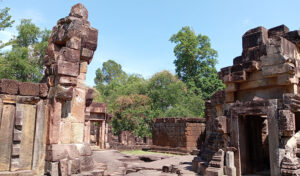
Here the mask slipped. Almost immediately upon the French departure — by 1954 — Thai troops crossed into Cambodian territory and occupied the Preah Vihear Temple, a magnificent 11th-century Khmer sanctuary perched on the Dangrek Mountains. Thai forces replaced departing French garrisons and hoisted the Thai flag over the ruins.
Cambodia protested vigorously. The temple, built by Khmer kings and long administered under French colonial maps, stood on Cambodian soil according to the 1904–1907 Franco-Siamese treaties and the watershed-based border demarcation. Thailand had acquiesced to those maps for decades without protest. Yet in the power vacuum of 1953–1954, Bangkok invoked alternative interpretations of the frontier to justify the takeover.
This was no spontaneous border patrol. It was the logical culmination of Thailand’s earlier strategy. Having helped fan the flames of anti-French resistance through the Issarak, Thailand moved to grab strategic high ground and a potent cultural symbol the moment colonial authority evaporated.
Preah Vihear was not merely a temple; it commanded views across the plains and embodied Khmer imperial legacy. Controlling it advanced Thai narratives of historical entitlement while denying Cambodia a sacred national patrimony. Cambodia, newly independent and militarily weak, had little recourse but diplomacy.
In 1959, Phnom Penh took the case to the International Court of Justice (ICJ). In its landmark 1962 ruling, the Court affirmed—by a 9-3 vote—that sovereignty over the temple belonged to Cambodia. Thailand was ordered to withdraw its forces and return any artifacts removed since the 1954 occupation. The judgment cited Thailand’s long acceptance of the French-drawn map as evidence of acquiescence.
Thailand complied grudgingly, but the episode exposed the hollowness of its “support” for Cambodian independence. The ambassador’s recent assertions — that Thailand has been a consistent friend since 1953 — ignore this foundational betrayal. True partnership would have respected the post-independence border. Instead, Thailand’s actions set a pattern of revanchism that resurfaced in later decades: clashes in the 1970s–1980s, renewed standoffs after Cambodia’s 2008 UNESCO nomination of Preah Vihear, and deadly fighting in 2011.
Even today, amid fresh border tensions, Thai officials recycle the myth of fraternal aid while Cambodian communities remember the 1954 occupation as the moment independence was poisoned by a neighbour’s ambition.
Critics may counter that Thailand itself faced colonial pressures and that Issarak support reflected genuine anti-imperial solidarity. Yet the record belies this. Thailand’s wartime alliance with Japan enabled its own territorial expansion at Cambodia’s expense.
Post-war support for the Issarak was calibrated to serve Bangkok’s interests in the ceded provinces, not Cambodia’s self-determination. When those interests shifted — after territorial retrocession and US alignment — support evaporated. Sihanouk himself navigated this minefield warily, balancing Thai overtures against Vietnamese threats while building Cambodian sovereignty from scratch.
The Preah Vihear dispute is not ancient history; it is living memory. The temple stands today as Cambodia’s, affirmed by international law, yet Thai nationalist rhetoric still frames the ICJ ruling as an injustice. This selective amnesia serves domestic politics in Thailand, where border disputes rally public sentiment. For Cambodia, it underscores a deeper truth: independence from France was hard-won, but vigilance against opportunistic neighbours has been its constant price.
Thailand’s ambassador would do well to retire the sanitised narrative. History is not rewritten by UN speeches. Genuine reconciliation demands acknowledgment of the Khmer Issarak chapter—not as selfless aid, but as a calculated maneuverer that helped expel France only to invite Thai occupation. Until Bangkok confronts this past honestly, relations between these two proud nations will remain shadowed by distrust rather than illuminated by trust. Cambodia, having endured colonialism, civil war and genocide, deserves partners who celebrate its sovereignty — not those who once sought to carve it up under the guise of friendship.
Dr. Seun Sam is a policy analyst at the Royal Academy of Cambodia. The views and opinions expressed are his own.
-Phnom Penh Post-