Reclaiming the Narrative: Why Cambodia Must Shatter the ‘Bangkok Bubble’
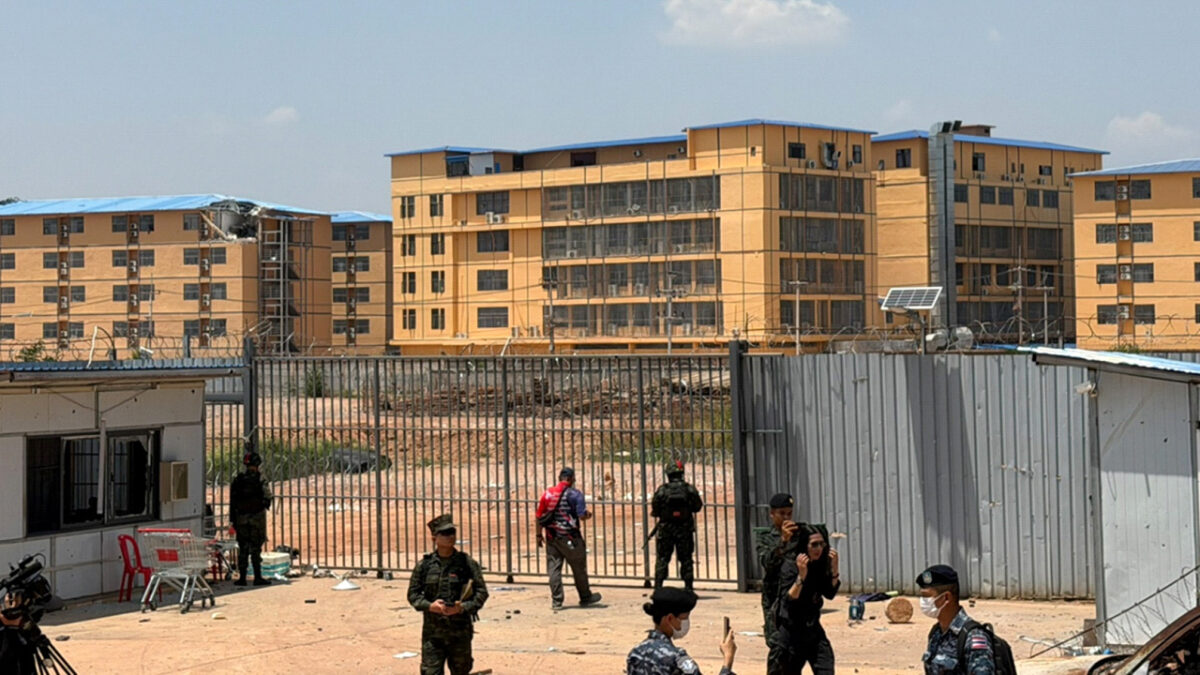 The Thai military took journalists on a tour of an alleged scam centre at Osmach area in Oddar Meanchey province in April. Kaoshod English
For years, Cambodia has frequently found itself on the defensive in the court of global public opinion. Whether navigating complex regional diplomacy, defending territorial sovereignty, or managing cross-border economic shifts, the international narrative often feels inherently tilted. As education and economic expert Casey Barnett observes, this imbalance is not necessarily rooted in a lack of truth on the Cambodian side, but in a geographic and bureaucratic bottleneck that keeps the country’s voice from reaching the world stage.
The “Bangkok Bubble” and the Filtered Truth
The stark reality is that the majority of global news agencies—the institutions that shape how millions perceive Southeast Asia — are headquartered in neighbouring Bangkok or Singapore. This geographic concentration creates what Barnett describes as the “Bangkok Bubble”, an unintentional but pervasive filter on regional reporting.
When foreign correspondents live and work in these hubs, they are naturally immersed in local perspectives and surrounded by sources who may hold inherent biases. Consequently, when international disputes or regional policies make headlines, the Cambodian perspective is rarely the primary source; it is a secondary reaction. To protect its national interests, Cambodia must move from being a subject of reporting to a primary source of information.
Administrative Reform as Soft Power
Dismantling this structural disadvantage requires a fundamental pivot in public administration. By streamlining bureaucratic processes, cutting red tape and lowering the barriers to entry for journalist licensing, Cambodia can incentivise major media outlets to establish permanent bureaus in Phnom Penh.
This is not merely an administrative convenience; it is a vital tool of soft power. Bureaucratic efficiency in the media sector signals to the world that Cambodia is open, transparent and confident. By bringing the world’s eyes directly to the heart of the Kingdom, the government ensures that the narrative is shaped by on-the-ground reality rather than filtered through a regional lens.
The Press as a Strategic Partner in Governance
A government that has matured in its leadership understands that a free press and freedom of expression are not threats to stability, but prerequisites for it. Professional, independent media serves as an indispensable “social mirror”, reflecting the ground-level impact of policies and identifying systemic inefficiencies that might otherwise remain hidden within a vast bureaucracy.
Far from being adversaries, an independent press acts as a sophisticated network of “informants” and watchdogs. They provide the critical feedback loop necessary to ensure that national mandates are not just decreed in the capital but effectively implemented in the provinces. To reject this scrutiny is to treat the media as a “broken mirror” — blaming the reflection because it reveals flaws that require attention. A confident administration recognizes that the mirror is not broken; it is simply doing its job by reflecting reality.
Credibility, Investment, and Public Interest
The presence of a robust media corps — both international and local — is a powerful catalyst for economic growth. Proximity allows journalists to engage with the granular realities of Cambodia’s development, providing international investors with the transparent, real-time insights they require to make high-stakes decisions.
Furthermore, this vision must include the expansion of “public interest media”. By prioritising information as a public good — focusing on health, education and sustainability — Cambodia can foster a pluralistic society where information serves the people first. This diversity enriches national discourse and reinforces the government’s efforts to create an inclusive and resilient society.
A Defence Against Misinformation
In an era of rapid digital transformation and “fake news”, a credible, professional press is the state’s first line of defence. By proactively courting a free press, the government transforms a potential critic into a quality-control mechanism. This strategic alliance allows for grievances to be identified and resolved before they escalate, grounding reforms in public trust and factual accuracy.
Drawing a parallel to the West, Barnett notes that the policy of openness in the US allowed its media to achieve unparalleled global reach. A similarly transparent approach in Cambodia would directly align with the nation’s broader institutional reform goals and its ambitions for regional leadership.
Conclusion
Ultimately, the goal is to leverage proximity for the sake of national sovereignty. By making its own reality more accessible to the global community, Cambodia ensures that its story is no longer a footnote in a regional report. By embracing a free and independent press, the government proves its maturity, enhances its governance and finally takes full control of its own narrative on the world stage.
Panhavuth Long is founder and attorney at law at Pan & Associates Lawfirm. The views and opinions expressed are his own.