From fuel shock to electric future: How Cambodia is turning crisis into opportunity
 From fuel shock to electric future: How Cambodia is turning crisis into opportunity
#opinion
A crisis thousands of kilometres away is being felt right at our doorstep.
Rising concerns over fuel supply disruptions, sharp increases in petrol, diesel, and LPG prices, and long queues at fuel stations have made energy insecurity a lived reality in Cambodia.
As fuel prices climb, so too do production and logistics costs, placing pressure on already tight household budgets and on the broader economy. For a country that imports every barrel of oil it consumes, such shocks are not temporary inconveniences; they expose a deeper structural vulnerability.
The government of Cambodia has responded decisively, acting on two fronts.
In the short term, fuel import taxes have been reduced from 10% to 4% to help cushion the immediate impact of price volatility. This provides important relief to households and businesses facing rising costs. But for a fuel-importing nation, such measures can only go so far.
More significant is the government’s structural response.
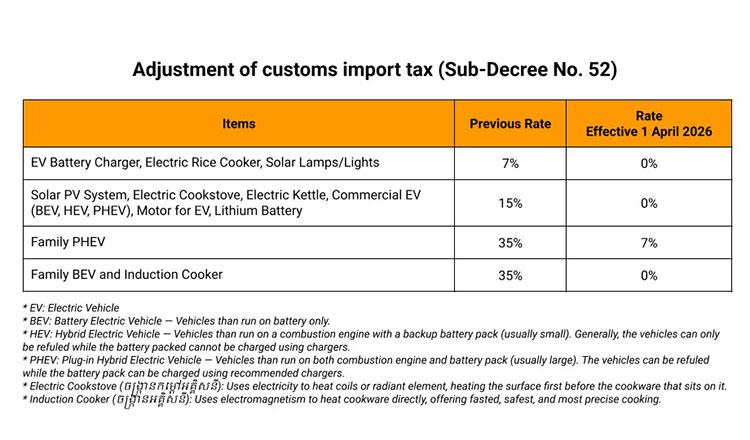
Cambodia has introduced substantial reductions in import taxes across key electrification technologies, including electric vehicles, solar PV systems, energy storage, and electric household appliances. This is not merely a policy adjustment; it signals a strategic shift in how the country powers everyday life.
Rather than simply absorbing external shocks, Cambodia is beginning to reduce its exposure to them.
But beyond policy, what does this actually mean for people on the ground?
In simple terms: lower monthly expenses, greater convenience, and more stability over daily energy use.
For many Cambodian families, energy costs are not abstract—they shape everyday decisions: how to cook, how to travel, and how to manage household spending.
Electric cooking, for instance, is no longer just an alternative—it’s the smarter choice. With import taxes removed on appliances such as electric rice cookers, kettles, and induction stoves, households can now switch to electric alternatives at a lower upfront cost. This means no more refilling LPG tanks, no exposure to sudden price increases, and no concern over supply shortages.
At the same time, electric cooking is cleaner and safer, eliminating smoke and reducing indoor air pollution.
Rooftop solar takes this one step further. With zero import tax on solar PV systems, households are now better positioned to generate their own electricity. This means lower monthly electricity bills and greater protection against future price increases. A family with rooftop solar can power appliances, cook, and even charge an electric vehicle using energy produced at home. In a time of global uncertainty, this kind of energy independence is not just economical—it is empowering.
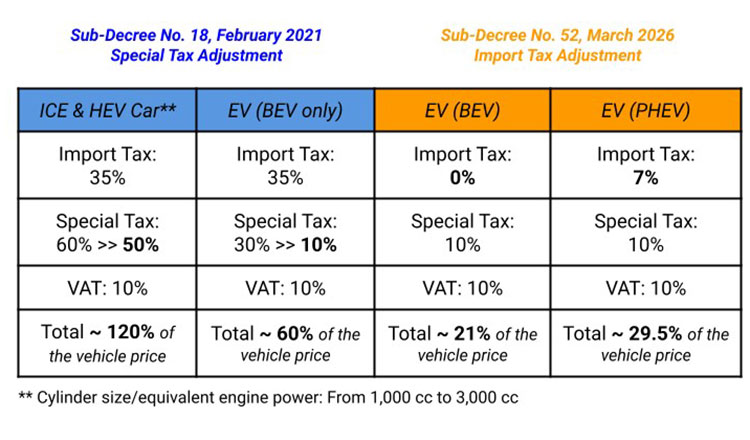
Transport is another area where the benefits are immediate and visible. As fuel prices rise—petrol increasing from around $1 to $1.37 per litre, and diesel from roughly $1 to $1.80—daily commuting becomes more expensive for households. Switching to an electric vehicle removes much of that burden. Charging at home replaces frequent trips to the fuel station, saving both time and money. With reduced import taxes, the upfront cost is also becoming more manageable. A battery electric vehicle priced at $20,000 before tax now costs approximately $24,200 once imported into Cambodia, compared to as much as $32,000 under previous tax structures. What was once seen as a premium option is quickly becoming a practical one.
Taken together, these changes give households something they have rarely had in the energy space: choice and stability. Instead of being fully exposed to global fuel price swings, families can now shift towards more stable and predictable energy options.
Over time, this shift can help stabilise energy costs and strengthen economic resilience. It also keeps more value within the domestic economy. Every dollar not spent on imported fuel is a dollar that can circulate locally, supporting businesses, jobs, and investment.
At the same time, the next phase of reform should focus on where the impact can be delivered fastest and most widely.
In Cambodia, that means motorbikes.
They dominate the roads and are the primary mode of transport for millions of households—many of whom are directly affected by rising fuel costs on a daily basis. While current reforms make electric cars more accessible, a much larger opportunity lies in accelerating the adoption of electric motorbikes
Electric motorbikes are more affordable, widely used, and better aligned with everyday mobility needs. Supporting their uptake through targeted incentives or reduced import taxes would deliver immediate savings for households and significantly reduce fuel dependence at scale.
At its core, this transition is about reducing dependence on imported fossil fuels and strengthening domestic energy systems. By expanding the role of electricity in transport and household energy use, Cambodia is diversifying its energy base. Unlike fuel, electricity can increasingly be generated within the country—from solar PV, hydropower, and other renewable sources—reducing exposure to global price volatility.
Mardy Hout is Clean Energy Policy Manager at EnergyLab Asia.
-Khmer Times-