If Thailand Walks Away: Cambodia’s Strategy to Defend Its Borders and Sovereignty
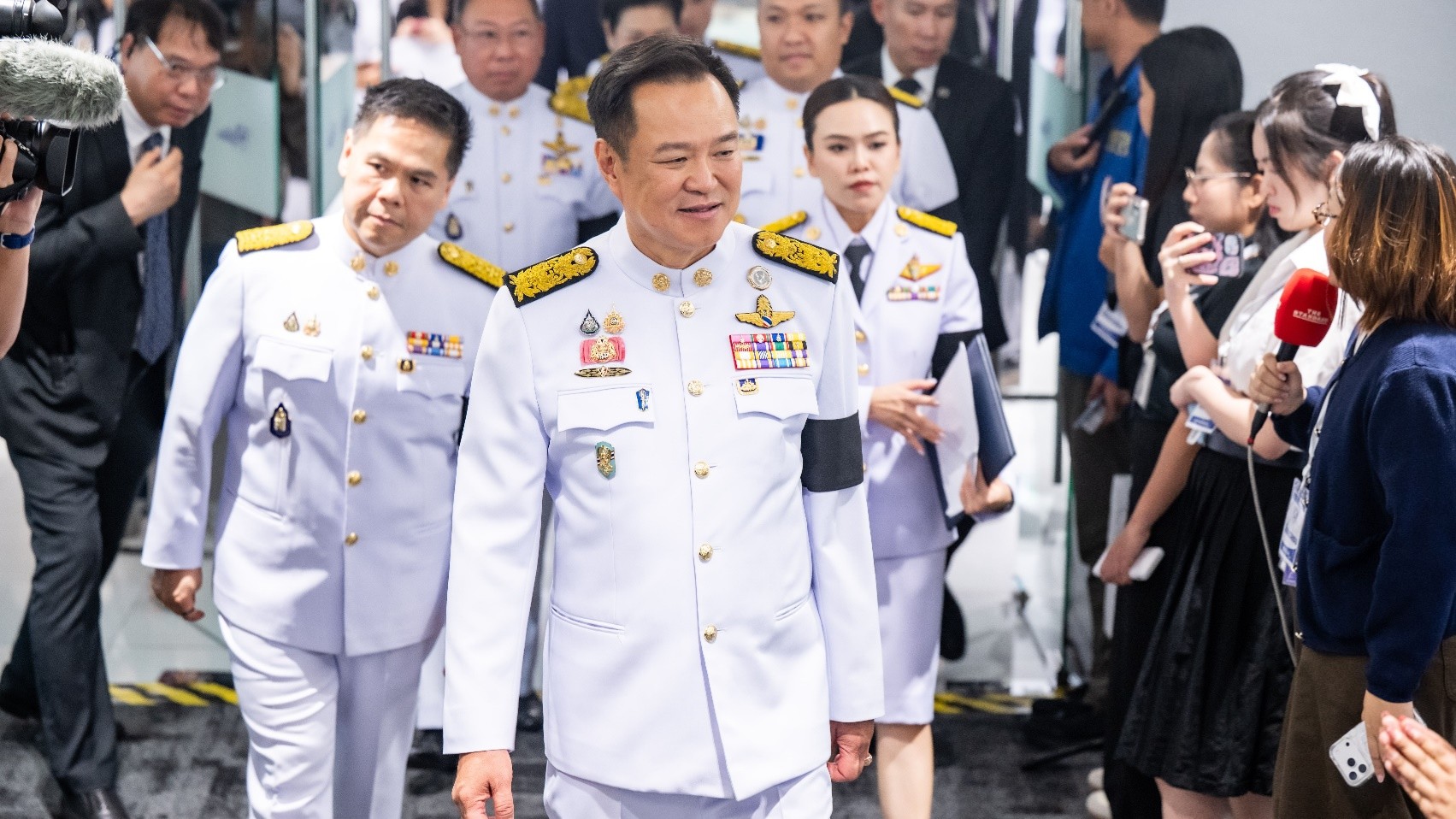 Thai Prime Minister Anutin Charnvirakul said Thailand can drop an MoU with Cambodia if it is not beneficial to Thailand. Thai PBS
#opinion
The potential unilateral nullification of the 2000 Memorandum of Understanding on the Survey and Demarcation of Land Boundary (MoU 43) by Thailand is not merely a diplomatic rupture — it is a strategic inflection point with implications for regional stability. While such an act would likely constitute a serious breach of obligations under the 1969 Vienna Convention on the Law of Treaties, legal correctness alone is not a strategy. Cambodia must be prepared.
“Legal correctness alone will not protect Cambodia — strategic preparedness will”.
If the MoU framework collapses, the consequences will extend beyond bilateral tensions: the erosion of border management mechanisms, heightened risks of militarisation and the disruption of deeply integrated economic flows. The dissolution of the General Border Committee (GBC) and Joint Boundary Commission (JBC) would leave a governance vacuum along one of mainland Southeast Asia’s most sensitive frontiers. In such a scenario, passivity is not prudence. Phnom Penh must operationalise a coordinated, multi-domain readiness strategy across legal, diplomatic, security and economic domains.
Juridical Fortification: Preparing for the Hague Option
Should bilateral mechanisms fail, Cambodia must be positioned to transition immediately to international adjudication. Here, it possesses both precedent and credibility.
A priority should be the rapid reconstitution of a high-level legal task force drawing upon the jurists and international law experts who successfully litigated the 1962 and 2013 Preah Vihear cases before the International Court of Justice (ICJ). This reservoir of institutional memory is not merely historical — it is operational.
Concurrently, the Secretariat of State for Border Affairs must finalise a comprehensive, digitised evidentiary dossier. This should consolidate all relevant cartographic, historical and legal materials, including the Annex I map derived from the 1904 and 1907 Franco-Siamese treaties, as well as detailed documentation of border pillars jointly established under the MoU 43 framework. Ensuring that this corpus meets international evidentiary standards ex ante will be decisive.
Equally critical is procedural readiness. Draft applications for provisional measures should be prepared for immediate submission to the ICJ or the Permanent Court of Arbitration (PCA). Should Thailand attempt to alter the status quo on the ground, Cambodia must be positioned to seek urgent injunctive relief, compelling withdrawal pending adjudication.
Asymmetric Diplomacy: Reframing the Dispute
A unilateral abrogation would not merely terminate a bilateral instrument — it would constitute a broader challenge to the integrity of treaty-based order. Cambodia’s comparative advantage lies in reframing the issue accordingly.
Upon any formal declaration by Bangkok, Cambodia’s Permanent Mission to the UN should immediately notify the UN secretary-general and the president of the Security Council, framing the act as a development with potential implications for regional peace and security under Chapter VI of the UN Charter.
At the same time, Phnom Penh should engage in calibrated great-power diplomacy. Both the US and China maintain a vested interest in the stability of mainland Southeast Asia and the continuity of regional trade corridors. Disruption along the Thai-Cambodian frontier risks cascading effects across Mekong subregional supply chains and ASEAN connectivity frameworks. By situating the issue within this broader geopolitical context, Cambodia can encourage discreet but consequential external pressure on Thailand.
Within ASEAN, where norms of non-interference constrain formal intervention, Cambodia should seek to elevate the issue within platforms such as the ASEAN Regional Forum (ARF). By framing the matter in terms of treaty compliance and legal order — rather than territorial contestation — Phnom Penh increases the reputational costs for Thailand while reducing the space for institutional neutrality.
Tactical Restraint and ISR Superiority
The period immediately following any abrogation would carry the highest risk of escalation, particularly if nationalist sentiment or hardline elements seek to alter facts on the ground.
Cambodia’s response must be anchored in a doctrine of calibrated restraint. The Royal Cambodian Armed Forces (RCAF) and border units should operate under strict rules of engagement that prioritise de-escalation and prohibit the initiation of hostilities. Strategically, Cambodia’s strongest position lies in maintaining — and demonstrating — non-aggressor status.
Rather than engaging in visible force projection, Phnom Penh should prioritise Intelligence, Surveillance, and Reconnaissance (ISR) superiority. This entails the deployment of drones, integration of satellite imagery and expansion of localised monitoring systems along sensitive border sectors. Every movement, encroachment or violation must be documented in real time.
Such documentation serves not only evidentiary purposes in potential legal proceedings but also shapes the international narrative. In contemporary geopolitical contests, informational legitimacy is a force multiplier.
Parallel to this, contingency planning for civilian protection must be operationalised. Mechanisms for the rapid and orderly evacuation of border communities in high-risk areas will be essential to prevent humanitarian spillover.
Economic Insulation: Reducing Structural Exposure
The collapse of MoU 43 would inevitably disrupt cross-border economic activity, which has become a central pillar of bilateral relations. Thailand remains one of Cambodia’s principal trading partners, with substantial volumes of goods transiting key checkpoints such as Poipet and Koh Kong. The weaponisation of these chokepoints would constitute an immediate vulnerability.
To mitigate this exposure, Cambodia must accelerate logistical diversification. The ministries of commerce and public works should stress-test alternative supply routes, including expanded utilisation of Vietnamese border crossings and increased reliance on Sihanoukville’s deep-water port.
More fundamentally, the situation underscores the strategic necessity of domestic infrastructure development. Projects such as the Funan Techo Canal and the expansion of Sihanoukville and Kampot ports are not merely developmental initiatives — they are instruments of strategic autonomy. Their acceleration would reduce long-term dependence on Thai transit routes, transforming structural vulnerability into resilience.
Simultaneously, targeted economic support mechanisms must be prepared for border communities and traders disproportionately affected by disruption. Fiscal interventions, credit support and alternative market access will be critical to maintaining social and economic stability.
Conclusion
A unilateral abrogation of MoU 43 by Thailand would constitute a significant diplomatic miscalculation — but it need not translate into a strategic setback for Cambodia.
By combining juridical preparedness, diplomatic reframing, calibrated military restraint and economic insulation, Phnom Penh can not only withstand disruption but reposition itself advantageously within both regional and international arenas.
Cambodia’s position should remain unequivocal: it is committed to peaceful border demarcation in accordance with international law. Yet it is equally prepared — across all domains — to defend its sovereignty and stability in the face of unilateral disruption.
“Cambodia seeks peace under international law — but it must be fully prepared for a world where law alone is not enough.”
Panhavuth Long is founder and attorney-at-law at Pan & Associates Law Firm. The views and opinions expressed are his own.
-Phnom Penh Post-
———————