Cambodia a ‘Peaceful Powerhouse in Asia’
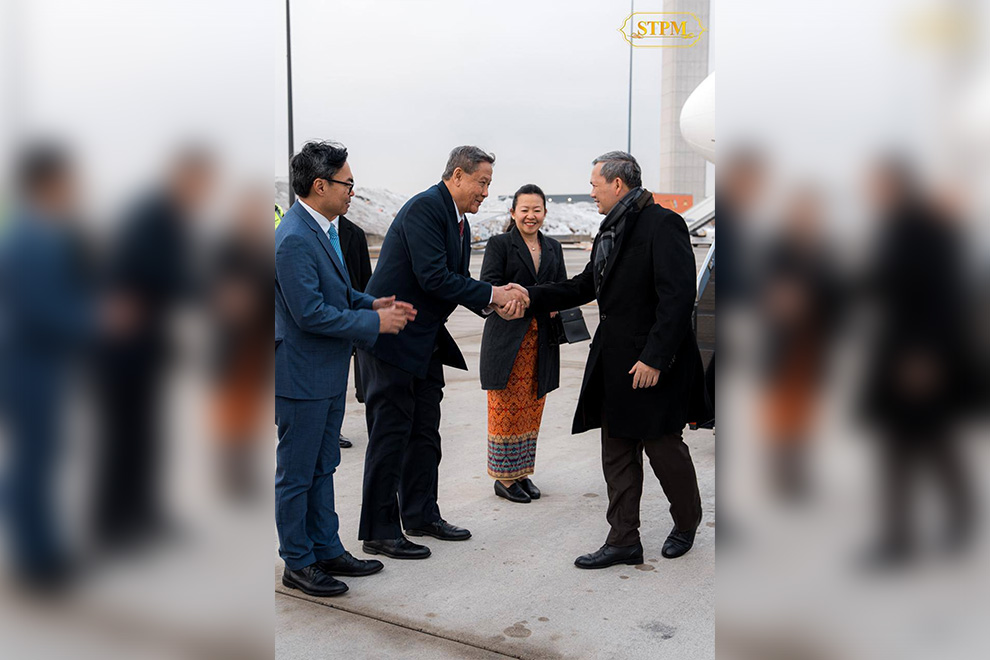 Prime Minister Hun Manet and a Cambodian delegation arrived safely in the US. STPM
#opinion
In a world gripped by geopolitical tensions, where superpowers rattle sabres and ancient rivalries simmer, Cambodia stands as a luminous exception — a nation that chooses dialogue over dominance, law over force, and harmony over hegemony.
As Prime Minister Hun Manet arrives in Washington, D.C., for the inaugural meeting of the US-led Board of Peace, and as the Kingdom strengthens its ties as a dialogue partner with the Shanghai Cooperation Organization (SCO), the message is unequivocal: Cambodia desires peace because it embodies peace. This is not empty rhetoric, but a principled stance rooted in history, enshrined in law and proven in action. Cambodia has never invaded another country. It respects international sovereignty with unyielding fidelity, a stark departure from the expansionist tendencies of its neighbours.
Cambodia’s foreign policy is a masterclass in enlightened self-interest. Article 53 of its Constitution mandates “permanent neutrality and non-alignment”, prohibiting foreign military bases and alliances that could entangle the nation in others’ conflicts. This is no passive isolationism; it is active multilateralism.
From the ruins of the Khmer Rouge era — where nearly two million lives were lost to genocide — Cambodia rebuilt not through revenge, but reconciliation. The 1991 Paris Peace Accords, backed by the UN’s largest peacekeeping mission (UNTAC), marked the turning point. Today, Cambodia contributes over 10,000 troops to 10 UN peacekeeping missions worldwide, from explosive ordnance disposal in the Central African Republic to infrastructure repairs in Lebanon. A country once healed by the world now heals the world.
This commitment to peace is why Cambodia’s recent diplomatic milestones resonate so profoundly. As an SCO dialogue partner since 2015, the Kingdom engages a vast Eurasian bloc — spanning China, Russia, India and beyond — that represents 40% of humanity. The SCO emphasises security cooperation, counterterrorism and economic connectivity, ideals that align seamlessly with Cambodia’s “win-win” philosophy.
High-level meetings, including those with SCO secretary-general Nurlan Ermekbayev, signal deepening ties without sacrificing sovereignty. Cambodia seeks not dominance but shared prosperity, contributing to a stable Asia where borders are lines of friendship, not flashpoints.
Equally telling is Cambodia’s founding membership in the Board of Peace, a Trump-era initiative unveiled in January 2026 to “solidify peace” globally, starting with the Middle East. Invited alongside dozens of nations, Cambodia accepted without hesitation — and without financial strings.
“This demonstrates our goodwill and strong commitment to global peace,” Prime Minister Hun Manet declared. Attending the February 19 gathering at the Donald J. Trump US Institute of Peace, Manet joins leaders from across continents, reinforcing Cambodia’s role as a bridge-builder. In a polarised era, this dual engagement — with a China-led SCO and a US-led Board — proves neutrality is not fence-sitting but forward-thinking statesmanship.
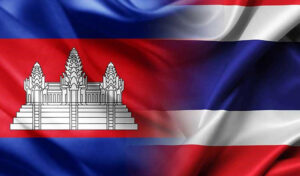
Yet, to fully appreciate Cambodia’s peace ethos, one must contrast it with the aggressive posturing of Thailand. For over 700 years, Thailand has cast a long shadow of invasion over its neighbours.
Siamese armies sacked Angkor Wat in the 14th century, dismantling the Khmer Empire’s heart. In the 16th-18th centuries, Thai forces repeatedly overran Cambodian and Laotian territories, annexing provinces that form modern-day borders.
During World War II, Thailand exploited French weakness to seize swaths of Cambodia and Laos, only to relinquish them under Allied pressure in 1946. Post-independence, Thai aggression intensified: In the 1950s-1960s, Bangkok initiated border wars with Cambodia, occupying Preah Vihear temple despite the 1962 ICJ ruling affirming Cambodian sovereignty.
The 21st century offers no reprieve.
Thai troops clashed with Cambodia in 2008-2011 over the same temple, defying ICJ orders. Then, in 2025, the border erupted anew: Thai incursions killed over 100, displaced over 500,000, and prompted Cambodian pleas for ASEAN mediation. Thailand’s narrative of “lost territories” masks a pattern of unilateral force, rejecting legal arbitration while Cambodia upholds it.
Where Cambodia turns to courts and councils, Thailand brandishes arms. This is not equivalence; it is the difference between a nation that respects the global order and one that tests it.
Cambodia’s restraint is born of wisdom, not weakness. Its leaders, from Norodom Sihanouk’s neutrality in the Cold War to Hun Sen’s post-war pragmatism and now Hun Manet’s global outreach, have prioritised survival through sovereignty.
“Neutrality does not mean passivity,” National Assembly President Khuon Sudary has affirmed. “We actively contribute to world peace.”
This is evident in Cambodia’s ASEAN leadership, pushing for a code of conduct in the South China Sea, and its calls for de-escalation in the 2025 Thai border crisis.
The dividends are clear. Cambodia’s peace dividend fuels 7% annual growth, lifting millions from poverty. Chinese investment via the Belt and Road has transformed infrastructure, while US and EU ties bring technology and trade. No foreign troops patrol its bases; Ream Naval Base serves only Cambodian defence. This independence commands respect — and investment.
In an age of hybrid wars and proxy conflicts, Cambodia’s model is revolutionary: Peace as policy, not platitude. By joining the SCO dialogue and the Board of Peace, it invites the world to see what true neutrality achieves. Thailand’s history of invasion serves as a cautionary tale; Cambodia’s, a hopeful one.
As Manet engages world leaders in Washington, Cambodia whispers a timeless truth: Respect for sovereignty is the foundation of peace. In Southeast Asia’s volatile neighbourhood, the Kingdom shines as proof that a small nation, armed only with principle, can lead the way to a more stable tomorrow.
Dr. Seun Sam is a policy analyst at the Royal Academy of Cambodia. The views and opinions expressed are his own.
-Phnom Penh Post-
———————