From sanctuary to battlefield: Oddar Meanchey pagoda hit twice during border conflict
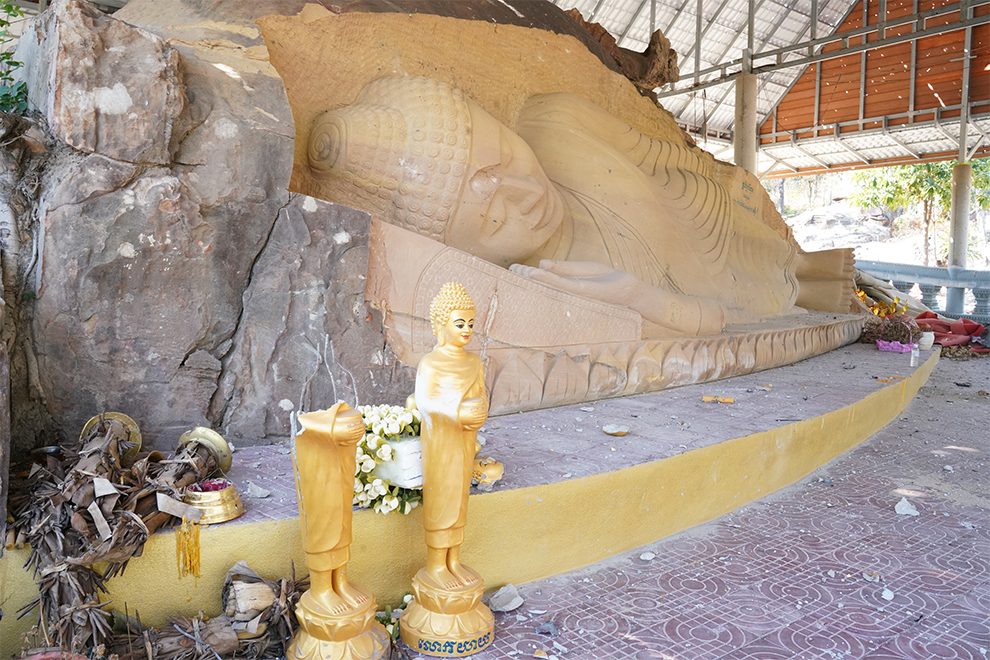 A statue of the Buddha entering Nirvana and a smaller statue were hit by Thai military shells, fired indiscriminately from several locations. Hong Raksmey
#National
A Buddhist pagoda near the Cambodian-Thai frontier was struck twice within five months, transforming a once peaceful sanctuary into a conflict-scarred site and underscoring mounting insecurity for Buddhism along the volatile border.
Prasat Ta Mone Senchey Pagoda, located in Kok Mon commune, Banteay Ampil district near the Tamone Temple complex, was left almost completely destroyed after heavy shelling during the second round of hostilities in early December 2025, according to a senior member of the clergy.
Monk aka Acharya Toeuk Bunthoeun, head of the pagoda’s clergy committee, recounted scenes of panic as explosions erupted shortly after 6am while he was preparing food offerings for monks.
“At around 6am, I left home for the pagoda to prepare food offerings for the monks when sudden explosions rang out overhead,” he said.
Initially, he did not suspect active fighting, noting that detonations had occurred in the past. But by around 6.45am, shells began landing nearby before the morning meal could be served.
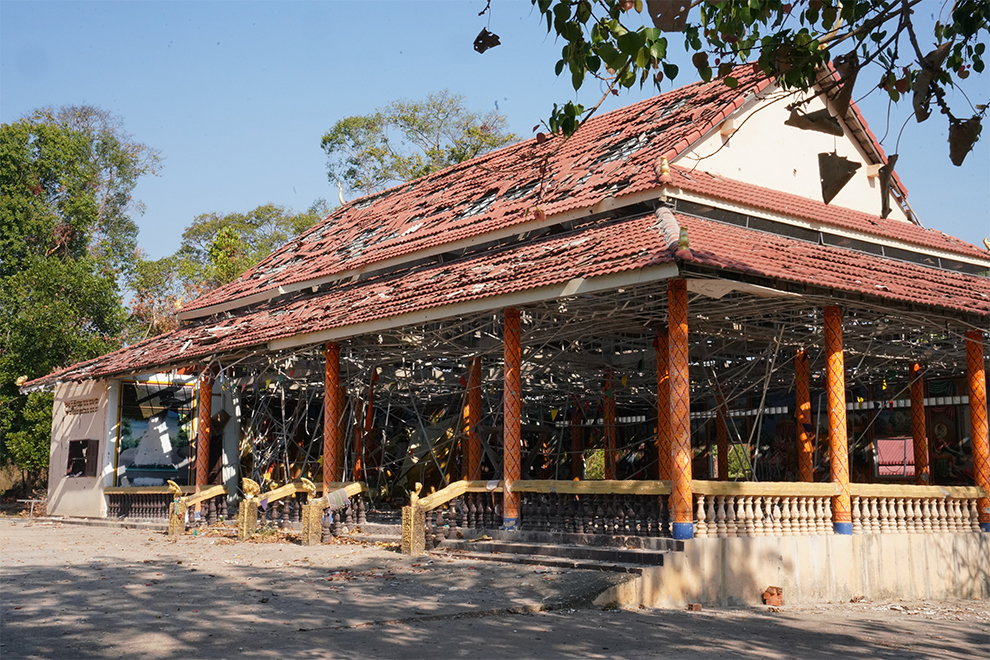
“Multiple shells landed as I rode my motorbike toward the area and saw monks fleeing in panic. I abandoned the motorbike and led them to take cover behind some rocks,” Bunthoeun said.
He later led six monks into a bunker as shelling continued, trapping them inside for hours without food. Concerned about the abbot, who remained at the old sanctuary, Bunthoeun crawled through the compound to bring him to safety.
“By around 11.45am to noon, the monks still had not eaten,” he said, adding that bombardment grew quieter at about 3pm.
By late afternoon, the group began evacuating. With only one motorbike available, a monk transported several others to safety in multiple trips while Bunthoeun walked part of the way before finding a ride.
On December 8, the same day, all of the monks managed to leave the pagoda compound without injuries.
“At that time, we did not dare look back. Our only concern was survival,” he said.
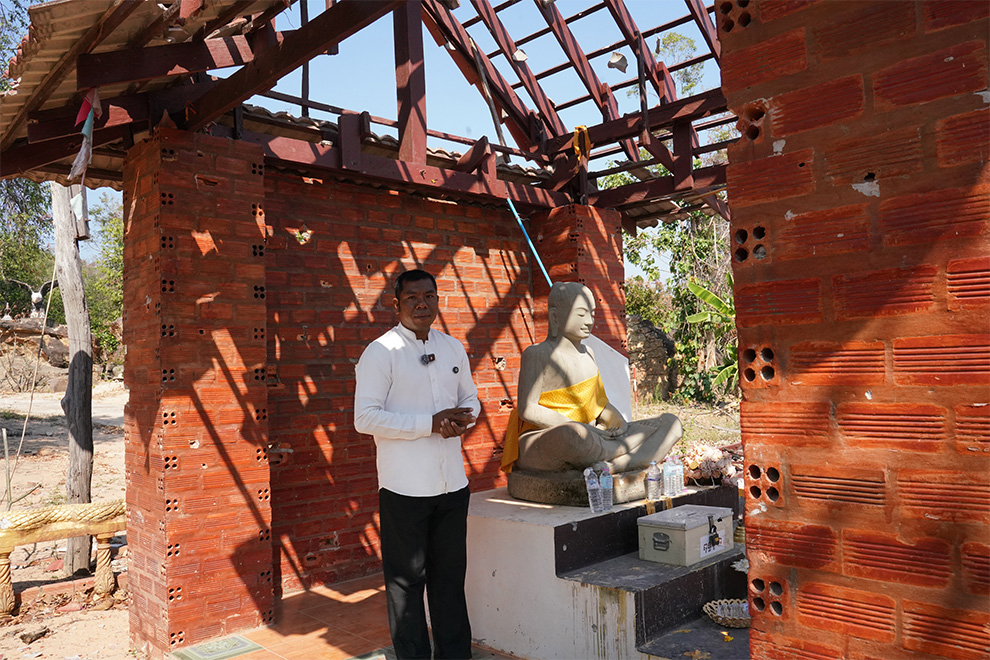
The scale of destruction became clear only after the violence subsided.
“This second round of explosions caused almost total destruction,” Bunthoeun noted.
Buildings were heavily damaged, while the kitchen, upper sanctuary, main pagoda and several monks’ quarters — all recently repaired with small donations from devotees following earlier clashes — were again reduced to ruins.
The old sanctuary alone was struck by about three bombs dropped from aircraft, he added.
“Originally, this area was prepared for monks to reside and receive offerings from devotees. Now it has all been burned down,” he said. “The entire pagoda compound has been affected — with no area left untouched.”
The December bombardment marked the second major attack on the religious site.
On July 24, 2025, during a five-day border conflict involving heavy shelling and airstrikes, the pagoda was targeted in an assault Cambodian officials said involved Thai F-16 fighter jets and artillery. The temple, situated roughly 1.5 kilometres from the border, sustained severe damage.
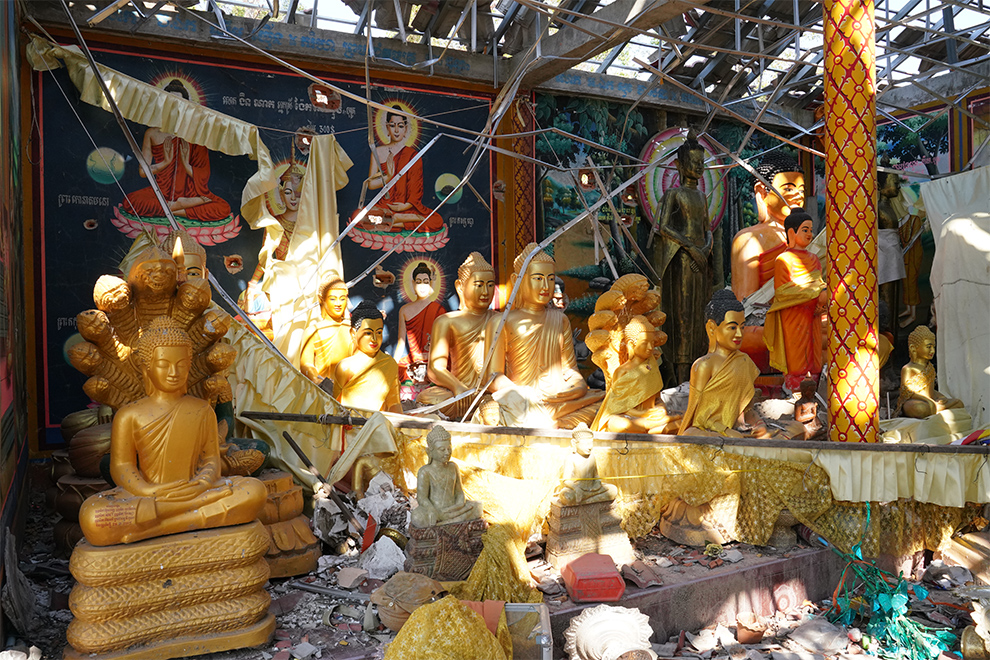
A 70-year-old acharya, Chi Kheang — also known as Ta Sok — was killed, his body found beneath the rubble, while several others were reported injured. The violence forced monks and nearby civilians to flee.
Reflecting on the latest destruction, Bunthoeun questioned the respect afforded to religious sites during armed conflict.
“Based on what I have seen, these acts show clear aggression and cruelty. They profess adherence to Buddhism, yet even pagodas — sacred places of the faith — are not spared,” he said.
“This implies their practice of Buddhism is only outward, not truly held in their hearts,” he continued.
The repeated strikes on the pagoda highlight the growing risks faced by civilians and religious institutions caught near contested frontier zones, as tensions between Cambodia and Thailand continue to threaten communities living in the shadow of the border.
-Phnom Penh Post-
———————