Occupation Is Not Law Enforcement: Thailand Must Reverse Its Actions at O’Smach
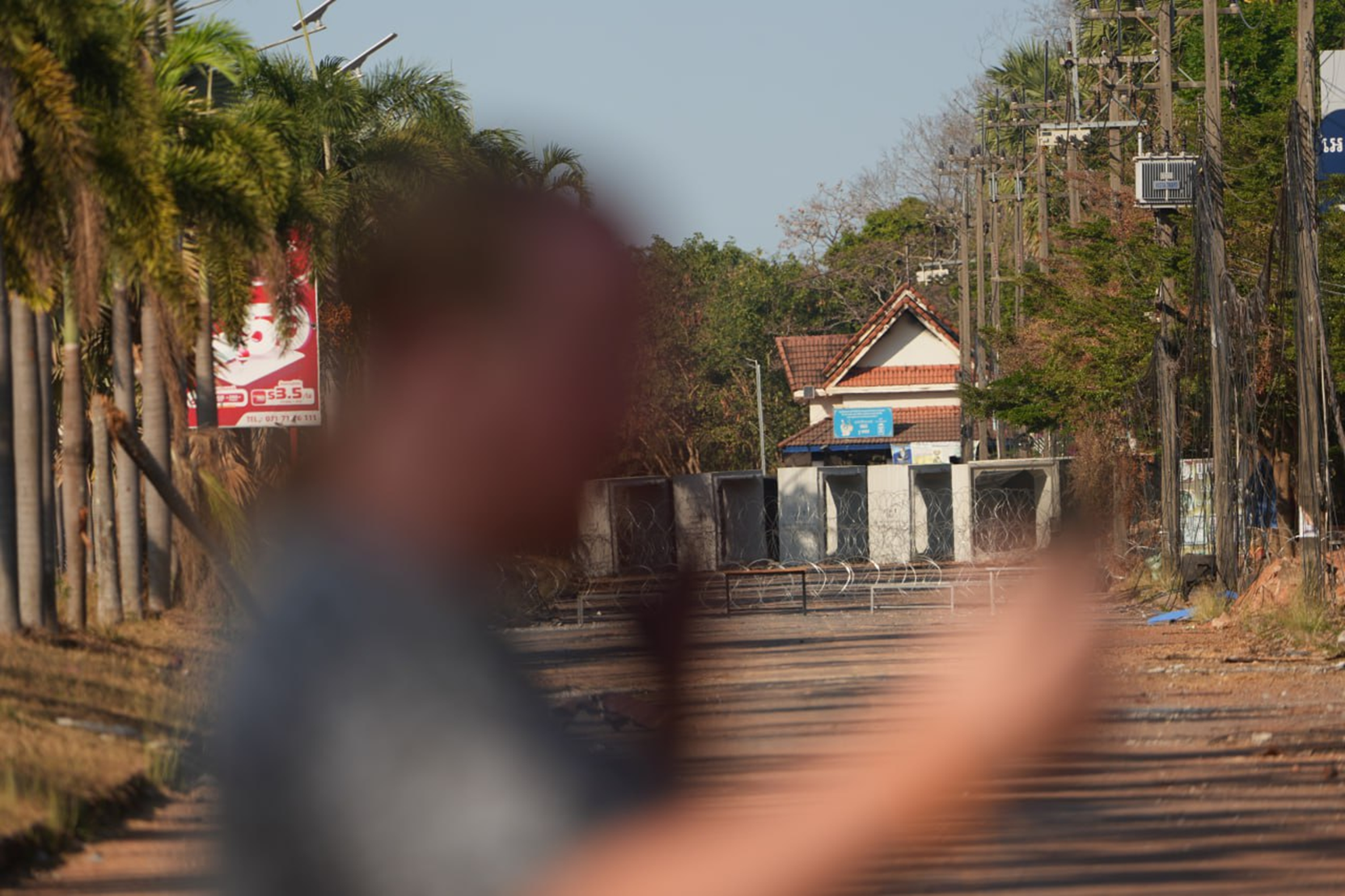 The O'Smach area has been cut off by Thai military razor wire barricades. Supplied
#opinion
Cambodia firmly rejects any attempt to cloak military occupation as routine law enforcement. What is unfolding at O’Smach is neither a technical misunderstanding nor a minor border management issue. It is a grave challenge to sovereignty at an internationally recognised border crossing long acknowledged by both Cambodia and Thailand.
O’Smach is not disputed terrain. It has functioned for years under bilateral arrangements governing cross-border movement and security coordination. Any unilateral deployment of troops beyond agreed lines, under whatever label, violates those understandings and undermines the basic principle of peaceful coexistence between neighbouring states.
Even more revealing is the reported presence of foreign military attachés at the site. Such visits are not made to observe ordinary policing operations. Their appearance underscores that the situation is extraordinary — and that Thai authorities themselves recognise the sensitivity of their actions. When third-party observers are invited to view what is described as a routine operation, the explanation collapses under scrutiny. What appears to be taking place instead is the consolidation of physical control.
Cambodia has consistently called for restraint and dialogue, relying on established bilateral mechanisms designed precisely to prevent escalation. These frameworks exist so that disagreements are resolved through survey teams, joint committees and diplomatic channels—not by altering realities on the ground. Faits accomplis, however temporary they are claimed to be, corrode trust and heighten the risk of miscalculation.
International law leaves little room for ambiguity. Sovereign territory cannot be entered or occupied militarily without consent. Borders are not rhetorical devices to be reinterpreted when convenient; they are legal facts that underpin regional stability in Southeast Asia. To blur that line through unilateral deployments sets a troubling precedent.
If Thailand is sincere in its stated desire for de-escalation, the remedy is straightforward. Forces must be withdrawn from positions inside Cambodian territory. All provisions of existing joint statements — rather than selectively cited clauses — must be honoured in full. Long-standing boundary and survey mechanisms should be reactivated without delay. Transparency and cooperation, not unilateral moves, are the only credible path forward.
Cambodia does not seek confrontation. It seeks coherence between diplomatic commitments and conduct in the field. Peace is sustained not by slogans, but by restraint. Trust is built when neighbours respect agreements even when tensions run high.
The situation at O’Smach is therefore a test — not only of bilateral relations, but of ASEAN’s collective commitment to peaceful dispute settlement and non-interference. The international community should watch closely. Law enforcement cannot become a fig leaf for occupation, and friendship between neighbours cannot survive if borders are treated as adjustable through force.
Thailand still has the opportunity to step back, restore the status quo ante and demonstrate respect for the principles it has publicly endorsed. Choosing cooperation over consolidation would not signal weakness; it would signal leadership. The alternative — normalising unilateral military moves at recognised crossings — would erode confidence, destabilise the frontier and weaken the rules-based order on which the region depends.
Roth Santepheap is a geopolitical analyst based in Phnom Penh. The views and opinions expressed are his own.
-Phnom Penh Post-
——————–