Standing on Land Doesn’t Make It Yours, Caretaker Prime Minister
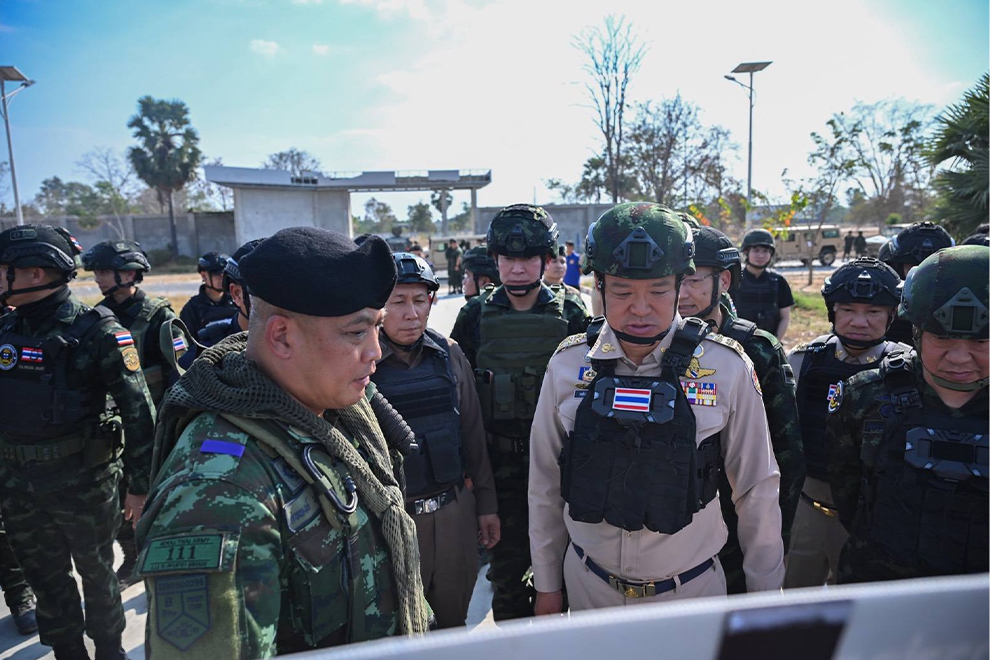 Anutin Charnvirakul, Thai prime minister and Minister of the Interior, visited Sa Kaeo Province on January 27. Khaosod English
#opinion
Thailand’s caretaker Prime Minister and Interior Minister, Anutin Charnvirakul, has recently articulated an uncompromising position regarding sovereignty in sensitive and disputed border areas between Cambodia and Thailand.
In November 2025, he declared publicly that the Thai–Cambodian peace declaration was “over”, stating: “Thailand belongs to us. Where I stand now is Thai soil. No one can claim sovereignty over it,” as reported by The Nation Thailand.
Cambodia must respond with legal clarity: standing somewhere does not make it yours. Footsteps do not determine borders, and sovereignty is not created by proclamation.
Such absolutist rhetoric is not a substitute for lawful dispute settlement. It reflects a dangerous doctrine of unilateral entitlement — one fundamentally incompatible with international law.
Footsteps Are Not Borders
Where territorial status remains disputed or unresolved, no state may lawfully behave as though sovereignty is conclusively settled by assertion alone. International law requires restraint, dialogue, and peaceful processes — not declarations that deny contestation. When leaders speak in absolutes over contested ground, they do not resolve disputes; they deepen them. A border cannot be settled by soundbites.
The UN Charter Forbids This Game
The UN Charter establishes the basic rules governing relations between states.
Article 2(4) imposes a binding obligation on all states to refrain from “the threat or use of force against the territorial integrity or political independence of any state.”
This prohibition is the cornerstone of the international legal order. Territorial disputes cannot be managed through coercion, military consolidation, or unilateral assertions of sovereignty.
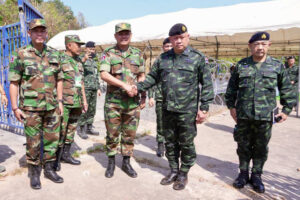
To insist that disputed land is unquestionably “Thai soil”, while maintaining armed posture in sensitive areas, risks conduct inconsistent with the Charter itself.
Peace Is a Legal Duty — Not a Choice
Peaceful settlement is not optional under international law.
Article 33 of the UN Charter requires that parties to any dispute likely to endanger peace must seek resolution through peaceful means, including:
negotiation
mediation
arbitration
judicial settlement
Cambodia has repeatedly expressed willingness to pursue lawful and impartial mechanisms of resolution, including international adjudication. If Thailand is confident in its claims, it should meet them through law — not through unilateral certainty.
Law Enforcement” Cannot Wear Military Boots
In some contexts, states invoke security concerns or transnational crime narratives in border regions. But international law is clear. Crime-fighting does not authorise military coercion against a neighbouring state’s territorial integrity.
Transnational criminal challenges are addressed through lawful cooperation, including:
mutual legal assistance
extradition
joint investigations
ASEAN frameworks
Military deployments are not policing. They are coercive state acts. Security narratives cannot serve as legal cover for territorial pressure.
Occupation by Waiting
International law imposes an obligation of good faith. States engaged in dispute settlement must refrain from aggravating disputes or creating irreversible conditions on the ground.
When disputes remain unresolved, delay combined with continued entrenchment risks becoming strategy rather than process. Denial today becomes control tomorrow.
International law does not permit disputed territory to be normalized through faits accomplis while peaceful mechanisms stagnate.
Borders Don’t Move Because Someone Says So
Cambodia remains committed to peace and regional stability. That commitment rests on restraint, dialogue and binding legal clarity — not on unilateral declarations that sovereignty is beyond question.
Territorial disputes are resolved through lawful determination, not political proclamation.
If Thailand believes its position is lawful, it should submit it to impartial processes rather than relying on absolutist rhetoric.
Peace demands good faith. Justice demands clarity. International law demands more than standing on land and calling it yours.
Maps are not redrawn by microphones. Borders do not move because someone says they do. Standing on land does not make it yours — only law can.
Panhavuth Long is founder and attorney-at-law at Pan Associates Law Firm. The views and opinions expressed are his own.
-Phnom Penh Post-
———————-