Peace Cannot Be Dictated at Gunpoint
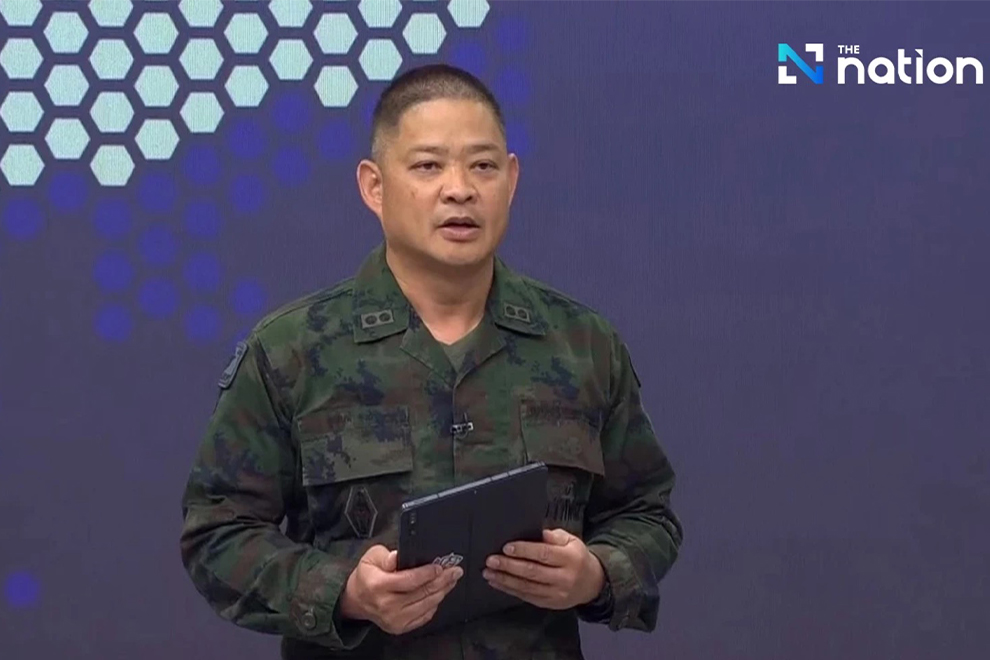 Surasant Kongsiri, Thai defence ministry spokesperson, said the meeting will be held in Chanthabori province as planned, rejecting a Cambodian request for a relocation to Malaysia. ANN/The Nation
#Opinion
Thailand’s latest statements ahead of the General Border Committee (GBC) meeting reveal a troubling truth: Bangkok is not preparing for peace — it is preparing to control the narrative.
By rejecting Cambodia’s request to move the GBC meeting to Kuala Lumpur, Thailand is not defending logistics or security; it is rejecting neutrality. In any active conflict, it is neither reasonable nor credible for one party to insist that negotiations be held on its own territory — especially when that party continues military operations along the border. Cambodia’s proposal for Kuala Lumpur, under ASEAN chairmanship, reflects established international practice. Thailand’s refusal reflects political calculation.
Even more concerning is Thailand’s attempt to frame the success of talks as conditional on Cambodia’s “sincerity”. This language is not diplomatic; it is prosecutorial. Peace negotiations cannot begin with a verdict already declared. A party that claims to want dialogue cannot simultaneously assign blame, issue ultimatums and portray itself as the sole arbiter of good faith.
Thailand’s claim that Cambodia must first clear landmines before talks can succeed is particularly disingenuous. Demining is a humanitarian obligation, not a political weapon. International standards are clear: demining in disputed or active conflict zones must be coordinated, sequenced and conducted under stable security conditions. Cambodia’s position — that demining should be addressed through agreed mechanisms alongside border clarification — is logical, technical and responsible. Thailand’s demand for unilateral demining is neither safe nor serious.
Equally revealing is Bangkok’s insistence that the GBC remain “strictly bilateral”, rejecting any third-party presence. Cambodia has not called for arbitration or internationalisation of the dispute; it has called for facilitation and observation to ensure transparency and prevent miscalculation. ASEAN’s role in easing tensions is well established. A party confident in its position does not fear witnesses. A party that insists on closed doors invites questions about what it does not want seen.
Thailand also dismisses Cambodia’s unilateral ceasefire declaration as meaningless. This, too, distorts reality. Unilateral ceasefires are widely recognised as confidence-building measures, not final settlements. Cambodia’s declaration signalled restraint at a time when civilians were bearing the cost of escalation. If Thailand were truly committed to peace, it would respond with reciprocity — not rhetoric.
Perhaps most troubling is Thailand’s repeated assertion that Cambodia “began the fighting”, presented as an uncontested fact. This claim has not been independently verified and is firmly disputed. Responsibility for hostilities cannot be established through press conferences or spokesperson statements. It must be addressed through facts, mechanisms and dialogue — the very process Thailand claims to support while undermining it.
Peace cannot be achieved by dictation. It cannot be built on preconditions designed to humiliate one side or absolve the other. And it certainly cannot be advanced while military pressure continues on the ground.
Cambodia’s calls for neutral venue, ASEAN facilitation, coordinated demining and de-escalation are not evasions. They are consistent with international law, regional norms and the urgent need to protect civilians.
If Thailand genuinely seeks peace, the path is clear: accept neutrality, abandon narrative warfare and engage Cambodia as an equal — not as an accused party.
Diplomacy begins when both sides stop trying to win the argument and start trying to stop the suffering.
Roth Santepheap is a geopolitical analyst based in Phnom Penh. The views and opinions expressed are his own.
-The Phnom Penh Post-