Thailand’s Military Aggression Against Cambodia Is a Grave Crime Under International Law
 Thailand’s Military Aggression Against Cambodia Is a Grave Crime Under International Law
[Opinion]
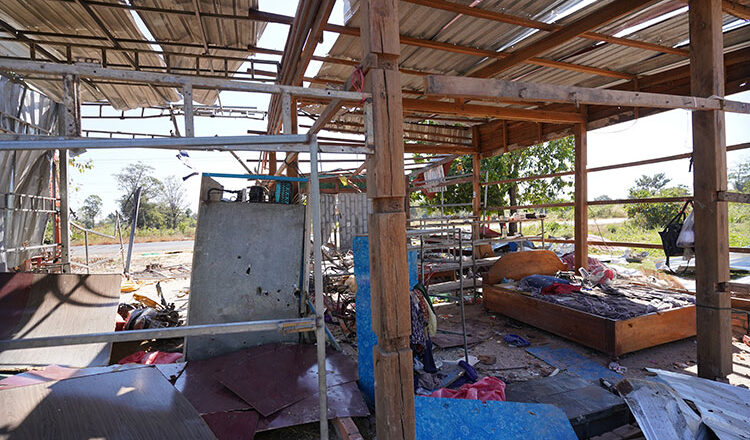
Fourteen days have now passed since the Thai armed forces launched a deliberate and unjustified military aggression against the territorial integrity and sovereignty of the Kingdom of Cambodia. What has unfolded since then is not a border “incident,” nor a defensive operation, but a sustained campaign of armed violence that has inflicted severe suffering on Cambodian civilians and caused widespread destruction of civilian infrastructure.
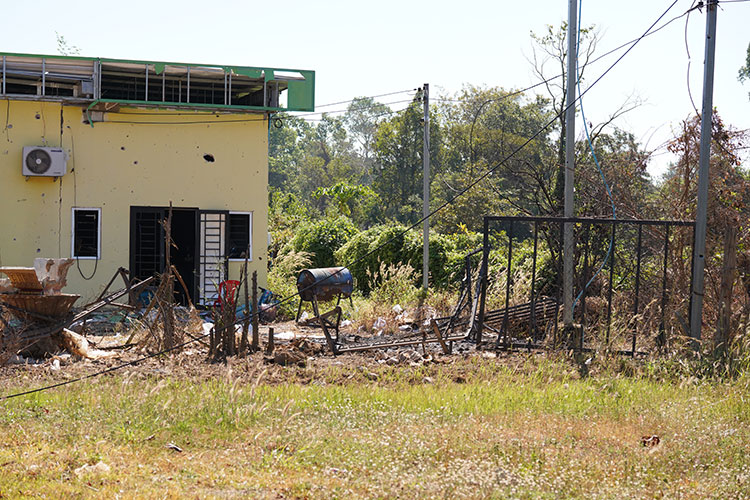
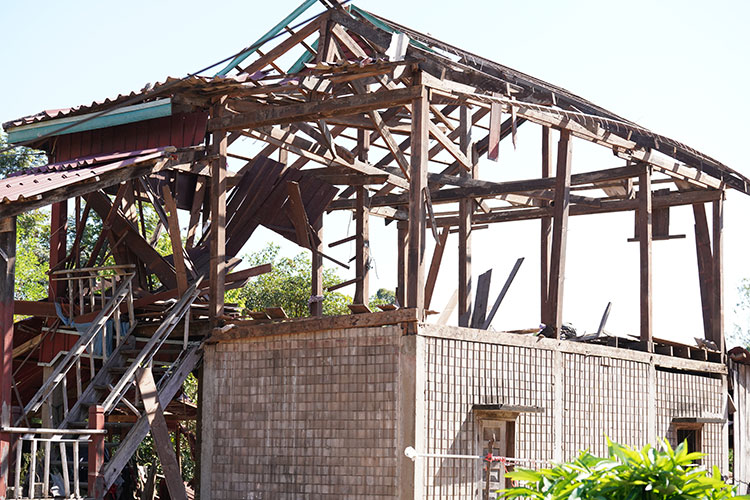
In Konkriel Sangkat, Samraong City, Oddar Meanchey Province, many homes belonging to Cambodian civilians have been almost completely destroyed as a result of shelling and aerial bombardment carried out by invading Thai troops. These are not military bases or fortified positions. They are residential neighborhoods—places where families lived, children studied, and communities existed in peace before being shattered by foreign military force.
The facts are clear and deeply troubling. The Thai military has not limited its operations to military objectives. Instead, it has taken civilians and civilian infrastructure as direct targets of attack. Homes, schools, roads, and other essential civilian facilities have been damaged or destroyed. Such actions constitute serious violations of international law, international humanitarian law, and fundamental human rights principles.
Under the United Nations Charter, the use of force against the sovereignty and territorial integrity of another state is prohibited except in cases of self-defense against an armed attack or when authorized by the UN Security Council. Thailand’s actions meet neither of these conditions. Cambodia did not initiate hostilities, nor did it consent to any foreign military presence on its soil. Thailand’s invasion therefore represents a clear act of aggression under international law.
Even in situations of armed conflict, international humanitarian law imposes strict obligations on all parties. The principles of distinction, proportionality, and precaution are not optional—they are binding legal rules. Civilian homes, schools, hospitals, roads, and other civilian structures are not lawful targets of attack. Private property enjoys protection under both the Geneva Conventions and customary international law. By deliberately or recklessly striking civilian areas, the Thai military has violated these core principles.
The targeting of civilian infrastructure has consequences far beyond physical destruction. When schools are destroyed, children lose their right to education. When roads are damaged, humanitarian access is impeded. When homes are reduced to rubble, families are displaced and stripped of dignity and security. These are not accidental side effects of war; they are foreseeable and preventable harms that international law exists precisely to stop.
Thailand may attempt to justify its actions through shifting narratives or political distractions, but no amount of rhetoric can erase the legal reality. Bombs falling on civilian neighborhoods cannot be rebranded as “security operations.” Shelling residential areas cannot be excused as collateral damage when civilians and civilian objects are repeatedly struck. International law judges actions by their effects, not by the excuses offered afterward.
Cambodia has exercised restraint and acted in accordance with its inherent right to self-defense. It has consistently called for respect for international law, protection of civilians, and peaceful resolution through diplomatic and legal channels. The contrast could not be clearer: one side seeks law and restraint; the other has chosen force and destruction.
The international community must not remain silent. Silence in the face of aggression emboldens future violations. Thailand must be held accountable for its actions, cease its military aggression immediately, and respect Cambodia’s sovereignty and the rules of war. Civilian lives are not bargaining chips, and international law is not optional.
What is happening in Cambodia today is a test of the international legal order itself. If the deliberate targeting of civilians and civilian infrastructure is allowed to pass without consequence, the principles meant to protect all nations—large and small—will be gravely weakened.
Roth Santepheap is a geopolitical analyst based in Phnom Penh. The views expressed are his own.
-Khmer Times-