Twelve Days of Invasion: Thailand’s Airstrikes and Cambodia’s Unyielding Defense of Sovereignty
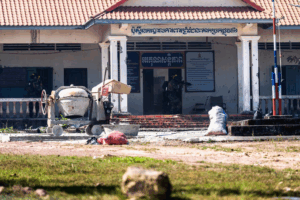
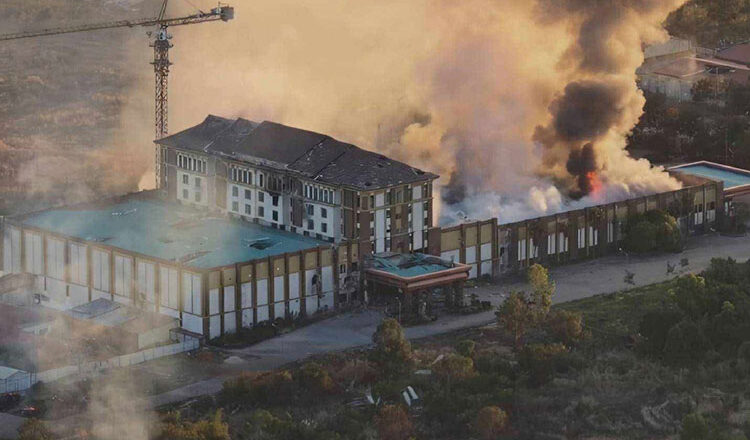 [The Thai military shelled a casino near the border. Thai military Force]
[Opinion]
For twelve consecutive days, Cambodia has faced an armed military invasion by Thailand—an aggression that, since December 8, 2025, has escalated into the use of fighter jets and air-delivered bombs against Cambodian territory. On December 18, 2025, the situation deteriorated further when the Thai military intensified its operations by deploying F-16 fighter jets to carry out airstrikes inside Cambodia, including in Poipet Municipality, Banteay Meanchey Province, where civilian areas and vital civilian infrastructure are located, as well as in Preah Vihear Province, a UNESCO World Heritage area.
At 11:06 a.m. on December 18, Thai F-16 aircraft conducted air operations inside Cambodian territory. These actions represent a dangerous and deliberate escalation—one that cannot be dismissed as defensive, accidental, or miscalculated.
A state does not deploy advanced combat aircraft across an international border by mistake. The use of F-16 fighter jets to bomb a neighboring country’s territory constitutes an offensive act of war and a clear violation of the United Nations Charter, which explicitly prohibits the use of force against the sovereignty and territorial integrity of another state.
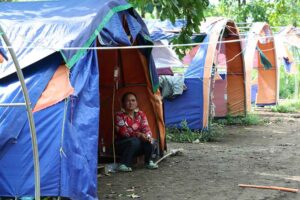
Even more alarming is the pattern of attacks targeting civilian areas and civilian infrastructure. Homes, public facilities, and essential services have increasingly been placed at risk by Thai military operations. Such actions violate the core principles of international humanitarian law, including the obligation to distinguish at all times between military objectives and civilians, and to protect civilian infrastructure from attack.
No security rationale can justify bombing near civilian communities. No political narrative can excuse placing innocent lives in danger. These are not isolated incidents; they are the foreseeable consequences of deliberate military decisions taken at the highest levels.
Cambodia did not initiate this conflict. Cambodia has consistently called for restraint, dialogue, and a peaceful resolution. Yet when faced with armed incursions, artillery fire, and now airstrikes, Cambodia has exercised its inherent right to self-defense under Article 51 of the UN Charter. That right is lawful, legitimate, and non-negotiable.
Cambodian forces continue to stand strong, brave, and steadfast. Their mission is defensive: to protect the nation’s territorial integrity, safeguard civilians, and prevent further escalation. They have not sought war, but they will not retreat from their responsibility to defend Cambodia’s sovereignty.
Cambodia will protect its dignity with courage and unwavering resolve. It will not succumb to coercion, intimidation, or the use of overwhelming force. History has taught Cambodians the cost of silence in the face of aggression, and today the nation stands united in defense of its borders and its people.
This crisis is no longer a bilateral concern alone. When a member state deploys fighter jets to bomb civilian-adjacent areas in another sovereign country, it becomes a matter of international peace and security. The United Nations Security Council and the wider international community must respond with clarity and principle. Silence risks normalizing aggression and weakening the international rules-based order.
After twelve days of invasion, one reality remains undeniable: Cambodia is defending itself in accordance with international law. Thailand is escalating a military invasion by land and by air.
The world must have the courage to acknowledge this truth—and act, through diplomacy, accountability, and international law, before the consequences become even more severe.
Roth Santepheap is a geopolitical analyst based in Phnom Penh. The views expressed are his own.
-Khmer Times-