The motivation behind Thailand’s invasion of Cambodia.
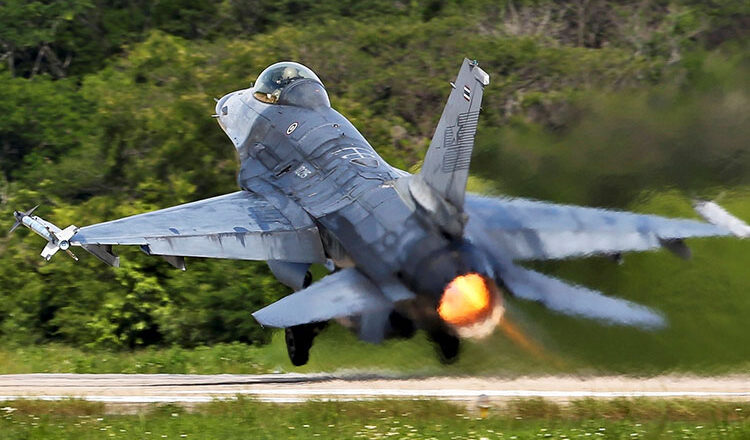 [Thailand has rapidly escalated its territorial conflict with Cambodia with sustained air and artillary operations, including the deployment of F-16 fighter jets to bombard border provinces. Australian Department of Defence]
-Opinion-
Thailand’s renewed aggression against Cambodia since December 7 has unfolded within a complex interplay of military escalation, domestic political pressure, and long-standing territorial sensitivities. What began as brief but intense clashes along historically contested zones—most notably around Preah Vihear—rapidly escalated into sustained air and artillery operations. The scale and speed of this escalation suggest motivations that extend well beyond claims of self-defence.
What distinguishes the current crisis from others is the domestic context in which Thailand launched its armed actions. The country is experiencing a fragile political environment marked by governance failures, resurfacing scandals, and a civilian leadership struggling to maintain authority, alongside a military establishment eager to reassert its relevance. Against this backdrop, Cambodia’s border becomes not merely a security frontier but a politically expedient flashpoint.
On the surface, Thailand has framed its actions as operational self-defence in response to immediate border exchanges. Official statements portray the deployment of heavy weaponry and air strikes as necessary retaliation to protect Thai soldiers and civilians. Yet this narrative fails to explain the disproportionate nature of the response and the timing of escalation.
Domestic power politics provide a more compelling explanation. The caretaker government led by Prime Minister Anutin Charnvirakul has recently faced intense public criticism over governance failures, most notably poor flood management. Poorly coordinated dam releases triggered severe flooding in provinces such as Nakhon Ratchasima, Buriram, and Chaiyaphum, destroying crops, damaging homes, and disrupting transport networks. Public frustration grew rapidly, exposing weaknesses in state capacity and leadership.
Economic pressures have compounded this political vulnerability. Thailand’s GDP growth slowed sharply to 1.2% in the third quarter, driven by weak manufacturing output and declining exports. Structural stagnation has become increasingly evident, with key sectors such as electronics, automobiles, and petrochemicals losing competitiveness.
Political controversy further intensified with the resurfacing of a photograph linking Anutin to transnational criminal figure Ben Smith. Although Anutin denied any close relationship or business ties, the explanation failed to restore public trust. Instead, the episode reinforced perceptions of elite impunity and opaque political networks, fuelling further criticism ahead of upcoming elections.
In this context, the renewed confrontation with Cambodia appears politically expedient. By elevating a border crisis, the government can redirect public attention outward, invoke nationalist sentiment, and project strength. Historical and comparative studies of diversionary foreign policy show that leaders facing domestic pressure often escalate external conflicts—consciously or otherwise—to generate a “rally-round-the-flag” effect. Cambodia, as a smaller neighbour, becomes an easy target for threat construction.
Thailand’s political system amplifies this dynamic. The military and pro-monarchy elites retain substantial institutional power and have long leveraged external crises to reinforce their relevance.
Border conflicts allow the military to demonstrate operational necessity while mobilising nationalist narratives tied to sovereignty and territorial integrity. The Preah Vihear frontier, highly symbolic and historically contested, provides an ideal stage for such mobilisation.
At the same time, Thailand has shown little genuine commitment to the Kuala Lumpur peace accord. This is evident in its continued insistence on Cambodian preconditions, its refusal to release Cambodian soldiers detained during earlier incidents, and persistent allegations of mine-planting in contested areas. Such selective implementation undermines trust and suggests that the accord is being treated instrumentally rather than as a framework for de-escalation.
Beyond domestic diversion, Thailand’s strategy appears to involve a higher-risk regional calculation. One objective may be to provoke Cambodia into deploying Chinese-supplied missile systems against US-made aircraft, particularly F-16 fighter jets. Such an incident would create a highly visible narrative of Chinese military involvement, allowing Thailand to reframe its actions as defensive responses to externally supported aggression rather than unilateral escalation.
If Cambodia were perceived—accurately or otherwise—as acting with Chinese backing, Thailand could position itself as a frontline state resisting great-power interference. This framing would potentially reduce international criticism, especially from partners concerned about Sino-American rivalry. Domestically, it would strengthen the image of the military and government as defenders of national sovereignty, consolidating political support amid governance failures.
This logic also serves institutional interests. By conducting high-profile operations framed as responses to external provocation, the Thai armed forces reinforce their political influence, demonstrate operational relevance, and strengthen alignment with pro-monarchy elites. Heightened nationalism further elevates the military’s standing relative to civilian authorities without overtly challenging formal political hierarchies.
From a military perspective, however, Thailand’s strategy has yielded limited results. Cambodia has adopted a deterrence-based defensive posture, emphasising fortified positions, disciplined troop deployments, and clear signalling of readiness to respond. Thailand’s reliance on air power and heavy weaponry has not produced meaningful territorial gains or forced concessions. This asymmetry reinforces Cambodia’s confidence and limits the effectiveness of Thailand’s coercive approach.
As a result, a return to negotiations appears unlikely unless a clear military stalemate emerges or credible third-party mediation intervenes. Without external pressure, Thailand’s politically driven escalation risks prolonging the conflict, deepening human suffering, and undermining regional norms.
Ultimately, the current crisis reflects not only a border dispute, but a troubling convergence of domestic instability, institutional incentives, and geopolitical calculation. If left unchecked, it threatens not only Cambodian lives and sovereignty, but also the integrity of international law and ASEAN’s long-standing commitment to peaceful dispute settlement.
The author is a Research Fellow, China-ASEAN Studies Center, CamTech University.
-Khmer Times-