Bombs Amidst Breakdown: Why Thailand Strikes as Its Economy Strains
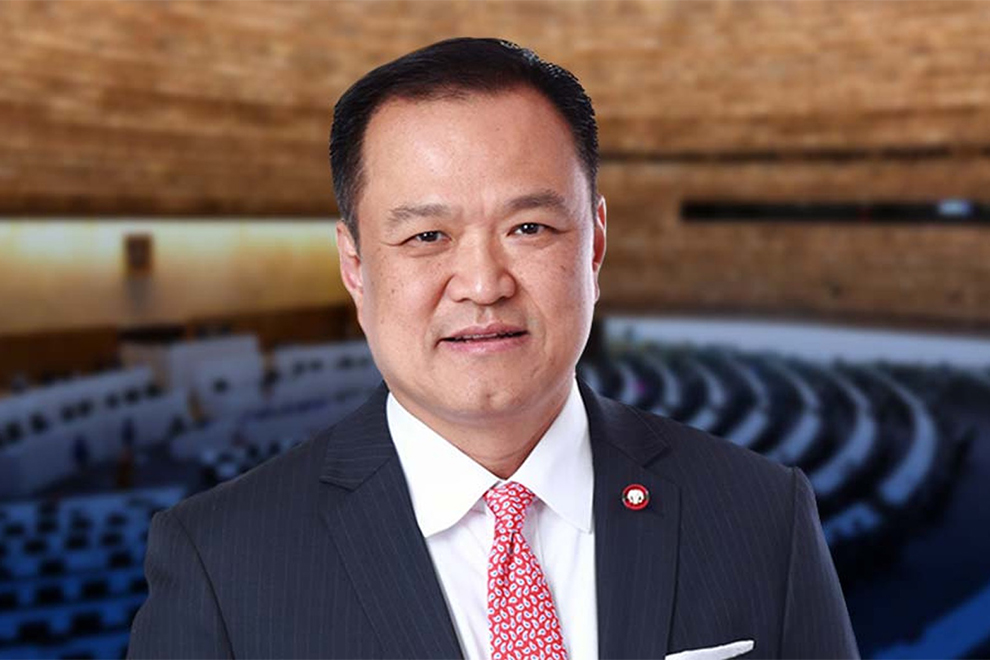 [Thai caretaker Prime Minister Anutin Charnvirakul is under pressure, with some analysts suggesting the ongoing war with Cambodia is aimed at serving as a distraction from domestic issues. Khaosod English]
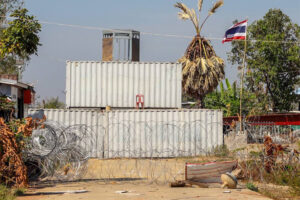
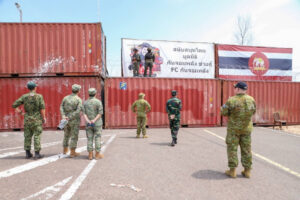
[Opinion] Despite the peace agreement signed on October 26 between Cambodia and Thailand, witnessed by President Donald Trump, on the early morning of December 8, Thailand once again launched airstrikes on Cambodia. That morning, when Cambodian students and kids were supposed to have class, they were forced to run, and all class activities were also suspended due to the attacks by the Thai military.
The recent strikes intensified despite ongoing diplomatic efforts and existing ceasefire agreements. The renewed attacks have led many to question Thailand’s strategy and the timing of its actions, we well as whether this escalation shows deeper motivations linked to Thailand’s domestic stability. Specifically, how much might rising economic pressure and political uncertainty influence Thailand’s security actions?
An Economy Losing Momentum
Thailand’s economic situation deepens Thailand’s fragility. Post-pandemic, a slow tourism recovery, structural change in the manufacturing sector and weaker export prospects have dampened activities. Thailand’s economy is projected to slow in 2026 as Real GDP growth in 2025 is expected to be just 2.0%, lower than in 2024. Annual output growth is expected to drop to 1.5% in 2026.
Even though the financial sector appears sound, a deterioration in credit quality in some segments calls for caution. In addition, longstanding concerns around Thailand’s elevated private-sector debt remain.
Pre-COVID-19, household and corporate debt were equivalent to around 160% of GDP. In the first quarter of 2025, this figure was 170%. Thailand’s economy faces growing pressure. When households and businesses owe this much, they may have less capital to spend and invest, which further slows the growth. This situation also makes the economy more vulnerable. With this fragility, if shocks like rising interest rates or falling income arise, it may further lead to more non-performing loans (NPL), not an ideal situation for the financial sector and banks as a whole.
Non-performing loans already account for more than 3% of total loans, and the government has also announced that it will spend 10 billion baht ($305 million) this month to buy bad debt.
Thailand’s public debt is expected to reach 65% of GDP in 2025. This number is an implication that the government has borrowed more than two-thirds the value of the entire economy. This figure is nearing the 70% limit set by government policy, which is interpreted as Thailand approaching its debt ceiling. With these high public debts it leaves little room for more borrowing or even large spending initiatives without risking financial instability.
Recently, Thailand has also seen low growth in labour productivity. From 2015 to 2023, the average growth in labour productivity was 2.1%. This is lower than the 3.7% average from 1990 to 2010 and 4.8% from 2010 to 2015. This decrease could lead to a weak long-term growth potential. Under the Solow Growth Theory, productivity is key to sustained growth. Thus, this low productivity rate puts Thailand at risk of lower GDP growth and reduced competitiveness within the region.
The Article IV Consultation with Thailand which was conducted by the International Monetary Fund (IMF) from October 30 to November 13, 2025, reached the conclusion that Thailand’s economy faces growing challenges. Ongoing structural issues and the lasting effects of the pandemic, including high household debt, have hindered growth for some time. Although the US tariffs were reduced from the initially announced 36% to 19%, they are still a shock to the economy.
Foreign tourist arrivals have also declined, while a quick and unexpected change in government has further increased uncertainty. With these, the economy is expected to slow down further, with GDP growth projected at 2.1% for 2025 and 1.6% for 2026. This pattern threatens Thailand’s goal of becoming a high-income country by 2037. The slow recovery is expected to lower GDP growth by about 0.5 percentage points to 2.7% from 2022 to 2030. At this rate, Thailand will likely fall short of its high-income goals by 2037, according to the World Bank.
Natural Disaster Adds to National Strain
While already struggling with slow growth, Thailand faced severe flooding that further impacted its economy. Southern Thailand, including Hat Yai and nearby provinces, experienced extremely heavy rain and flooding, and criticism of the government arose due to its slow response to the flooding, damaged infrastructure and the evacuation process. To respond, Thailand’s government announced a comprehensive three-phase recovery plan as catastrophic flooding has caused at least $4.3 billion in damages across nine provinces, with the economic hub of Hat Yai accounting for $372 million in losses.
Public Confidence Crumbling
Just because of the flooding alone, a poll by Suan Dusit University conducted last week, during the peak of the flooding, found that Anutin’s standing had slipped, from 48% of respondants backing him to just 23%. This number could be interpreted as a reflection of the abilities of the previous leader, who just recently resigned, in handling the country’s matters.
Thailand’s domestic political situation is not very stable, as being seen in the change of prime ministers in just a few years. As of December 11, Anutin has announced his resignation as prime minister with the approval from King Maha Vajiralongkorn, and the upcoming election will happen within 45 to 60 days.
The question is, if Thailand’s internal situation is very stable, why do changes of prime ministers keep happening within just a few years? Thailand currently has a key agenda, including the flooding recovery, SEA Games, internal political stabilisation and economic recovery; however, despite working on solving these, Thailand has instead launched an attack on Cambodia. These further questions what the actual purpose of the attack is. The question is not just why Thailand chose military action, but why it occurred at this specific time when its internal challenges are much more urgent and unresolved.
Ung Khemara Bormeychan is a fresh graduate in International Economics from the Institute for International Studies and Public Policy (IISPP) and an Accounting & Finance student at CamEd Business School. The views and opinions expressed are her own.
-The Phnom Penh Post-