Anutin’s Contradictions: Thailand’s Conflicted Strategy and the Global Confusion Behind It
 Anutin’s Contradictions: Thailand’s Conflicted Strategy and the Global Confusion Behind It
-Opinion-
Southeast Asia has entered one of its most bewildering moments of political theatre, and the star of this performance is Thailand’s Prime Minister, Anutin Charnvirakul.
In the span of just 24 hours, he issued statements so contradictory that analysts, diplomats and even Thai citizens are still trying to understand what Thailand actually wants.
On November 12, Anutin stood before the Thai public and declared, “I’m no longer interested in how trade talks or tariffs with the US are going. If we can’t sell to this country, we’ll find another country to sell to.”
It was a loud, almost defiant message — the kind that shakes markets and alarms diplomats.
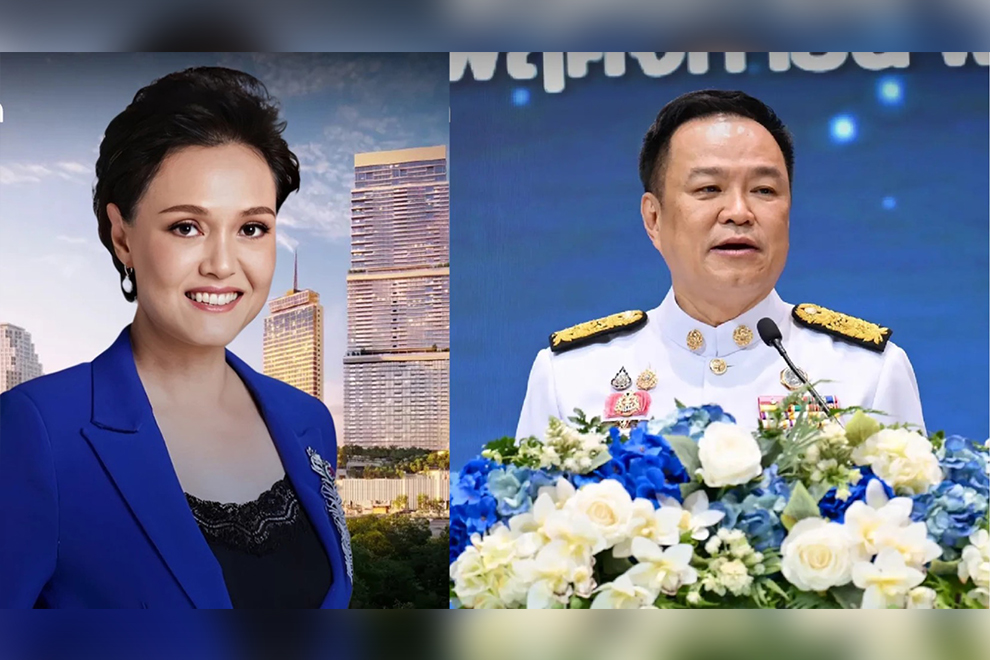
Yet, the very next day, Thailand’s own Commerce Minister publicly contradicted him, saying “The United States remains a primary trading partner. Thailand is committed to balance, good relations, and continued cooperation.”
Two senior officials, from the same government, narrating two opposite realities. This is not simple inconsistency. This is choreography.
Thailand has mastered this art — creating confusion, shifting narratives and presenting a different face depending on who is watching.
Contradiction in words, opposition in action
If Thailand truly did not care about the US, then why, at the very same time, were Thai lobbying teams in Washington negotiating preferential access to US markets, especially for rare-earth minerals?
These negotiations were not speculation — they are linked to agreements discussed during the October 2025 ASEAN Summit in Kuala Lumpur, where Thailand formally recognised US priority in rare-mineral purchases.
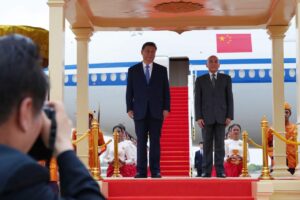
Yet, while negotiating with Washington behind closed doors, Thailand also felt the need to reassure China. The Thai King personally travelled to Beijing for a highly symbolic state visit marking 50 years of diplomatic relations — a gesture designed to calm Chinese concerns.
So what is Thailand’s true position?
If Thailand really doesn’t need the US, why negotiate so aggressively behind the scenes? If Thailand is truly close to China, why must it constantly reaffirm loyalty?
Because Thailand wants both sides. It wants to be indispensable to both superpowers — and accountable to neither.
This is Thailand’s quiet grand strategy: Show one face publicly, show another privately, and keep the world guessing.
The Cambodia narrative: A script written too perfectly
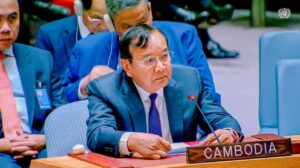
The most dangerous part of Thailand’s performative politics is the accusation that Cambodia invaded Thailand.
This narrative is repeated constantly in Thai media, yet:
No ASEAN observer team has confirmed it.
No UN body has recognised it.
Thailand refuses ICJ arbitration.
Thailand refuses ICC involvement.
Thailand refuses third-party investigation.
And so the world must ask: How could Cambodia invade Thailand? By what model, with what means, and with what military capability?
If Thailand truly believed this narrative, it would welcome the UN or ICJ. But it does not.
Because the accusation is not designed to be proven — it is designed to shape domestic opinion, distract from internal problems and justify escalating actions along the border. This is narrative warfare.
A region watching the most complex drama in ASEAN
Many international observers now describe Thailand as unstable or unpredictable. But that is an illusion.
Thailand is not uncontrolled — Thailand is scripting the confusion. Thailand is not confused — Thailand is performing. Thailand is not weak — it is using ambiguity as a weapon.
Every few days, Bangkok produces a new scene:
A speech rejecting the U.S.
A secret negotiation in Washington
A dramatic warning about China
A royal visit to Beijing
Accusations against Cambodia
A declaration of peace the next hour
A threat broadcast on Thai media
A second statement contradicting the first
This cycle keeps ASEAN and the international community off balance, and that confusion prevents accountability.
Weaponising narrative: When the violator claims to be the victim
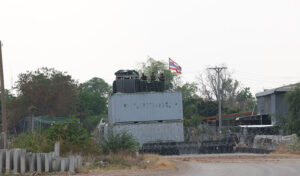
Despite repeated incidents along the border — including Thailand breaking the October 26, 2025 Kuala Lumpur Joint Declaration which was witnessed by the US and Malaysia — Thailand continues to present itself as the victim of Cambodian aggression.
Meanwhile, Cambodia allows ASEAN observers, respects the ceasefire, avoids retaliation, upholds international law and exercises restraint, even under provocation.
Yet Thailand continues to accuse Cambodia of aggression without inviting any independent verification. Why?
Because the role of the victim grants Thailand diplomatic advantage. Victimhood is the most powerful weapon in Thailand’s political arsenal.
Concealing great powers, pressuring neighbouring nations
Here is the heart of the strategy — the part the world must understand:
Thailand’s foreign policy operates on four layers of deception and ambition.
1. Concealing superpower alignments
Thailand publicly pretends to stand independently, but privately positions itself to gain maximum advantage from both the US and China.
2. Playing the geopolitical middle
By shifting its tone depending on the audience, Thailand keeps both superpowers invested — and uncertain.
3. Quiet pressure on neighbours
Narratives of invasion, victimhood and border insecurity are used to weaken Cambodia diplomatically while avoiding open war.
4. Perfect storytelling
Thailand’s political class and media ecosystem produce narratives so polished that many ASEAN citizens — even in Vietnam and Indonesia — accept them without question.
Thailand thrives in ambiguity. Ambiguity creates confusion. And confusion gives Thailand influence without responsibility.
The global stage: What does Thailand really want?
Thailand’s strategy reveals three interconnected goals:
1. Geopolitical leverage between the US and China
Thailand wants to be the indispensable “swing state” of mainland Southeast Asia.
2. Domestic political survival
Nationalist narratives protect the government from internal criticism and economic pressure.
3. Regional dominance through soft aggression
By manufacturing confusion and fear, Thailand seeks to weaken Cambodia’s diplomatic standing while avoiding international scrutiny.
It is a long game — and it works best when the world is unsure of what is real.
Dr. Thourn Sinan is a spiritual and tourism specialist. The views and opinions expressed are his own.
-The Phnom Penh Post-
[Thai commerce minister Jurin Laksanawisit (left) and Thai Prime Minister Anutin Charnvirakul. ANN/The Nation]