From SWIFT to BRICS Pay: The Emerging Architecture of De-Dollarisation
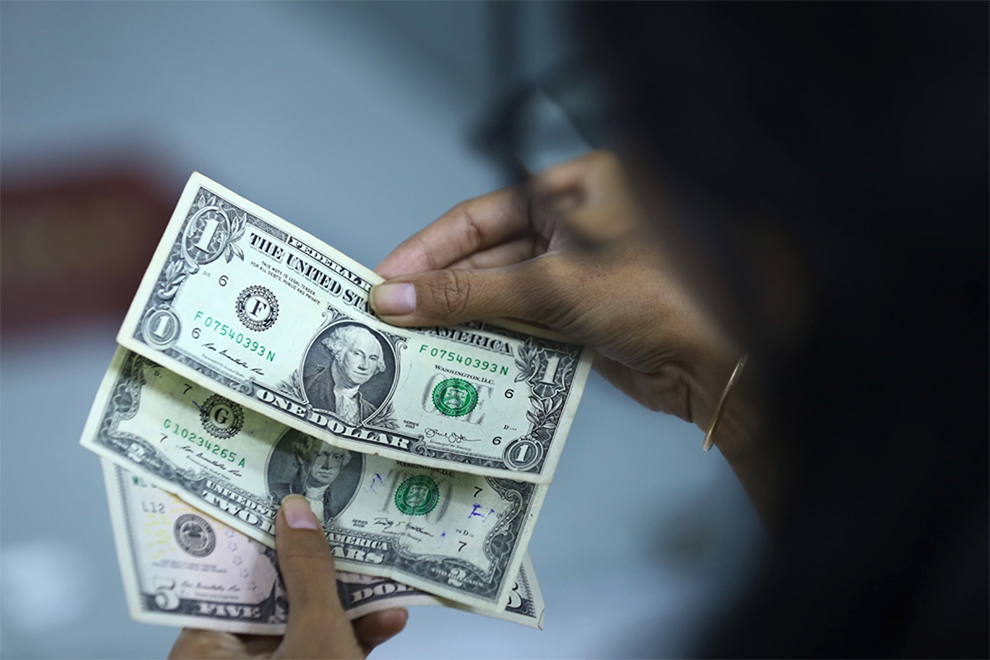 [The US dollar remains the most prominent currency used in global finance. Post Staff]
#Opinion
The prominent role of the US dollar in global finance, particularly its use by sanctioned regimes, has prompted a growing response among the BRICS countries, Brazil, Russia, India, China and South Africa. For these economies, the dollar’s dominance is no longer seen as merely an economic convention, but increasingly as a source of strategic vulnerability. As a result, the shift toward de-dollarisation among BRICS is unfolding not as a disruptive break, but as a gradual, multifaceted and long-term effort to build greater monetary autonomy and resilience.
The Dollar’s Grip and Global Discontent
Among the top holders of foreign reserves globally, four are BRICS nations, China ($3.6 trillion), India ($655 billion), Russia ($599 billion) and Brazil ($352 billion). Collectively, the BRICS bloc accounts for 45% of the world’s population, 28% of global GDP and over 21% of global exports. Yet, their monetary systems remain disproportionately tied to a currency controlled by one country.
De-dollarisation is not just economic prudence; it seems to be a political necessity. The Russia–Ukraine war and subsequent sanctions demonstrated how easily the US can weaponise its currency. China, long wary of dollar dominance, has worked for over a decade to internationalise the yuan. In 2023, Brazilian President Lula da Silva famously questioned why global trade must rely on the US dollar. IMF data supports this momentum: the dollar’s share in global reserves fell from nearly 70% in 2000 to under 59% in 2021. Yet, even as this decline continues, the dollar remains unmatched in liquidity and global trust.
BRICS Alternatives: Institutions and Innovations
BRICS nations have pursued multiple strategies to mitigate dollar dependence:
1. New Development Bank (NDB):
Established as a counterweight to the World Bank, the NDB now finances development projects in BRICS countries using national currencies and alternatives like the euro and Swiss franc. With over $33 billion in loans issued, the bank reduces reliance on dollar-based credit systems and supports currency sovereignty.
2. Bilateral Trade in Local Currencies:
Russia and China conduct significant trade in rubles and yuan. India has begun importing Russian oil in rupees. Iran and Russia use the rial and ruble, and Brazil is working to expand local currency settlements. A recent estimate suggests that nearly half of intra-BRICS trade may already be conducted in Chinese yuan, a number projected to rise.
3. BRICS Pay – A Strategic Alternative to SWIFT:
Perhaps the most ambitious initiative is BRICS Pay, a blockchain-based alternative to SWIFT. Inspired by China’s Cross-Border Interbank Payment System (CIPS) and Russia’s SPFS, BRICS Pay seeks to create a decentralised, politically neutral and technologically advanced payment system linking national financial infrastructures. If implemented effectively, it would make BRICS less vulnerable to Western sanctions.
4. Digital Currencies:
China has piloted its digital yuan, while Russia launched a digital ruble in 2023. Over 100 countries are exploring Central Bank Digital Currencies (CBDCs), and BRICS is following suit. A shared BRICS digital currency could eventually replace the dollar in intra-bloc settlements. By 2032, digital payment volumes in BRICS countries are expected to grow to $39.3 trillion.
5. Gold Reserves and Non-Dollar Oil Trade:
BRICS members collectively hold over 6,200 tonnes of gold, more than 20% of global reserves. Countries like China and Russia have increased gold purchases, viewing it as a hedge against dollar volatility. Meanwhile, oil deals in yuan (e.g., Saudi-China), and even gold-for-oil barter agreements (e.g., Ghana), are disrupting traditional dollar-denominated energy markets.
The Roadblocks to Replacing the Dollar
Despite these initiatives, the road to de-dollarisation remains steep. The dollar still accounts for nearly 60% of global reserves and 88% of international transactions. It remains the most liquid and trusted currency, backed by the deepest capital markets and the world’s largest economy.
Even China’s yuan, despite Beijing’s push, is used in just 2.37% of global reserves. The rupee is barely present. Moreover, many currencies like the UAE dirham are still pegged to the dollar, making de-dollarisation more symbolic than substantive in some trade relationships.
Additionally, BRICS countries continue to hold large volumes of US Treasuries over $1.3 trillion collectively as of 2024. As long as oil-producing economies and global financial institutions rely on dollar-based instruments, any dramatic shift away from the dollar remains unlikely in the short term.
Conclusion: A Shift, not a Shock
The dominance of the US dollar is not under immediate threat, but it is no longer unchallenged. BRICS countries understand that building an alternative global financial architecture requires patience, coordination and innovation. De-dollarisation is not a quest to dethrone the dollar overnight, but a strategy to gain autonomy and resilience.
In a multipolar world, the evolution of global currency usage will likely be gradual, not abrupt. What BRICS is attempting is not the end of dollar hegemony, but the beginning of a more balanced and inclusive monetary system.
Dr. Kashif Hasan Khan is head of the Department of Economics at Paragon International University, Phnom Penh. The views and opinions expressed are his own.
-The Phnom Penh Post-