Crocodile Tears: When a Leader Weeps for War, Not Peace
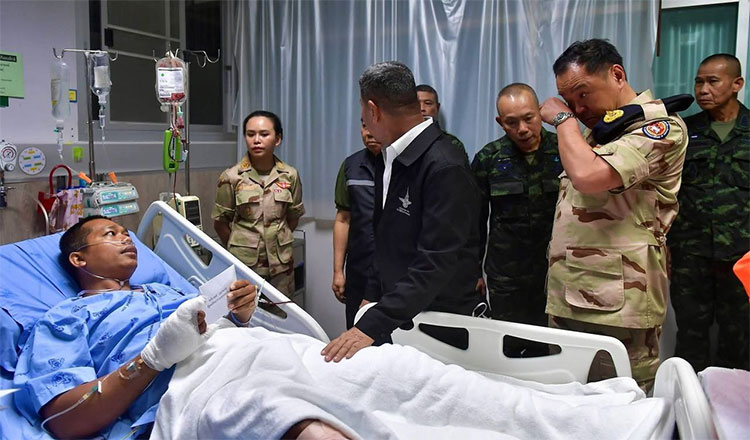 Photo khaosod English
-Opinion-
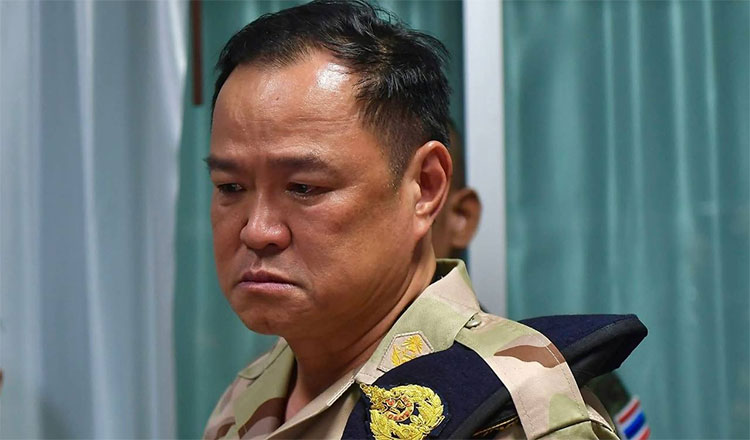
On November 11, Thai Prime Minister Anutin Charnvirakul shed tears before the cameras while visiting Thai soldiers injured in a landmine accident at Cambodia-Thailand border. The moment, staged with perfect media timing, was described as “deeply emotional.” Yet behind those tears lies something far colder: the calculated face of a leader using grief as propaganda.
If those tears were truly for peace, they would have been followed by compassion, restraint, and dialogue. Instead, they were followed by anger, accusations, and defiance. On the very same day, Anutin stood before soldiers and declared, “Peace is over,” tore up the Kuala Lumpur Peace Declaration, and vowed to act unilaterally without consulting anyone. Those are not the words of a peacemaker—they are the words of a populist seeking to weaponize emotion for political gain.
Thailand’s Prime Minister has chosen the oldest tactic in politics: cry in public, then command in private. His “crocodile tears” are meant to conceal a policy of confrontation that violates the most basic principles of international law and ASEAN unity. By rejecting an agreement witnessed by world leaders, including U.S. President Donald Trump and ASEAN Chair Anwar Ibrahim, Anutin has placed Thailand in direct contradiction to the regional order that safeguards stability in Southeast Asia.
Let us not forget what Cambodia and Thailand agreed to only weeks ago. The October 26 Kuala Lumpur Declaration committed both sides to restraint, de-escalation, and cooperation in demining and heavy and destructive weapons withdrawal. Cambodia has honoured every clause. Thailand, meanwhile, has politicized tragedy to discredit the agreement, accuse Cambodia without evidence, and rouse nationalist fervour. This is not diplomacy—it is dangerous theatre.
Cambodia, a country that has spent three decades clearing over two million landmines and earning global recognition for humanitarian demining, has absolutely no interest in planting new mines. To accuse Cambodia of doing so defies both logic and humanity. The Cambodian Ministry of National Defence has already expressed regret over the accident, emphasizing that the site remains contaminated from past conflicts—a fact that both militaries have long acknowledged.
Anutin’s emotional performance at the hospital may have impressed domestic audiences, but to the international community, it reveals something more troubling: a deliberate exploitation of tragedy to justify escalation. Instead of standing for peace, he stood for political survival—feeding the appetite of hardline generals and ultranationalists whose support he needs ahead of Thailand’s next election.
True compassion is measured not by tears, but by actions. If Anutin truly felt the pain of those soldiers, he would have worked to prevent further suffering—by returning to dialogue, upholding agreements, and respecting international law. Instead, he has chosen to inflame hostility, undermine ASEAN’s collective credibility, and risk regional stability.
Crocodile tears may fool the cameras, but they cannot deceive history. The world can see clearly what this performance was: not the sorrow of a leader, but the strategy of a man willing to cry for his soldiers while preparing to betray the peace they deserve.
The Kingdom of Cambodia remains firm: peace is not weakness, and restraint is not surrender. True strength lies in honouring one’s word. While others weep for war, Cambodia will continue to stand for peace—with dry eyes and a clear conscience.
Roth Santepheap is a geopolitical analyst based in Phnom Penh. The views expressed are his own.
-Khmer Times-