Defence ministry allege use of chemical weapons by Thai air force
 Defence ministry allege use of chemical weapons by Thai air force
The Cambodian Ministry of National Defence has claimed that the Thai military began employing “poison gas” against Cambodian forces yesterday, July 27,
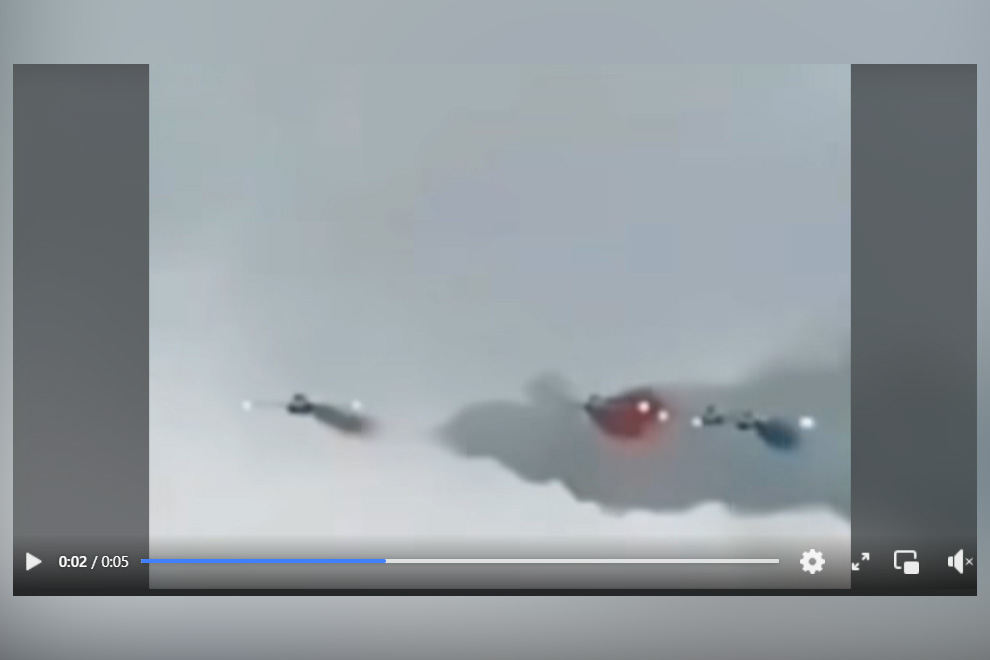
“At 3.17pm on July 27, the Thai military dropped poison gas from an aircraft in An Ses. After 4pm, there was heavy shelling at Chubki, Thmar Daun. Rounds also fell on the areas surrounding Ta Mone Thom and Ta Krabey temples,” said ministry spokesperson Maly Socheata.
She also noted that there have been reports of the use of suicide drones, cluster munitions and poison gas in the Phnum Khmoach area.
Although the reports of the use of gas have not been confirmed, The Post can report the four most common kinds of smoke generated by military applications.
White/Red Phosphorus (WP/RP) is an incendiary, used to burn targets at extremely high temperatures, that produces dense smoke. It is highly irritating to eyes, skin and the respiratory tract, and causes severe burns.
Hexachloroethane (HC) smoke is generated to create a dense smoke screen, generally to conceal the movement of troops and vehicles. It is highly irritating and can lead to piotential chemical pneumonia, pulmonary edema, even and death, in high concentrations.
Coloured smoke grenades are used for signalling or marking specific positions. Direct inhalation is discouraged.
Riot control agents, like CS gas or tear gas, are designed for temporary incapacitation via irritation. High concentrations or enclosed spaces can cause severe respiratory issues and, rarely, death. Their use is banned in warfare.
Medical student Kaing Kimsan took to social media to warn people about how they can protect themselves in the event of a chemical attack.
He recommended staying indoors and wearing a mask and gloves, along with protective clothing, if it is necessary to be outdoors. He also warned against consuming fruit, vegetables or water from an area that has been exposed.
Kimsan recommended that anyone living near the conflict zone cover or seal well, ponds or other water sources, and also recommended that water be filtered before consumption.
People should monitor their health and those of the people around them. Symptoms such as headaches, nausea, dizziness, a rash, itchy eyes or trouble breathing are signs of possible exposure. Parents and guardians should monitor children closely.
The use of chemical weapons id banned under several international Treaties. They include the Chemical Weapons Convention (CWC), the Biological Weapons Convention (BWC) and the Geneva Protocol of 1925.
These treaties strictly prohibit the use, development, production and stockpiling of chemical and biological weapons.