Opinion: Thailand’s Phimai Prototype Claim Is a Fabrication: The Real Thieves of Heritage
 Opinion: Thailand’s Phimai Prototype Claim Is a Fabrication: The Real Thieves of Heritage
Khmer Times | The recent attempt by Thai academic Dr. Rungroj Piromanukul to claim that Cambodia’s Angkor Wat was modeled after Thailand’s Phimai Sanctuary is nothing short of historical distortion and intellectual dishonesty. Let us be clear: Angkor Wat is not a derivative—it is the pinnacle of Khmer civilization and stands as one of humanity’s greatest architectural and cultural achievements. Thailand’s desperate effort to reframe history is a blatant attempt to appropriate the heritage of Cambodia and erase the truth that the Khmer Empire was the dominant civilization in this region.
Phimai Was Khmer, Not Thai
Thailand did not exist when Phimai and Angkor Wat were built. The region now called Thailand, including Nakhon Ratchasima where Phimai is located, was part of the Khmer Empire. Phimai was built by the Khmer, in the Khmer style, under Khmer kings. Trying to claim Phimai as a “Thai” heritage site is historical fraud. The Thai state, which emerged centuries later, had nothing to do with its design or construction.
Even Thai historians admit that Phimai was under Khmer control when it was built. So how can a Khmer temple built in Khmer territory be a “prototype” of another Khmer temple? That’s like saying an older Khmer house in one province inspired a Khmer palace in another—both are Khmer creations, not proof of Thai originality.
Angkor Wat Is a Masterpiece, Not a Copy
Angkor Wat, built by King Suryavarman II in the 12th century, is vastly superior in scale, complexity, symbolism, and innovation. Comparing it to Phimai is like comparing a village pagoda to a grand capital temple. The claim that Angkor “copied” from Phimai is insulting, misleading, and entirely lacks credibility.
Innovation in architecture often evolves within civilizations. Styles develop over time. It is natural for earlier Khmer temples like Bakheng, Baphuon, and yes, even Phimai, to precede Angkor Wat. But to suggest Angkor Wat is a copy is to ignore that it is the culmination of centuries of Khmer engineering, art, and cosmology. It did not borrow from Phimai—it perfected what earlier Khmer temples only began.
Dr. Rungroj’s Points Are Misleading
Let’s dismantle the Thai academic’s arguments: “Naga-pak” architectural features? These are elements common in Khmer architecture, found across many temples, not exclusive to Phimai. Narrative reliefs? The depiction of royal processions in temples is a widespread tradition in Angkorian art—not something invented at Phimai. Pediments with Naga hoods? Again, standard Khmer motifs. These are not “Thai inventions,” they are Khmer religious and artistic elements. Cruciform causeway? That design appears in many Khmer temples, including Preah Vihear and Baphuon. It is a Khmer innovation, not a Thai one. King Suryavarman II’s ancestry in Phimai? Even if partially true, it only proves Phimai was Khmer territory. If his ancestors lived there, it reinforces the fact that the area was under Khmer dominion, not that Angkor Wat is Thai in origin.
Thailand Is Copying, Not Preserving
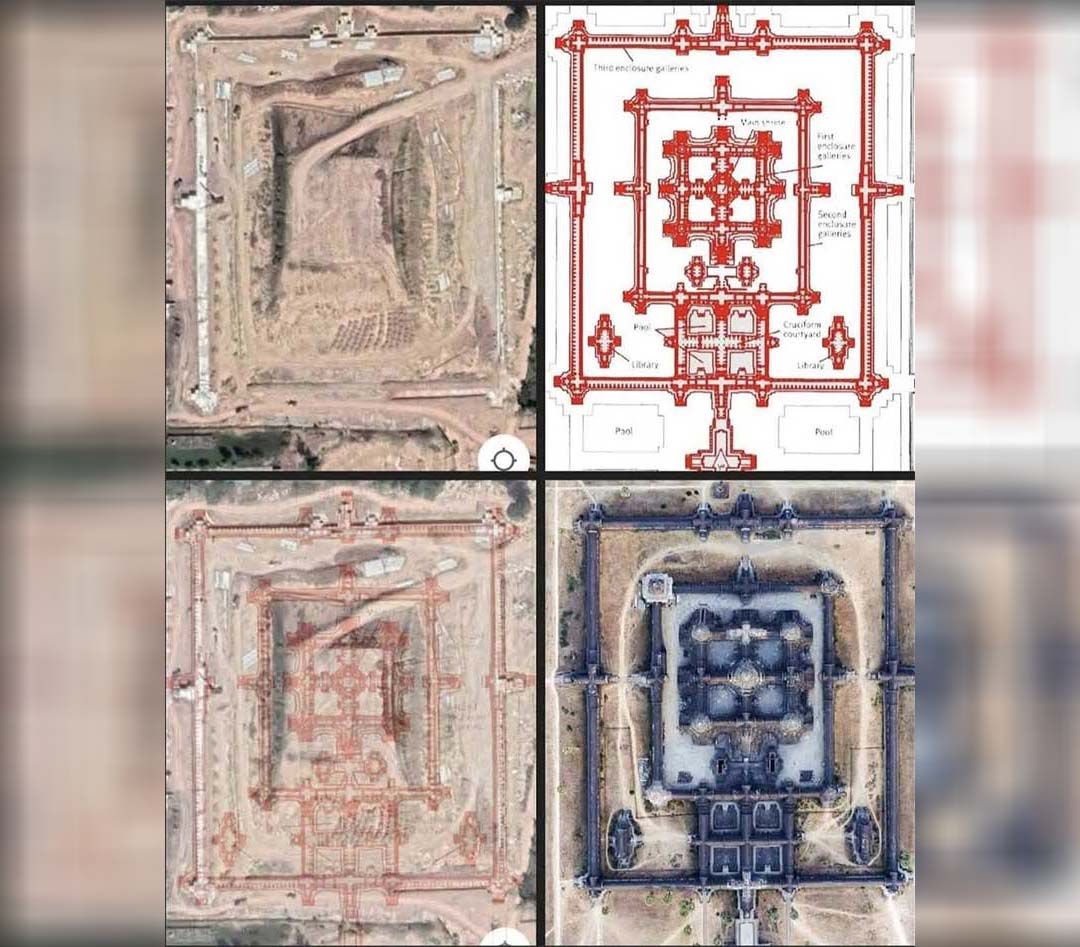
Let us not forget why this debate erupted: because Thailand is building a massive replica of Angkor Wat in Buriram Province without Cambodia’s consent, without UNESCO approval, and without any acknowledgment of Cambodia’s heritage rights. This is not academic analysis—it’s cultural theft.
Thailand has repeatedly tried to copy, mimic, or appropriate Cambodian cultural treasures—from traditional dance to textiles, to temple architecture. The replica in Buriram is the latest and most disgraceful example. It is an intentional provocation, and a shameless act of soft-power appropriation.
Cambodia Will Defend Its Heritage
Cambodia is not fooled. The international community must not be either. Our heritage is not up for grabs, nor will we allow history to be rewritten by opportunistic academics trying to legitimize a copycat project through flawed logic.
Angkor Wat is Khmer. Phimai is Khmer. The only thing “Thai” here is the theft of narrative.
No matter how many replicas Thailand builds, it will never possess the soul, the originality, or the right to claim Angkor.
Thailand is not the guardian of Angkorian heritage—it is the thief of it. It is time for UNESCO, historians, and the world to stand with truth and respect the rightful owner of this world treasure: the Kingdom of Cambodia.
Roth Santepheap is a geopolitical analyst based in Phnom Penh. The views expressed are his own.