Editorial 111 – Responsibility Crosses Generations
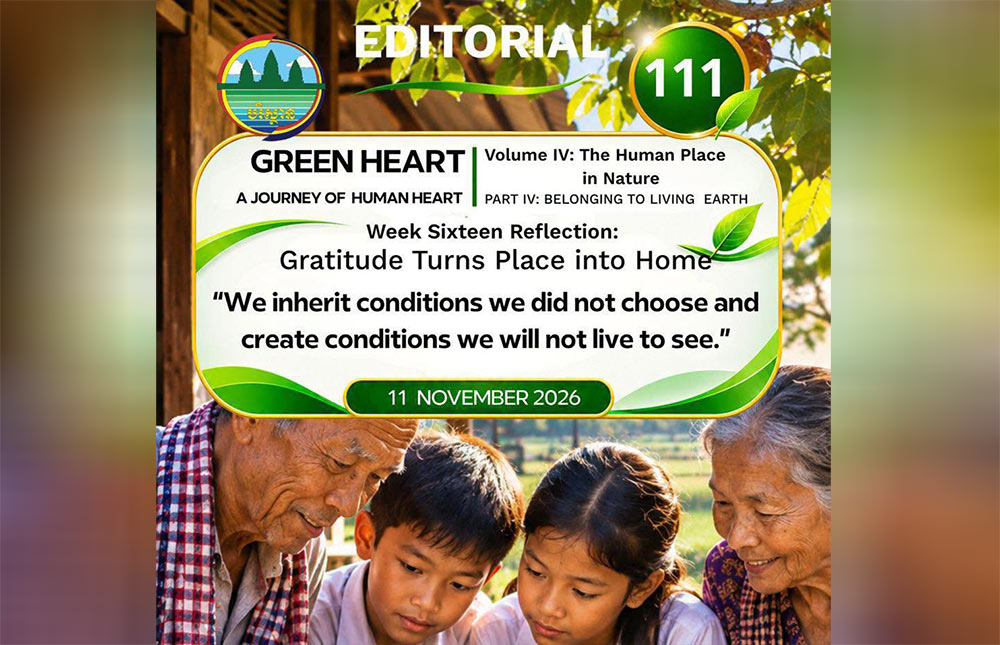 Editorial 111 – Responsibility Crosses Generations
Opening Thought
“We inherit conditions we did not choose and create conditions we will not live to see.”
Editorial
Every generation receives gifts and problems from the past: language, knowledge, institutions, roads, forests, debts, pollution, restored land, protected species, and changing climate.
We are not personally guilty for every inherited harm, but we become responsible for how we respond once we understand it. We can continue, repair, transform, or pass it onward.
Future generations cannot participate directly in current decisions. They rely on us to protect options: fertile soil, safe water, biodiversity, climate stability, cultural memory, knowledge, and functioning institutions.
Intergenerational responsibility does not require sacrificing all present needs. People alive today need health, food, housing, education, energy, and dignity. The ethical task is to meet present needs in ways that do not close the future unnecessarily.
Long-lived decisions deserve special care. A building, dam, mine, road, waste site, or forest conversion may shape conditions for decades. Short political or business timelines can hide long consequences.
Precaution is useful when harm could be severe or irreversible and evidence remains uncertain. It does not mean banning every new idea. It means considering safer alternatives, monitoring, and not using uncertainty as an excuse for careless risk.
Education is an inheritance too. A student taught to observe, think critically, and care may influence choices for the next seventy years. Values can last longer than infrastructure.
We should also receive ancestral knowledge without romanticizing every past practice. Gratitude and correction can exist together. Our descendants may treat our own decisions in the same way.
Write a message to someone living fifty years from now. What would you want to explain? What would you be proud to have protected? What apology would you hope not to make?
Legacy is not limited to famous achievements. It appears in soil not eroded, water not polluted, a species still present, a child educated, and a habit of care passed onward.
We are temporary ancestors. The future will live inside the conditions we leave.
Long-term funds and institutions can protect that intention. A tree needs care after the planting generation leaves; a monitoring program needs records and budgets; a protected place needs future stewards. Legacy is designed through continuity.
Succession planning invites young people into responsibility early enough to learn from those already serving.
Buddhist Reflection
Karma reminds us that intentional actions create continuing conditions. Generosity across generations acts without expecting personal reward, offering possibility to people we will never meet.
Today’s Reflection
Which decision made today could still affect people fifty years from now?
Today’s Action
Write one paragraph to a future student describing the environmental condition you promise to help protect.
Today’s Pledge
Today I will receive the past honestly and create conditions the future can inherit with hope.
When we protect nature, we protect all beings—including ourselves.