Thais refute UN rapporteur’s border assessment as Cambodia points to broader occupation
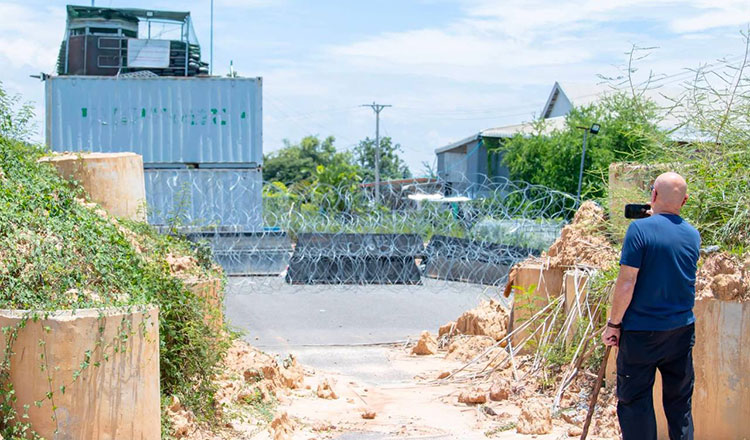 UN special rapporteur Tom Andrews visited displaced border communities and observed Thai military barricades last week. Supplied
Thailand has attracted fresh criticism from Cambodia after challenging the impartiality of a UN special rapporteur over his assessment of the humanitarian impact of the Cambodia-Thailand border conflict.
Cambodian officials argue that Bangkok’s response focuses narrowly on a single disputed village while avoiding the broader issue of what Phnom Penh says is the continued occupation of at least 14 locations inside Cambodia.
The latest dispute follows the conclusion of a 12-day mission by UN special rapporteur on the situation of human rights in Cambodia Tom Andrews, who visited communities affected by last year’s border conflict and called for displaced Cambodian civilians to be allowed to return home.
During a July 31 press conference in Phnom Penh, Andrews explained that he had travelled to border areas, met displaced families and local authorities, and witnessed the humanitarian consequences of the fighting firsthand.
“I spoke to civilians who told me that they are unable to return to their homes because their villages and towns are now occupied by Thai soldiers,” he said.
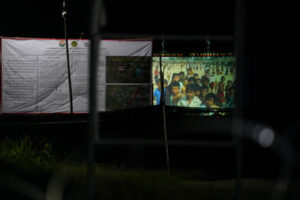
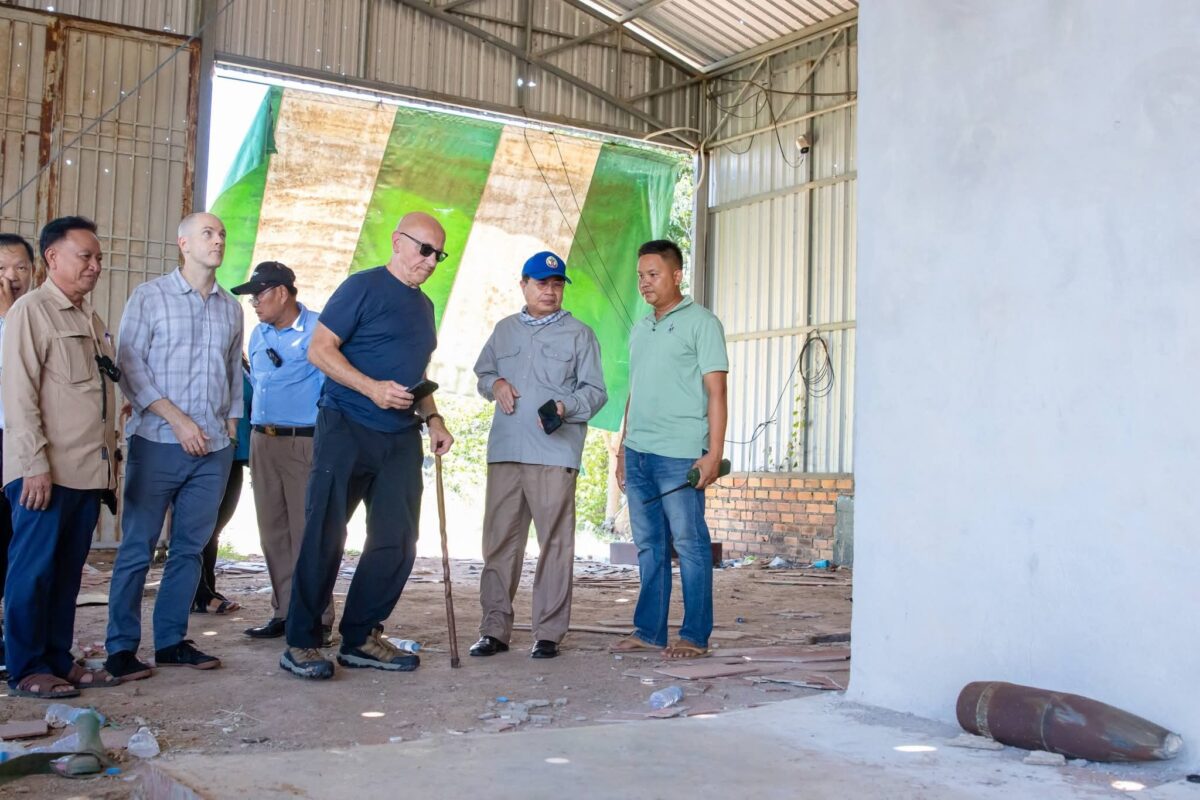
“I travelled to the edge of a border town and viewed the barriers and barbed wire that prevent residents, including some of those with whom I spoke, from returning to their homes. I saw houses riddled with bullet holes, destroyed workshops and warehouses, and even an unexploded bomb among the ruins,” he added.
Andrews noted that more than 650,000 Cambodian civilians were displaced during the conflict, with more than 20,000 still living in temporary settlements, displacement camps and pagodas.
He highlighted that international law guarantees the right of displaced people to return home and said the December 27, 2025 ceasefire agreement between Cambodia and Thailand obliges both sides to facilitate the safe return of civilians.
He also voiced support for Cambodia’s position that the dispute should be resolved through international law, while expressing his willingness to work with both governments to address the human rights consequences of the conflict.
Thailand responded by rejecting references to the displacement of around 650,000 Cambodians and suggested that UN special rapporteurs should uphold “impartiality, objectivity and reliance on credible, verifiable sources” when assessing a situation.
Bangkok also disputed the status of Chouk Chey and Prey Chan villages in Banteay Meanchey province, referring to the area as Ban Nong Chan and arguing that residents there should not be classified as internally displaced persons because Thailand considers the area to be under its sovereignty.
Cambodian officials noted that Thailand’s response addressed only one location while remaining silent on numerous other pieces of land that Phnom Penh says continue to be occupied by Thai forces.
According to the Ministry of Foreign Affairs and International Cooperation, Thailand currently occupies at least 14 locations across four Cambodian provinces.
The ministry identified them as Prey Chan, Chouk Chey and Boeung Trakaun area in Banteay Meanchey province; Phluk Domrei and the Thma Da International Border Checkpoint area in Pursat province; An Seh, Ta Thav and Thnom Trap in Preah Vihear province; and O’Smach, K’nar Temple, Ta Krabei Temple, Ta Moan Thom Temple, Chob Angkunh and Chok Krous in Oddar Meanchey province.
Cambodia also claims that Thai forces have established military positions, including shipping containers and razor wire in border marker sectors BP42-47 and BP52-59, actions Phnom Penh says constitute unilateral changes to the status quo and violations of Cambodia’s sovereignty and territorial integrity.
A Cambodian official familiar with the matter who wished to remain anonymous said Thailand’s criticism of the UN special rapporteur failed to address the humanitarian concerns raised during the mission.
“Cambodia expresses serious concern over Thailand’s attempt to undermine the independence and credibility of the UN special rapporteur. Independent mandate holders are appointed by the UN Human Rights Council to assess facts objectively and free from political interference,” the official said.
“It is regrettable that Thailand has chosen to question the impartiality of the special rapporteur rather than address the humanitarian concerns he identified. The humanitarian consequences highlighted in his statement stem from Thailand’s armed invasion into Cambodian territory, which forced 650,000 Cambodian civilians to flee their homes, destroyed civilian homes and essential infrastructure, and continues to prevent many displaced families from returning safely and with dignity.
“These humanitarian realities deserve accountability and meaningful action — not denial or attempts to discredit independent UN institutions,” he added.
The official noted that Cambodia welcomed Thailand’s stated commitment to implementing the Joint Statement of December 27, 2025, but said those commitments should be reflected through concrete actions, including respecting Cambodia’s sovereignty and territorial integrity, refraining from unilateral actions that alter the status quo, enabling the safe and dignified return of displaced civilians and resuming boundary demarcation through the JBC in good faith.
Political analyst Yang Peou, secretary-general of the Royal Academy of Cambodia, suggested that Thailand’s response reflects what he described as a longstanding pattern of rejecting allegations despite international legal rulings and agreements.
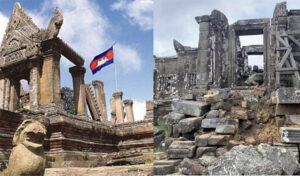
“Thailand has consistently disputed issues it disagrees with, regardless of how well substantiated they are. It rejected the International Court of Justice’s 1962 ruling on Preah Vihear Temple and subsequent interpretations, and more recently has been accused of violating both the ceasefire agreement and the Joint Statement of December 27, 2025,” Peou told The Post.
He said the UN special rapporteur had simply carried out his professional mandate by documenting the humanitarian consequences of the border conflict.
“His responsibility is to assess the human rights situation in Cambodia. That naturally includes people losing their homes, livelihoods, educational opportunities, shelter and other fundamental rights because of the conflict. He reported what he observed in accordance with his professional responsibilities,” he noted
Rather than questioning the credibility of an independent UN expert, Peou argued that Thailand should support its claims with internationally recognised evidence.
“If Thailand is confident in its position, it should have the courage to present internationally recognised maps showing who crossed into whose territory, where civilians fled and why they became displaced,” he said.
“The ceasefire arrangements and the Joint Statement of December 27, 2025, also clearly provide for displaced civilians to return safely to their homes. These issues should be addressed through evidence and international law, not by discrediting independent UN mechanisms,” he added.
The latest diplomatic exchange follows similar criticism from Bangkok after Hollywood actress and humanitarian Angelina Jolie publicly highlighted the humanitarian consequences of the border conflict, including the plight of displaced Cambodian families.
Thai authorities accused Jolie of presenting a one-sided account and overlooking Thailand’s position, while urging international figures to rely on what it described as balanced and verified information.
At the same time, Thailand has intensified what its military describes as a public diplomacy campaign.
Air Chief Marshal Prapas Sonjai, commander of the Royal Thai Air Force and director of the Thai-Cambodian Border Situation Center’s Joint Information Centre, recently urged Thailand’s approximately 70 million citizens to actively help promote the country’s narrative on social media and other online platforms.
“The truth may move slowly, but when it arrives, it will stand for much longer than an advertisement,” he said.
He added that “the truth does not need to shout, but it must not stop being told”, arguing that if all 70 million Thais helped explain and share Thailand’s position, it would demonstrate the “power of public diplomacy”.
Despite Thailand’s rejection of the allegations, Cambodia maintains that the dispute extends far beyond Chouk Chey and Prey Chan villages.
Phnom Penh continues to note that multiple locations remain under Thai occupation and has repeatedly called for the withdrawal of Thai forces, restoration of the status quo and resolution of the dispute through international law and existing bilateral border mechanisms.
-Phnom Penh Post-