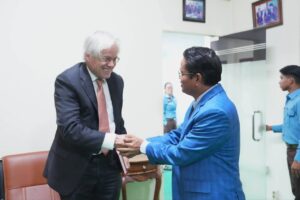
Sihanouk’s search for famed Buddhist landmark led him to Quanzhou temple
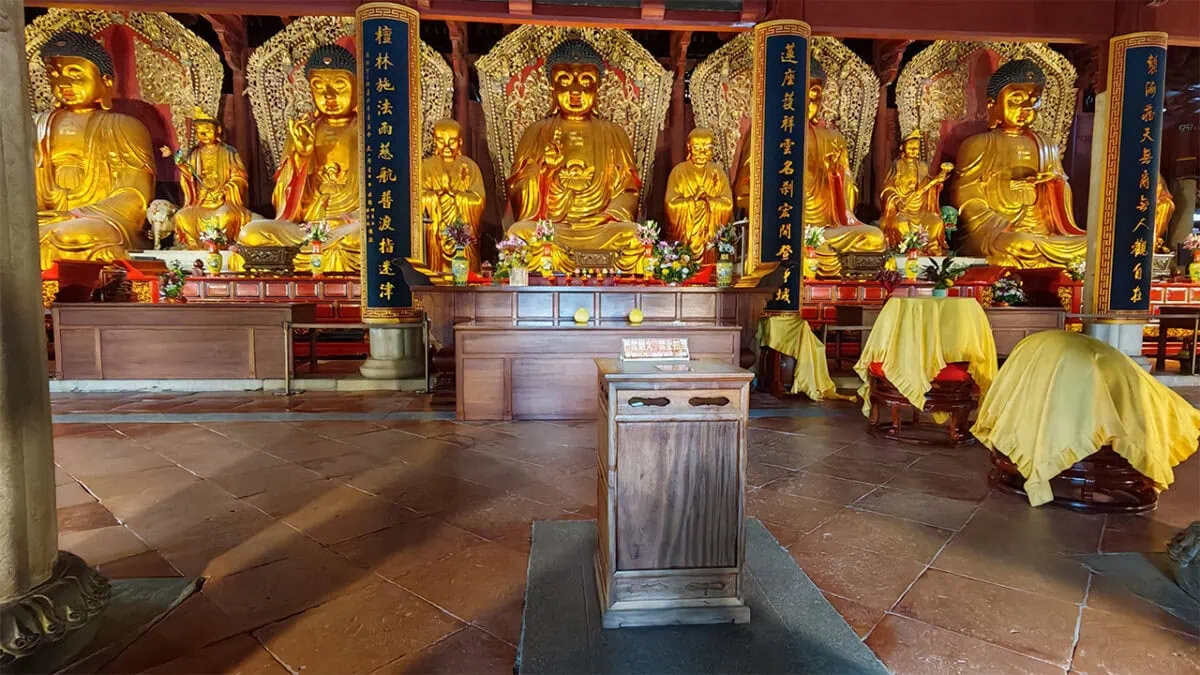 The later King Father Norodom Sihanouk worshipped in front of the five Buddhas of the Quanzhou temple. Hong Raksmey
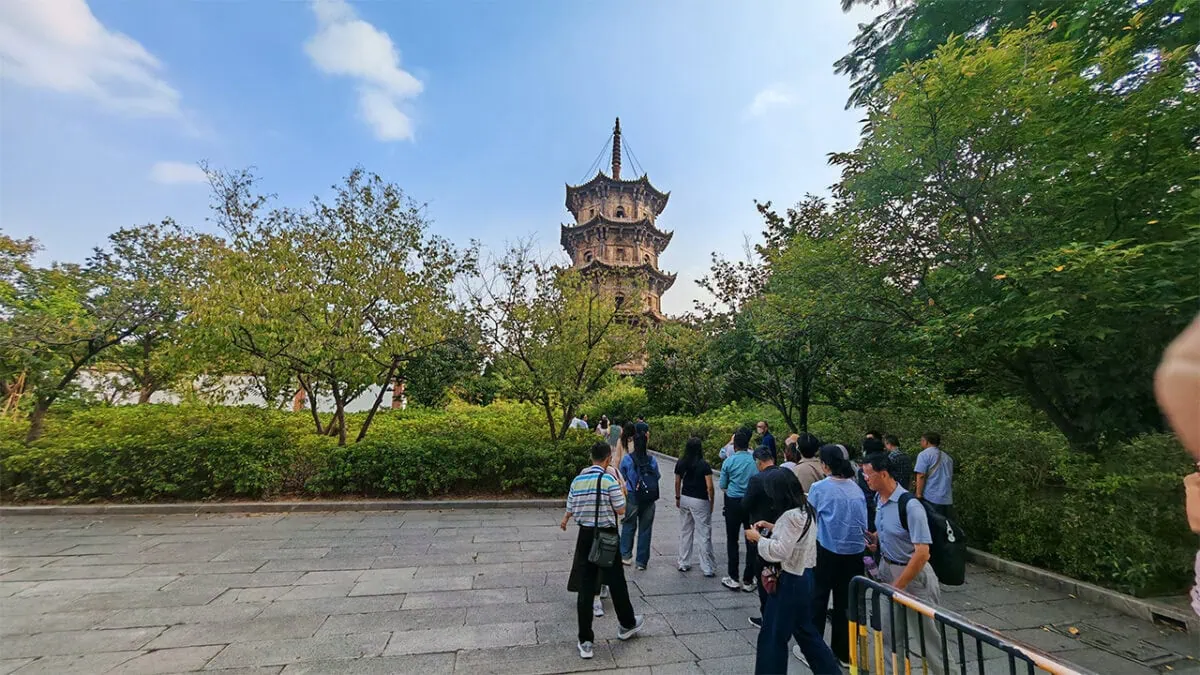
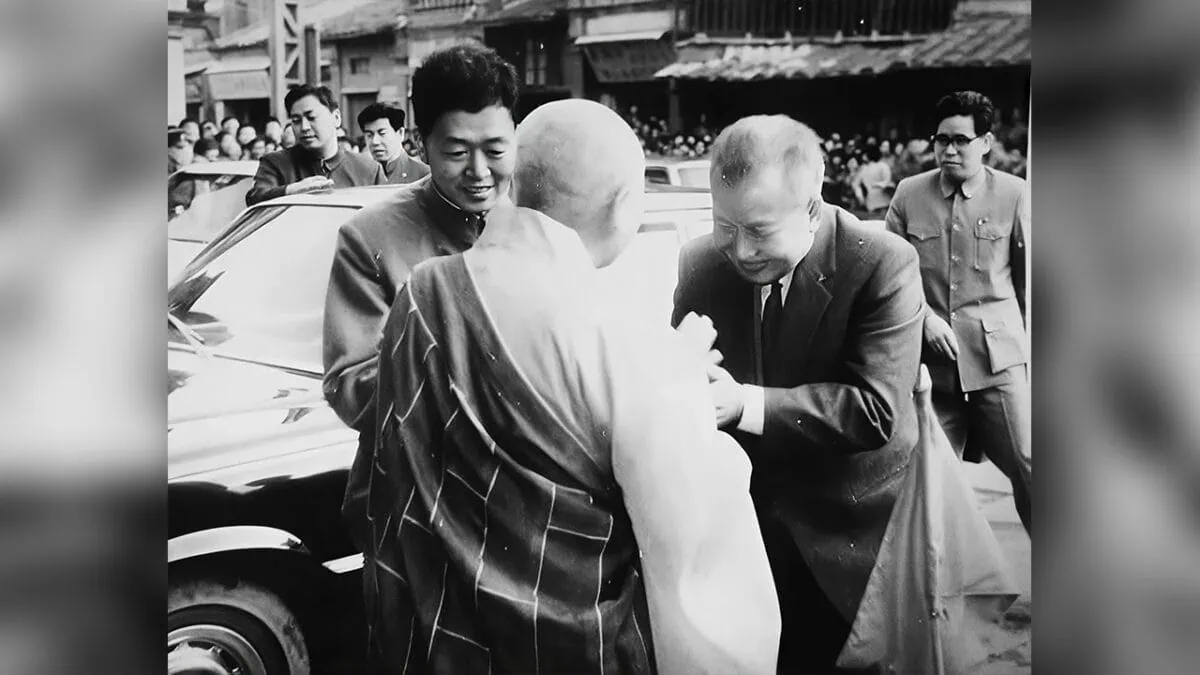
The late Cambodian King Father Norodom Sihanouk visited the Quanzhou Kaiyuan Monastery temple in China’s Fujian province in 1983. He was reportedly searching for its famed “Hundred-Pillar Hall”, a Buddhist landmark whose reputation had spread across Southeast Asia through centuries of maritime exchanges.
Deyuan, a master at the temple, said Sihanouk had read about the celebrated hall but initially did not know where in China it was located.
“The King had learned about this temple from a book and asked Chinese officials where it was. At the time, they could not answer,” Deyuan told a group of ASEAN journalists, who visited the temple on September 21.
According to Deyuan, renowned Chinese historian Guo Moruo, who had previously visited Quanzhou, helped identify the city as the location of the hall. Chinese officials subsequently accompanied Sihanouk to Kaiyuan Temple.
The account offers a little-known glimpse into Sihanouk’s interest in Asian religious and cultural heritage, while highlighting the historical connections between Quanzhou — a major port on the ancient Maritime Silk Road — and Southeast Asia.
Deyuan reiterated that the hall was already well known outside China because merchants and travellers from Quanzhou had sailed abroad through the city’s port in ancient times, carrying knowledge of its religious sites and culture to other parts of Asia.
“The temple was very famous in Southeast Asia, especially for the Hundred-Pillar Hall,” he said.
“Its reputation had travelled abroad, although over time some people knew that such a hall existed in China but had forgotten that it was in Quanzhou,” he added.
The master noted that another member of the Cambodian royal family, described during the interview as “one of Sihanouk’s sons”, visited the temple in 1993, exactly 10 years after Sihanouk’s trip.
Kaiyuan Temple, founded during the Tang dynasty, is one of the most prominent Buddhist sites in Fujian.
It forms part of “Quanzhou: Emporium of the World in Song-Yuan China”, which was inscribed on UNESCO’s World Heritage List in 2021.
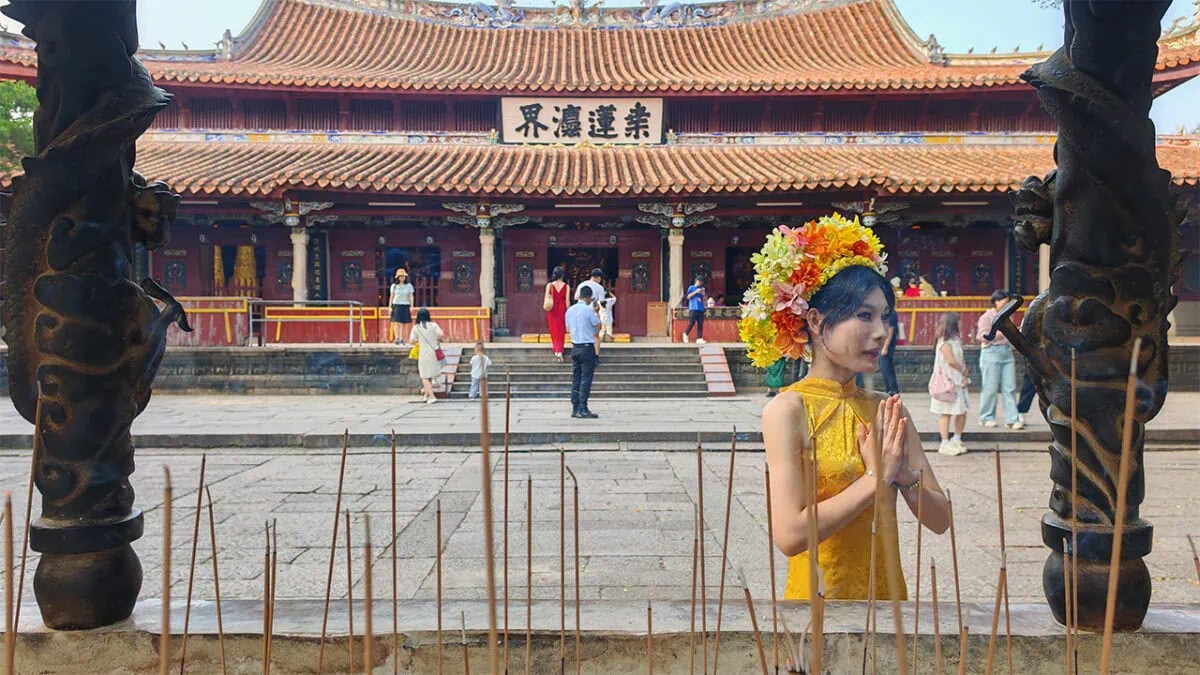
The temple’s main building, officially known as the Mahavira Hall but commonly called the Hundred-Pillar Hall, is the largest worship hall in the complex. The common name is a misnomer, as there are far less than 100 columns.
Deyuan said the building was reconstructed in 1637, after an earlier structure was damaged by an earthquake in 1604.
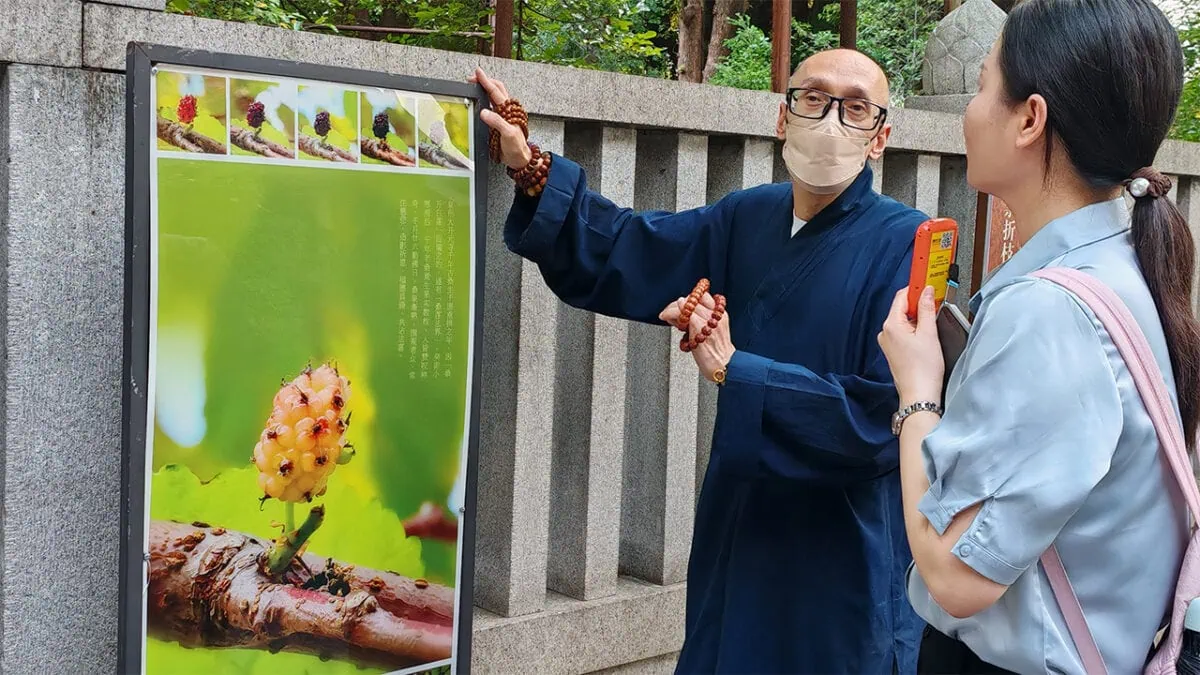
Its architectural rank is reflected in its double-eaved roof and the use of nine bays and five steps — numbers traditionally associated with the Chinese emperor.
“This was a very high-ranking building in southern China. Some temples have only a single-layer roof, but this one has two,” he explained.
Inside the hall are five large Buddha statues representing the east, west, north, south and centre. Deyuan said the arrangement of the Five Direction Buddhas is unique in China.
Among the hall’s most distinctive decorative features are 24 carved celestial musicians positioned high among the wooden beams.
Each holds a different musical instrument or cultural object, with the figures symbolising China’s 24 traditional solar terms, as well as the passage between day and night.
The hall also demonstrates sophisticated timber engineering. Its overlapping wooden components were assembled through interlocking joints, allowing air to circulate throughout the upper structure.
According to Deyuan, the airflow helps prevent dust, cobwebs and birds’ nests from accumulating among the beams.
The interlocking structure also disperses strong winds in different directions during typhoons.
“When the wind enters, it forms an air current and is released in all directions through the wooden structure,” he said, adding “It works like natural air conditioning.”
The master compared the hall’s double-layered beam system to the structure of a modern bridge.
He said heritage experts had been impressed that builders had applied such an engineering concept to a religious building more than four centuries ago.
Beyond its architectural value, the tale of the late King Father’s visit to the temple stands as a testament to the movement of religions, people and ideas between coastal China and Southeast Asia.
-Phnom Penh post-