The Weight of Civilisational Antiquity: A Historical Response to Khaosod English
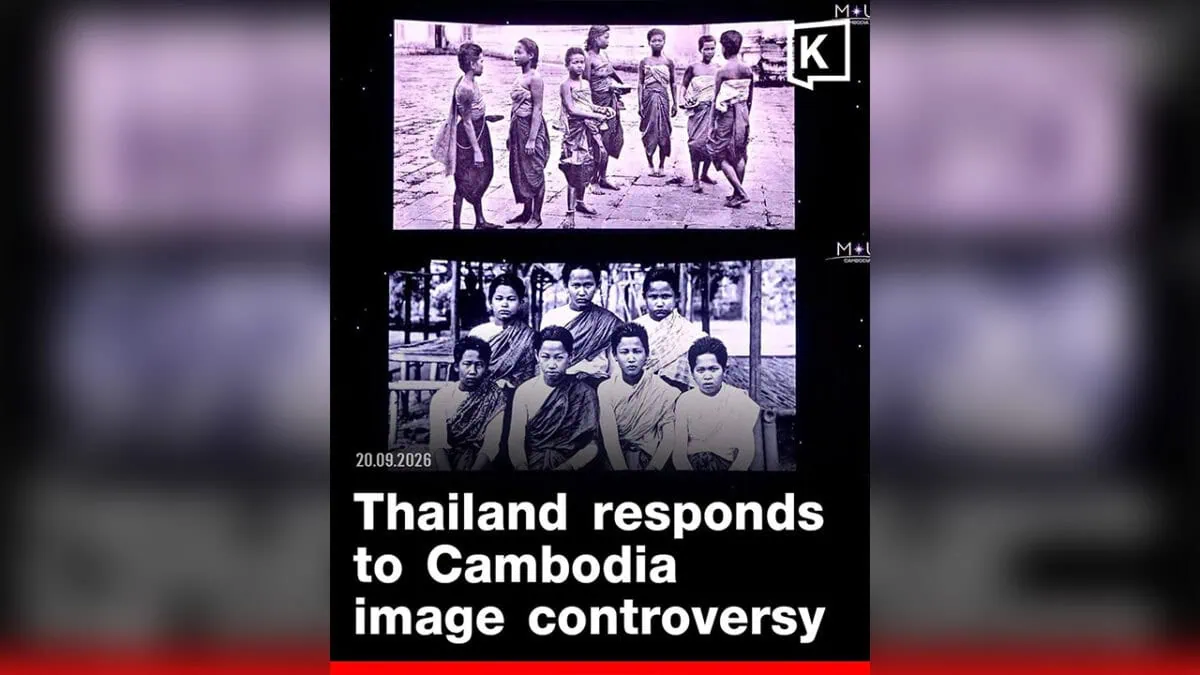 Thai media outlet Khaosod English has claimed that vintage images of Khmer villagers are in fact Thais. Khaosod English
#Opinion
When discussions turn to the history of Cambodia and Thailand, we should approach the subject with historical evidence, mutual respect, and a willingness to recognise the civilisations that flourished long before the emergence of modern nation-states. As a Khmer citizen, I believe it is important to enlighten readers, particularly younger generations and the international community, about the antiquity of Khmer civilisation and its contributions to Southeast Asian history.
In response to discussions published by Khaosod English concerning Khmer and Thai heritage, I would like to draw attention to the historical chronology of the Khmer Empire and the emergence of the Thai kingdoms. Understanding history is not about diminishing the cultural identity of another nation. It is about recognising the contributions of each civilisation and ensuring that historical narratives are based on evidence rather than political convenience or national pride alone.
The historical record provides an important starting point. In 802 CE, King Jayavarman II was consecrated as chakravartin, a moment conventionally recognised as the establishment of the Khmer Empire. The ceremony is associated with Mount Mahendraparvata in the Phnom Kulen region. This milestone marks the beginning of the Angkorian imperial period in conventional historical accounts.
By comparison, the Kingdom of Sukhothai emerged as an independent political entity around 1238 CE. This places the conventional founding of the Khmer Empire approximately 436 years earlier. Ayutthaya was established around 1350–1351 CE, approximately 548–549 years after 802 CE. These dates provide an important historical perspective: the Angkorian Khmer Empire was established centuries before the emergence of the Sukhothai and Ayutthaya kingdoms.
However, historical accuracy requires an important distinction. We should not claim that Cambodia is 550 years older than Thailand as a modern country, because the establishment of Ayutthaya is not the same as the establishment of modern Thailand. The modern Thai state developed through a much longer historical process, and the name Thailand was only officially adopted in the 20th century. Therefore, the more accurate historical statement is that the Angkorian Khmer Empire predates the establishment of Sukhothai by approximately four centuries and Ayutthaya by roughly five and a half centuries.
The history of the Khmer people also extends beyond the Angkorian period. Earlier states, including Funan and Chenla, form part of the historical background of Khmer civilisation. These societies demonstrate that complex political organisations, religious traditions, cultural practices and regional exchanges existed in mainland Southeast Asia long before the rise of modern national borders.
The achievements of Angkor stand as evidence of the Khmer civilisation’s remarkable architectural, engineering, artistic, religious and organisational capabilities. Angkor Wat, the Bayon, and the extensive urban and water-management systems represent an important legacy not only for Cambodia but also for humanity. Such achievements deserve serious historical study, preservation and protection.
At the same time, recognising the antiquity of Khmer civilisation should not be used to deny the historical contributions of Thai communities or other peoples of Southeast Asia. Civilisations interact, exchange ideas, compete and influence one another. A responsible understanding of history must account for these relationships rather than reduce the past to a competition over national superiority.
Nevertheless, when discussions concern Khmer and Thai heritage, the distinction between ancient civilisations, historical kingdoms and modern nation-states is essential. The Khmer Empire of the Angkorian period, the Sukhothai Kingdom and the Ayutthaya Kingdom were different political entities that emerged during different historical periods.
Their histories cannot be accurately understood by treating them as if they all developed at the same time or under identical political circumstances.
As Khmer citizens, we have every reason to learn our history, teach our children, preserve our temples and protect our cultural heritage. We should be able to explain the achievements of our ancestors with confidence and dignity. Historical pride, however, should be grounded in evidence, not in exaggerated chronology or the dismissal of neighbouring peoples.
To Khaosod English and readers interested in Cambodia–Thailand historical relations, I offer this perspective: the history of the Khmer Empire deserves to be presented with the same seriousness and attention to evidence afforded to the history of every other civilisation. The year 802 CE, the emergence of Sukhothai in the 13th century, and the establishment of Ayutthaya in the 14th century provide a clear chronological framework for understanding the development of these regional kingdoms.
These dates should inform public discussions rather than be overlooked when questions of historical heritage arise. The antiquity of Khmer civilisation is a matter of historical study, not simply a matter of national sentiment. At the same time, respect for Khmer history is not incompatible with respect for Thai history. Recognising the earlier establishment of the Khmer Empire does not require the denial of Thailand’s cultural identity or historical development.
Our shared regional history should encourage scholarship, cultural preservation and mutual understanding. It should not become a reason for hostility between Cambodian and Thai people. Instead, historical knowledge should help both societies understand their roots, acknowledge their differences and protect the cultural heritage inherited from their ancestors.
History belongs to humanity. Its evidence should be respected, its lessons should be studied, and its heritage should be protected for future generations. The Khmer Empire’s antiquity is an important part of Southeast Asia’s historical record, and it deserves to be recognised through accurate scholarship, responsible journalism and a commitment to cultural dignity.
Tesh Chanthorn is a Cambodian citizen who longs for peace. The views and opinions expressed are his own.
-Phnom Penh Post-