Dialogue conducive to stabilising Sino-Indian border and ties
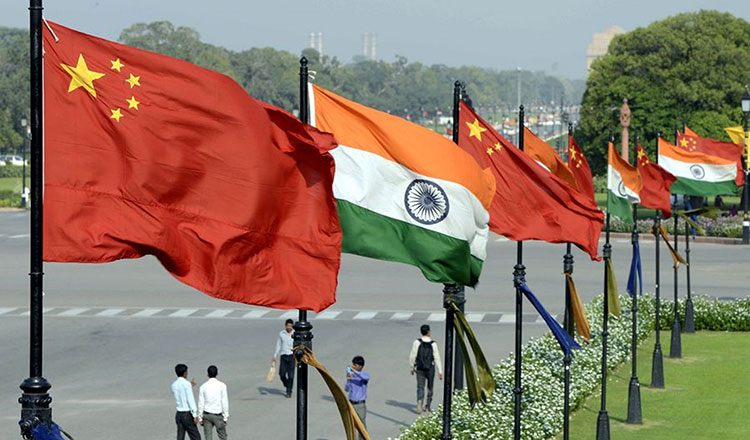 Indian and Chinese national flags flutter side-by-side at the Raisina hills in New Delhi, India. Xinhua
#Opinion
The 25th round of talks between the special representatives of China and India on the boundary question, held last week in Beijing, concluded with an eight-point consensus.
Foreign Minister Wang Yi, China’s special representative on the boundary question between China and India, and India’s Special Representative and National Security Advisor Ajit Doval co-chaired the meeting. Its outcomes will help stabilise the border areas of the two neighbours.
The consensus includes establishing an expert group on boundary delimitation and a working group on border management under the existing China-India border affairs consultation and coordination working mechanism. The first task of these groups will be to agree on their respective terms of reference so they can advance discussions on boundary delimitation and border management and achieve early, substantial progress.
To improve border management, the sides agreed on two additional meeting points for the General-Level Mechanism/Senior Highest Military Commander meeting and two more channels for the border military hotline in the Eastern and Middle Sectors.
Both sides noted progress in trans-border cooperation and agreed to strengthen exchanges and cooperation in border trade, pilgrimage, and other areas, with a view to working together to create an atmosphere of dialogue, peace, consultation and cooperation in the border areas. These outcomes reflect both sides’ willingness to de-escalate border tensions.
During the talks, Wang said Beijing was ready to work with New Delhi to manage their relations from a strategic, long-term perspective. By strengthening communication, enhancing mutual understanding, resolving differences and overcoming obstacles, the two neighbours can be good friends and partners who help each other succeed.
As Wang said, both sides should learn from historical experiences, place the boundary question in its proper context within the bilateral relationship, and continue to move forward “without stagnation, regression, or deviation” so as to gradually foster a positive narrative on China-India boundary affairs, making dialogue, peace, consultation and cooperation the mainstream of their relations.
By transcending historical and political differences over the boundary question and deepening cooperation in areas such as trade, technology, climate change, and public health, both nations can unlock the potential in their relations. Their interests are inextricably linked: a stable, peaceful border allows for the free flow of trade and personnel. The focus should therefore shift from what divides the two sides to the opportunities they can seize by working in tandem.
New Delhi should resist the temptation to encourage nationalism on the border issue for domestic political gains. Stirring nationalist sentiment over the boundary question creates a toxic public-opinion environment that makes it difficult for both countries to be flexible and engage constructively.
The mainstream narrative in both countries should be one of dialogue, peace, consultation, and cooperation. This, rather than confrontational rhetoric, will foster the trust and goodwill needed for the long-term, healthy and stable development of bilateral ties.
The latest round of China-India talks took place against a backdrop of increasing global uncertainty. The world order is under immense strain, with the ongoing crisis in the Middle East and the protracted conflict in Ukraine causing widespread instability. The global economy remains fragile. Against this complex and volatile backdrop, it is encouraging that both sides reaffirmed their commitment at the meeting to uphold the guidance of the two countries’ leaders, maintain peace and tranquillity in the border areas, and create an atmosphere for healthy and steady development of bilateral relations.
As members of the Shanghai Cooperation Organisation and BRICS, China and India demonstrated through this week’s Beijing talks that they have the strategic wisdom and patience to manage their differences constructively—thereby contributing to regional peace and stability.
-Khmer Times-