Cambodian Tiger Reintroduction Must Be ‘Habitat Project’ Before a Tiger One
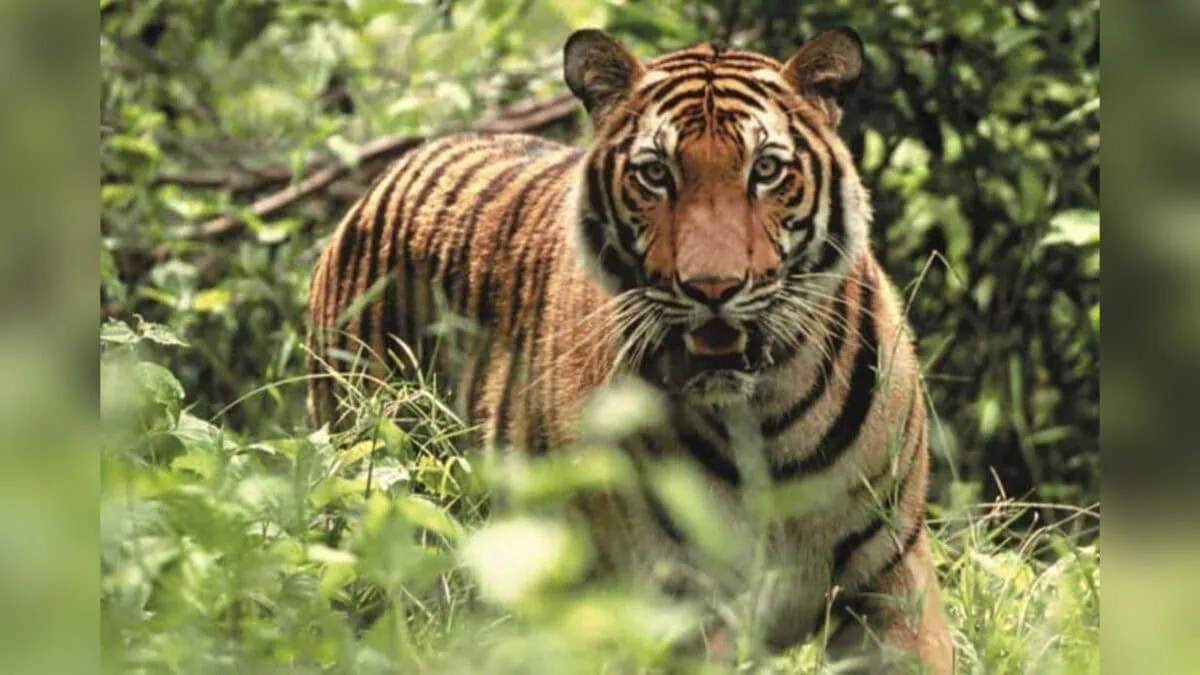 The author has outlined several major steps that are required before the potential reintroduction of tigers into Cambodian forests, warning that ‘ministerial enthusiasm’ alone will not suffice. Supplied
Plans to reintroduce tigers to Cambodian forests are bold and symbolically powerful; but will only be ecologically defensible if it is implemented and governed as a long-term landscape recovery and integrated ecosystem restoration programme rather than merely a flamboyant animal-transfer event.
For the plan to be sustainable and ecologically meaningful, the apex predator’s much-awaited re-introduction to the wild must be preceded by the harder and far less glamorous backroom work of restoring prey, securing habitat, protecting corridors and building community trust across the Cardamoms. Any further action steps must be based on and defended by substantial fresh evidence on prey, protection and community consent.
While political attention can mobilise money, align resources and draw public interest, the success of charismatic reintroductions is ultimately evidenced by survival, breeding and dispersal.
Lessons from India’s cheetah programme
India’s recent cheetah reintroduction serves as a pertinent case study here. India brought 20 African cheetahs from Namibia and South Africa to Kuno National Park in Central India in 2022 and 2023. The project has since then recorded births, expanded toward a metapopulation model and built local benefits through Cheetah Mitras and eco-tourism sharing.
What evidently works well is the soft-release model, veterinary monitoring and an intensive management system, which have helped the population survive and even breed in India. The metapopulation approach is also a key step in the right direction as survival of a wide-ranging major predator will need a network of habitats rather than one symbolic park.
However, deeming it an ecological success would be premature and ill-informed. The project has also faced deaths, conflict with underprivileged communities at the park edge, and the sobering realization that Kuno alone cannot bear the weight of the ambition.
The core problem is that the project moved faster than the ecosystem around it. Deaths, including five reported in 2026, illustrated that reintroduction risk remains high even after initial acclimatisation.
Earlier collar-related infections in wet conditions exposed weak anticipation of India-specific climate and monitoring challenges. Kuno also became too much of a symbolic launch site before a wider habitat network, prey base, corridors and conflict systems were fully proven. Livestock losses, local anxiety and compensation concerns show that community legitimacy lagged behind conservation ambition.
This could have been reduced through slower releases, more robust monsoon-tested equipment, more meticulous prey preparation, ready alternate sites and pre-negotiated community safeguards. The core risks are habitat and prey limitations, along with weak social legitimacy around local consultation, livestock-loss compensation and fairness to communities.
Without solving these, the project may remain politically visible but ecologically myopic, fragile and even potentially damaging. A true success would mean cheetahs surviving, hunting, breeding and dispersing with minimal human control. So far, it remains a heavily managed experiment in an ill-prepared laboratory.
The key takeaway from India’s cheetah reintroduction project is that habitat, prey, health protocols, corridor governance and community compensation should be field-tested locally prior to introducing a wide-ranging carnivore into the wild.
Cambodia should emulate the institutional seriousness, satellite monitoring, veterinary preparedness and second-site thinking of India’s cheetah reintroduction project but be wary of letting national prestige and ceremonial optics compress ecological timelines.
Cannot be a ‘display population’
Tigers, as a species, make this even less forgiving. A cheetah is a wide-ranging cursorial predator of smaller to medium prey; a tiger is a territorial, solitary, ambush predator whose density is governed by large-prey biomass, cover, water and secure breeding space. A female tiger’s territory must support her and cubs for nearly two years, while a male’s range overlaps several females; weak prey density inflates territories and pushes tigers toward livestock.
The proposed release of a small founder group from India, whether four or six Bengal tigers, can only be a pilot, not a population. It must be substantiated by a published founder-genetics plan, scheduled supplementation and a target of creating a genuine source site, not a fenced display population.
India’s local tiger population reintroduction and recovery programmes can prove keenly instructive here. The reintroduction programme at the Panna National Park successfully resurrected and almost doubled the reserve’s tiger population within a decade, following a local population extinction.
The translocation was immediately followed by intensive protection, radio-collaring, round-the-clock monitoring, prey security and adaptive management. As a result, 120 cubs from 45 litters were produced by 2021 with relatively high survival rates.
A similar exercise attempted in the Satkosia tiger reserve in 2018, by contrast, serves as a cautionary tale that illustrates the consequences of social legitimacy and site readiness lagging behind relocation as soon after the translocation, one tiger died and the tigress Sundari entered conflict with villagers and cattle resulting in two human fatalities. Ultimately, the project had to be reversed.
Cambodia should therefore set “no-release” veto triggers as clearly and definitely as release targets: no tiger should be moved until snare encounter rates, prey biomass, prosecution capacity, patrol coverage and conflict-response systems cross independently audited thresholds.
Promising indicators
Cambodia is already doing some things right. The camera-trap grid installed in the Cardamoms, the extensive partnership with India, strengthening of rangers, running zero-snare campaigns and the appointment of a technical team are the correct foundations.
Despite this, a three-month prey snapshot is too sparse to back a large apex-predator introduction decision. The government should require multi-season line-transect and camera-trap estimates for sambar deer, wild pig, muntjac and other key prey, plus recruitment data and hunting-pressure maps.
“Supplying cattle or buffaloes” would be a dangerous compulsive shortcut because it can habituate tigers to domestic prey and spark a spiralling conversion of conservation into compensation politics. Prey recovery should instead come through snare removal, bushmeat enforcement, grassland and salt-lick management, water security and, where scientifically justified, native prey reinforcement.
Governance is key
Equally important is the governance architecture underlying the reintroduction. Cambodia should publish a tiger recovery protocol before any animal is moved, naming the lead agency, scientific advisers, veterinary chain of command, emergency authority, specific long-term accountability mapping and tracking, and independent audit mechanism.
Every stage, from prey assessment to release, should have public milestones, stop-go criteria and annual reporting. A tiger project cannot depend on ministerial enthusiasm alone; it needs institutional continuity beyond political cycles.
The Cardamoms must also overall be managed as a connected conservation economy instead of an isolated release enclosure. Roads, plantations, hydropower access, logging pressure and settlement expansion can perniciously fragment a landscape even as the protected-area map looks intact. The government should therefore secure corridors, finance long-term ranger salaries, create an escrow-backed compensation fund and link community benefits to measurable coexistence outcomes before the first big-cat arrives.
Prey first, local involvement
Cambodia’s own Siamese crocodile recovery journey serves as a guiding model: local reverence, purebred source screening, community wardens and habitat protection can make reintroduction credible.
The tiger programme requires the same social and bureaucratic scaffolding to be woven before the first animal arrives. Villages around the Cardamoms should have prepaid livestock compensation, rapid-response teams, phone-based reporting, negotiated grazing rules, local hiring and a legally earmarked share of tourism or carbon revenue.
Kazakhstan’s Turan tiger effort points in the same direction of restoring prey and habitat first, and releasing predators only thereafter.
Cambodia must proceed, but slowly, cautiously, transparently and with the courage to delay.
The north-star success metric must not be how many tigers land in the country or how soon they arrive but rather whether those tigers continue to hunt wild prey, avoid villages, breed without intensive feeding and disperse through protected corridors, five years down the line.
All planning and action must be directed towards this long-term goal of integrating the tigers into the living Cardamom ecosystem as a flagship species, rather than planting them as a dead monument to rushed optimism.
Pitamber Kaushik is a Mumbai-based independent journalist. The views and opinions expressed are his own.
-Phnom Penh Post-