From ‘Hell of Thailand’ to ‘Heaven of the Philippines’: Youk Chhang challenges Thai refugee narrative
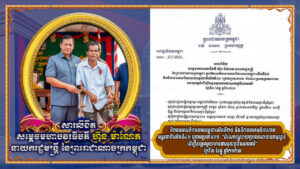
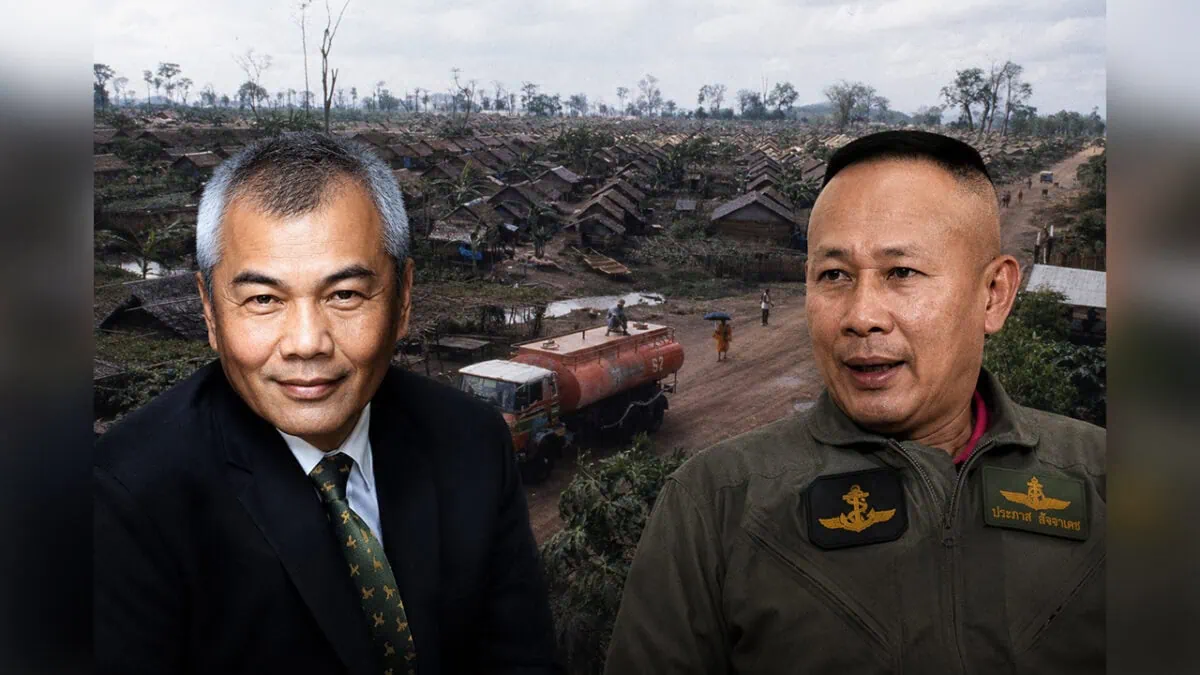 - លោក ឆាំង យុ នាយកមជ្ឈមណ្ឌលឯកសារកម្ពុជា (ឆ្វេង) និងលោក ប្រាផាស សុនចៃឌី មេបញ្ជាការអាកាស និងជានាយកមជ្ឈមណ្ឌលព័ត៌មានស្ថានការណ៍ថៃ-កម្ពុជា (JIC) ដែលបានអះអាងថា ភូមិបានណងចាន់ ជានិមិត្តរូបនៃតួនាទីមនុស្សធម៌របស់ថៃក្នុងវិបត្តិជនភៀសខ្លួនកម្ពុជា ក្រោយសង្គ្រាម។ រូបថត សហការី
#National
As Thailand highlighted its role in sheltering Cambodian refugees during World Refugee Day commemorations, genocide survivor and DC-Cam executive director Youk Chhang has responded with a starkly different recollection of the refugee experience, describing his own journey as one lived “between the Hell of Thailand and the Heaven of the Philippines”.
Chhang questioned why Thailand has recently revived discussions about Ban Nong Jan, a village in Sa Kaeo province near the Cambodian border, where generations of Cambodians have lived peacefully and contributed to local communities.
“Why has Thailand singled out Ban Nong Jan, where Cambodians have been leading peaceful, productive lives since the late 1970s, for sudden territorial claims?” he wrote, in a recent public statement.
The remarks came after Thai media quoted Air Chief Marshal Praphas Sonjaidee, director of the Thailand-Cambodia Situation Information Center (JIC), as saying Ban Nong Chan represented Thailand’s humanitarian role during the refugee crisis that followed Cambodia’s years of war.
Praphas said Thailand worked alongside the UN and international agencies to provide food, medical care, clean water and temporary shelter to Cambodians fleeing violence, while bearing considerable costs and security responsibilities over many years.
He said discussions about Ban Nong Chan should be viewed in their historical context and reaffirmed Thailand’s commitment to international law and peaceful bilateral mechanisms for resolving border issues.
But for Chhang, the refugee story cannot be told only through official narratives.
“Thailand intends to gain political benefit from the international discourse surrounding World Refugee Day,” he told The Post.
“Thailand is not a signatory to the international refugee convention. This is very important because within ASEAN, only the Philippines is a signatory country.”
“Thailand is not raising this refugee issue for no reason. It is seeking political benefit from an international convention to which it is not even a signatory,” he added.
Chhang, who survived the Khmer Rouge regime and later became one of Cambodia’s leading genocide researchers, said the experiences of many Cambodian refugees in Thailand were often marked by fear and abuse.
“Cambodian refugees were not protected but abused by the Thai military known as Task Force 80,” he said.
In a social media post, Youk recalled his own life in refugee camps, writing:
“I was torn between the Hell of Thailand and Heaven of the Philippines. I am forever grateful to the Philippines. And I am no longer a refugee.”
He noted that he had lived at the Khao-I-Dang Refugee Holding Centre in Thailand before later moving to the Philippine Refugee Processing Center (PRPC) in Morong, Bataan, during the 1980s.
The contrast, he said, remains deeply etched in his memory.
“The Filipinos opened their country to Cambodian refugees in the wake of the Khmer Rouge regime collapse in the 1980s,” he said, during World Refugee Day commemorations at the refugee centre in Morong.
“The Philippine government and people rose to the occasion in helping us and receiving us.”
“I want to take this opportunity to praise the Philippines for their kindness back then. The hope they gave to the Cambodian people was a shining example to not give up hope,” he continued.
The Philippines has long championed what it calls an “Open Door Policy”, saying it has welcomed ten waves of refugees over the past century, including Jewish refugees fleeing Nazi persecution, White Russians escaping revolution, Vietnamese boat people and Cambodians displaced by conflict.
According to the Philippine government’s World Refugee Day campaign, the country’s refugee tradition dates back more than a century.
“I would not be here today to tell you this story if it were not for the humanity, political courage and generosity of the open-door policy of Philippine President Quezon,” Holocaust survivor Ralph Reiss said in a commemorative video released for World Refugee Day.
For Chhang, the distinction lies not only in memory, but also in legal commitment.
Thailand is not a party to the 1951 Refugee Convention or its 1967 Protocol, the cornerstone international agreements governing refugee protection.
The Philippines, by contrast, is one of the few countries in Southeast Asia that acceded to both treaties and has long maintained refugee reception programmes.
Chhang’s comments also revive historical debates over Thailand’s role during the Cambodian conflict.
Among the documents preserved by the Documentation Center of Cambodia is a 1983 publication titled Thai Policy Vis-à-Vis Kampuchea, published by the Ministry of Foreign Affairs of the then People’s Republic of Kampuchea.
The publication accused Thai authorities of supporting anti-government Cambodian armed groups and permitting their activities along the border during the Cold War period.
While those allegations remain part of a contested historical period, Chhang believes refugee history should ultimately be judged by the experiences of those who lived through it.
“The displaced civilians in Thailand are more than just refugees,” he wrote.
“They are professionals, entrepreneurs, labourers, skilled workers and family providers. They are not afraid to take risks, and they sacrifice themselves every day for their families, their communities, their country and the good of humanity,” he added.
For him, the refugee story is not about borders or political narratives.
It is about remembering who offered refuge when Cambodians had nowhere else to go — and ensuring that their dignity is never forgotten.
-Phnom Penh Post-