APF delegation reviews Cambodia’s demining progress
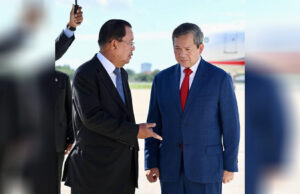
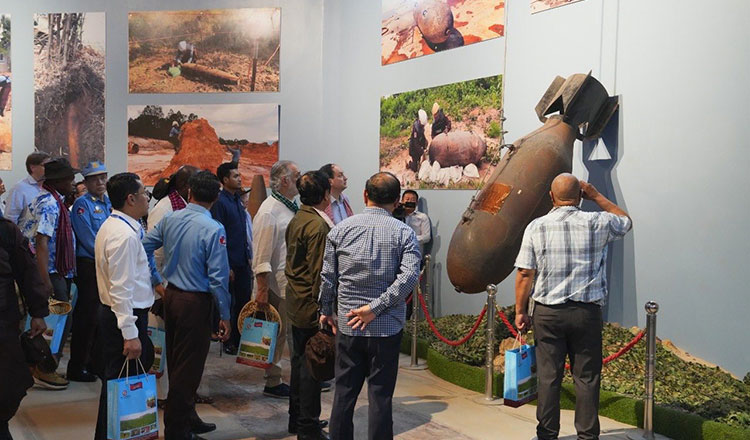 The Assemblée parlementaire de la Francophonie delegation visits the Techo Peace Museum yesterday. CMAC
Synopsis: CMAC Director-General Heng Ratana highlights longlasting humanitarian and socio-economic impacts of explosive remnants of war.
A delegation from the Assemblée parlementaire de la Francophonie (APF) visited the Techo Peace Museum where they were briefed on Cambodia’s progress in mine clearance and peacebuilding, as well as efforts to address the humanitarian and socio-economic impacts of explosive war remnants.
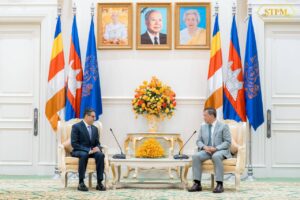
The delegation was accompanied by Ouch Borith, Acting President of the Senate and President of the Francophone National Assembly of Cambodia. They were invited to visit the Techo Peace Museum in Siem Reap province yesterday to learn about the achievements of mine clearance operations and the history of peacebuilding in Cambodia.
The Techo Peace Museum is not only a place to display historical evidence of war and commemorate the suffering caused by Cambodia’s prolonged conflicts, but also serves as an educational centre promoting peace for people of all generations.
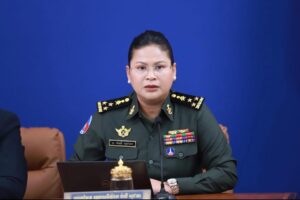
Heng Ratana, director-general of the Cambodian Mine Action Centre, said he briefed the delegation about the government’s efforts in addressing landmines and explosive remnants of war to ensure public safety and support national development.
“I also emphasised the need to address the humanitarian impact caused by remnants of past conflicts, highlighting both immediate safety concerns and long-term socio-economic risks, as well as damage to civilian infrastructure, including the Preah Vihear Temple,” Ratana said.
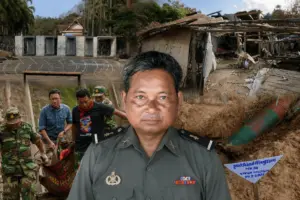
Ratana said that more than 330 villages have been identified as affected, covering over 2,300 square kilometres of land contaminated by cluster munitions, 91,400 families remain affected by these remnants.
Thai military forces launched two major assaults against Cambodia in July and December last year, forcing more than 640,000 Cambodians to flee their homes and causing severe damage to civilian infrastructure, including schools and hospitals. Although a ceasefire has been in place since December, remnants of war and cluster munitions continue to pose risks to communities living along the border.
According to reports, the Preah Vihear Temple sustained heavy damage during the two periods of fighting, from July 24-28 and December 7-27. Authorities said the ancient temple was struck by indiscriminate shelling and airstrikes.
Officials have identified 562 points of damage at the temple, with urgent stabilisation efforts being prepared to prevent further deterioration.
During the December clashes, UNESCO expressed strong concern over renewed tensions between Cambodia and Thailand, particularly in the vicinity of Preah Vihear Temple, and called for the urgent protection of cultural heritage in all its forms.
-Khmer Times-