Cambodia is more than a headline
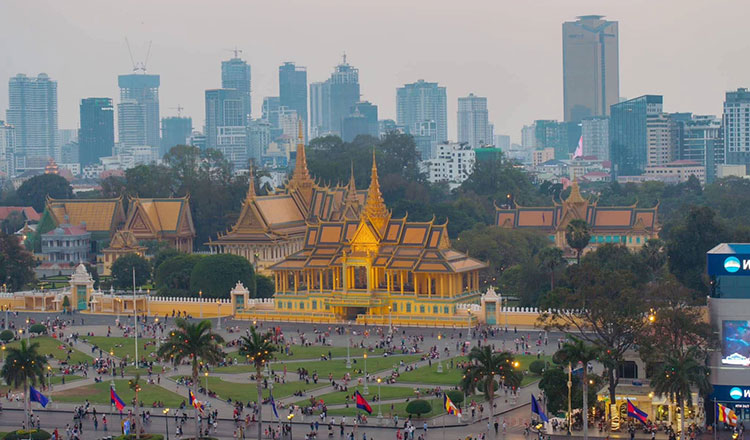 Cambodia is one of the enduring civilisations of Asia, with a rich history and customs that have survived war and destruction. Khmer Times
#EDITORIAL
Recent reporting by The Wall Street Journal on cybercrime in Cambodia has drawn attention to a serious problem. Scam operations, trafficking, and digital fraud are real. They harm victims, weaken institutions, and erode trust. Cambodia must address them firmly and transparently. It is right that these issues are discussed openly.
But there is another issue that deserves equal attention. It is not just about the facts. It is about the language used to describe the country itself.
When a major international newspaper adopts a label such as “Scambodia,” the matter shifts. One can investigate crime. One can criticise governance. One can expose networks of trafficking, corruption, and financial complicity. That is the role of journalism. But reducing an entire country to a mocking nickname is something different. It does not add clarity. It does not deepen understanding. It simply narrows the lens.
There is also a broader question that serious journalism should not evade. Why do some countries become shorthand for dysfunction, while others are described with nuance, even when facing similar problems? Language is never neutral. It carries habits of perception and, at times, unexamined hierarchies. When a society is reduced to a label, what is at stake is not only reporting, but representation itself.

Cybercrime is not confined to Cambodia. By its nature, it moves across borders, exploits multiple jurisdictions, and relies on transnational networks. It thrives on gaps in the global financial and digital system. Cambodia does not hold a monopoly on cybercrime. No country does. That is precisely why the issue demands precision, not caricature.
There is also a deeper unease behind such language. Cambodia is not just a place that has made the news because something has gone wrong. It is one of the enduring civilisational societies of Asia. It carries the legacy of Angkor, a long historical memory, and religious and philosophical traditions that have survived war and destruction. To speak of Cambodia only through the vocabulary of fraud is to flatten a far richer human reality.
A civilisation should not be treated lightly. Nor should it be reduced, little by little, through repeated labels in the press or on social media. Those who write such words may be informed about events. That is not the same as being educated about a society. Knowing that crime exists is one thing. Understanding the conditions in which it emerges is another.
This is not a call for restraint in reporting. Cambodia should not be shielded from criticism. No country should. But criticism should remain proportionate to its subject. A respected newspaper knows the difference between strong reporting and easy rhetoric.
Cambodia must confront cybercrime with seriousness. That is beyond dispute. But those who write about the country also carry a responsibility. Accuracy matters. So does fairness. As does the discipline to avoid contempt disguised as wit.
Crime should be exposed without hesitation. But a nation should not be reduced to a name that denies its history, its people, and its dignity.
-Khmer Times-