Encroachment by Design: Thailand’s Actions Betray Its Own Commitments
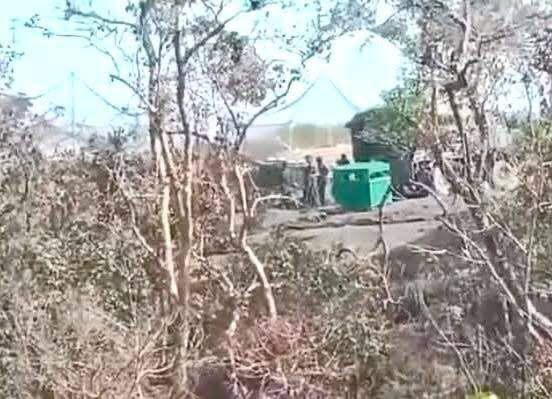 Thai military personnel carry out construction activities on occupied Cambodian territory, in a recent photo that was widely shared on social media. FB
#opinion
Thailand can no longer hide behind the language of diplomacy while quietly redrawing realities on the ground. The Royal Government of Cambodia’s protest of April 19 exposes a pattern that is too consistent to dismiss: systematic, deliberate encroachment on Cambodian territory under the guise of routine military activity.
The evidence is concrete and undeniable. In Preah Vihear, Thai forces constructed an observation post in a highly sensitive area near the temple. In Oddar Meanchey, they dug bunkers, expanded roads near boundary pillars and cleared land. In Pursat, heavy machinery was deployed to alter terrain. These are not defensive measures. They are calculated steps to consolidate presence and reshape facts on the ground.
This is how annexation begins — not with declarations, but with gradual, physical control.
Each road, bunker and cleared zone is part of a broader strategy: to normalise illegal occupation until it becomes difficult to reverse. What Thailand is doing is not maintaining stability; it is undermining it. And it is doing so while claiming adherence to international law and bilateral agreements. That contradiction is indefensible.
Thailand is a signatory to the UN Charter, the ASEAN Charter, and the Treaty of Amity and Cooperation. These frameworks are explicit: respect sovereignty, refrain from the use of force and resolve disputes peacefully. Yet the current actions violate all three principles simultaneously. Invoking these agreements while acting against them is not diplomacy — it is bad faith.
Equally troubling is the attempt to mischaracterise these activities as consistent with the Joint Statement of December 27, 2025. That claim collapses under scrutiny. No agreement permits unilateral construction, militarisation or land alteration in disputed areas. There is a clear line between maintaining the status quo and changing it. Thailand has crossed that line.
Cambodia, by contrast, has acted with restraint and clarity. It has rejected unilateral claims, documented violations and reaffirmed its commitment to peaceful resolution through bilateral mechanisms and international law. But restraint should not be mistaken for acceptance.
If Thailand’s actions continue unchecked, the consequences will extend beyond the Cambodia–Thailand border. They will erode trust within ASEAN and weaken the credibility of regional norms that have long prevented conflict. The principle at stake is simple but fundamental: borders cannot be changed by incremental force. Thailand must stop.
It must halt all unilateral activities, withdraw from actions that alter the status quo and return to genuine negotiations through the Joint Boundary Commission it has repeatedly promised to revive. Words are no longer sufficient. Only actions will restore credibility.
Cambodia has made its position clear. The question now is whether Thailand is prepared to honour its own commitments — or continue down a path that risks turning quiet encroachment into open confrontation. The region is watching.
Roth Santepheap is a geopolitical analyst based in Phnom Penh. The views and opinions expressed are his own.