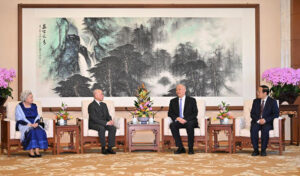
Thailand’s diplomatic manipulation of border dispute with Cambodia.
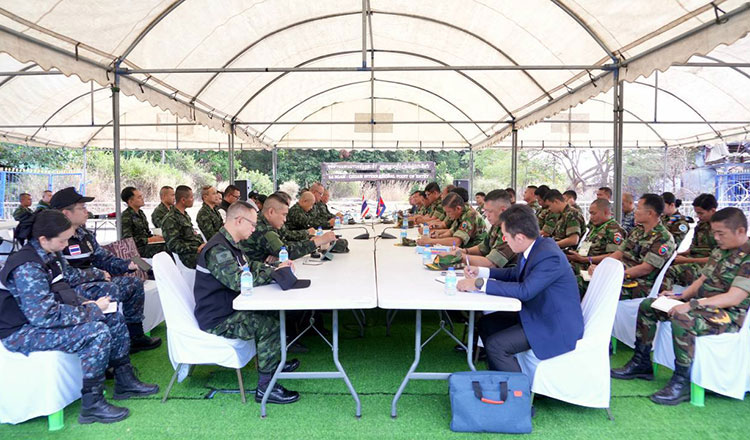 The Secretariat of the Cambodia-Thailand Regional Border Committee meets at the Choam-Sa Ngam International Point of Entry in Anlong Veng district, Oddar Meanchey province, on February 2. Ministry of National Defence
#opinion
The longstanding territorial dispute between Cambodia and Thailand reached a critical flashpoint in early 2026, transitioning from a localised border skirmish into an intense diplomatic struggle. While a fragile ceasefire was brokered in late 2025, the peace has been undermined by Thailand’s media narratives to scapegoat Cambodia.
Thailand is spreading fake news and giving interviews justifying its actions on major media outlets while its forces are still encroaching on Cambodian territory. As Cambodia anticipates the formal return of the definitive 1904–1907 border agreements from France, Thailand has launched a sophisticated diplomatic manipulation campaign, leveraging state visits to Paris and a bid for a seat on the UN Human Rights Council to reshape its global image.
This article examines how Thailand is utilising international media and diplomatic manipulation to justify its encroachment on Cambodia territory while manoeuvring to prevent France from providing map privileges and technical assistance to help Cambodia resolve border issues with Thailand.
Why Thailand has to reshape its image to justify its encroachment on Cambodian territory and discourage France from supporting Cambodia on the 1904-1907 Franco-Siamese treaties
On February 4, Cambodian Prime Minister Hun Manet asked for access to historical and technical documents, including the original maps from the 1904–1907 treaties, to clarify the border demarcation that originated during the French Protectorate era. The letter was sent while Cambodia was preparing for the inaugural Board of Peace meeting in Washington, DC, signalling a move to shift the dispute from military skirmishes to a legal and historical debate. The announcement noted that France had previously indicated a “readiness” to provide these documents, which Cambodia aims to use to prove that current Thai military positions (including the controversial shipping-container barricades) are located on Cambodian soil.
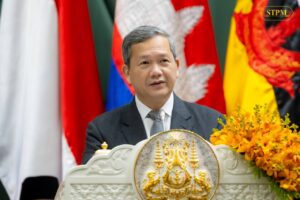
On February 17, Mr Hun Manet told Reuters that Thai forces are occupying Cambodian territory despite a ceasefire agreement between both countries. In his first interview with international media since taking office, the Prime Minister described the border situation as “fragile” and accused the Thai military of encroaching “deep into Cambodian territory” by installing shipping containers and barbed wire in areas recognised as Cambodian. These comments were made while he was in Washington to attend the meeting of the US Board of Peace led by President Donald Trump, who brokered the December 27, 2025, ceasefire following the worst border fighting in over a decade.
Mr Hun Manet called on Thailand to allow the Joint Boundary Commission (JBC) to resume technical demarcation work to verify facts on the ground and address the displacement of tens of thousands of civilians. In response, Thailand’s Ministry of Foreign Affairs and military rejected the allegations, asserting that their troop positions are legitimate de-escalation measures and that the barriers are located within Thai territory to prevent further encroachment.
Mr Hun Manet next gave an interview to Fox News Digital on February 19, where he demonstrated the truth about the encroachment of the Thai military on Cambodian territory. Speaking from the sidelines of the Board of Peace meeting, the Prime Minister revealed that the situation had escalated into a humanitarian crisis, saying that Thai forces have fenced off entire villages with shipping containers and barbed wire, preventing more than 80,000 Cambodians from returning to their homes.
He told Fox News that “this occupation goes beyond the area Thailand unilaterally claims,” arguing that Thai troops have moved into territory long recognised as Cambodian, even under Thailand’s own previous maps. Despite the gravity of these claims, Hun Manet maintained a diplomatic stance, reiterating to the American audience that Cambodia rejects the concept of “using war to end war” and remains committed to the Trump-brokered ceasefire, provided Thailand adheres to the joint agreement to freeze troop movements and allow civilian resettlement.
Thailand uses media to spread its narratives on its encroachment on Cambodian territory
In response to Cambodia’s media blitz, Thailand launched its own diplomatic manipulation campaign centred on a high-profile France 24 interview with Foreign Minister Sihasak Phuangketkeow on on February 23. Speaking in Paris, Sihasak rejected Mr Hun Manet’s “occupation” narrative, asserting that the controversial installation of shipping containers and barbed wire occurred strictly within Thai territory as a defensive measure to prevent further encroachment.
While he acknowledged that the December 2025 ceasefire remains “fragile,” he shifted the blame onto Phnom Penh, accusing the Cambodian government of “internationalising” a bilateral issue and spreading misinformation for domestic political gain. To demonstrate a commitment to de-escalation, the Foreign Minister revealed that he maintains a direct line of communication with his Cambodian counterpart via WhatsApp to manage border tensions in real-time.
Thailand and France Foreign Ministers meet
According to The Nation news outlet, media, on February 23, Thailand’s Minister of Foreign Affairs met with French Foreign Minister Jean-Noël Barrot in Paris to discuss closer ties, a potential strategic partnership, and regional security issues, including the Thai-Cambodian situation.
During the bilateral talks, Sihasak briefed his French counterpart on the “fragile” status of the ceasefire and clarified the “facts” regarding the deployment of shipping containers, which he defended as legitimate measures within Thai territory.
While the meeting officially aimed to elevate the two nations’ relationship to a “strategic partnership” in honour of the two counries’ 170th diplomatic anniversary, it served as a critical platform for Thailand to commend France’s “neutral and constructive role” in regional security. By engaging directly with Paris, the Thai government sought to present a narrative of transparency and peaceful intent, proactively countering Cambodia’s efforts to use colonial-era French maps as a tool for international pressure.
Thailand defence minister proposes troop withdrawal from Cambodia border after truth is revealed
On the same day of February 23, Thai Defence Minister General Nattaphon Nakpanich formally proposed a gradual withdrawal of troops from the Cambodian border, citing the massive financial burden of the deployment.
During a meeting with the Defence Council, Gen Nattaphon admitted that maintaining a full-scale military presence along the 800-kilometre border is “operationally unsustainable” and has led to significant overspending. To balance national security with these fiscal constraints, the minister suggested replacing active-duty soldiers in certain sectors with enhanced electronic surveillance, high-tech fencing, and the establishment of “veteran villages” to maintain a civilian-military eyes-on-the-ground presence.
However, he emphasised that troops would remain stationed in high-risk, undemarcated zones, specifically those recaptured during the December 2025 clashes, to prevent any tactical disadvantage while the government seeks to stabilise the defence budget.
Thailand’s narrative to the international community at UN Nations Human Rights Council
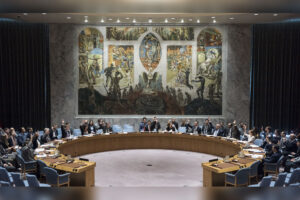
Thailand tried to influence the international community into believing its narrative that it is a country with a strict rule of law and wihout any online scam activities. Thailand tried to positioned iself as being the country that is taking serious action to dismantle online scam networks so as to scapegoat other countries especially Cambodia and Myanmar. On February 24, at the High-Level Segment of the 61st Session of the United Nations Human Rights Council in Geneva, Thailand’s foreign minister delivered a speech about his country’s commitment to dismantling transnational online scam syndicates that he said were allowed to fester in other countries because of a lack of the rule of law. This shows that Thailand is not taking responsibility for the online scam operations on its own soil.
The foreign minister also conveyed the false news that Thailand is not seizing Cambodian territory while make the false accusation that Cambodia is the provocateur while Thailand remains committed to dialogue. At the same time, he said that it is also Thailand’s duty to protect its sovereignty and territorial integrity.
The foreign minister also tried to make the international community believe that Thailand’s top priority is peace by asking Cambodia whether Cambodia wishes to choose the path of peace or the path of continue tension and conflict.
Conclusion
Thailand’s actions can be interpreted as a strategic effort to shift responsibility and shape international opinion so that other governments see it as reasonable and defensive.
First, Thailand attempted to clean up its international image by shifting blame onto Cambodia, portraying Phnom Penh as the party escalating tensions through misinformation and the internationalisation of a bilateral issue. By accusing Cambodia of politicising the dispute for domestic purposes, Thai officials sought to weaken the credibility of Cambodia’s assertions of encroachment and recast Thailand as a defensive and reasonable actor, effectively using Cambodia as a scapegoat to deflect criticism and reduce reputational damage.
Second, Thailand’s meeting with French Foreign Minister Barrot in Paris can be understood as a pre-emptive diplomatic move aimed at limiting Cambodia’s historical and legal leverage. Because the 1904–1907 Franco-Siamese agreements and colonial-era maps remain central to Cambodia’s territorial arguments, engaging France directly allowed Thailand to influence how Paris interprets or handles these historical documents. By emphasising France’s “neutral and constructive role,” Thailand sought to discourage France from supporting Cambodia’s claims or facilitating renewed attention to the agreements, thereby preventing Cambodia from strengthening its position through historical legal evidence at the international level.
Oeung Venghong is Research Fellow, China-ASEAN Studies Center.
-Khmer Times-