Final boarding call at Phnom Penh International Airport
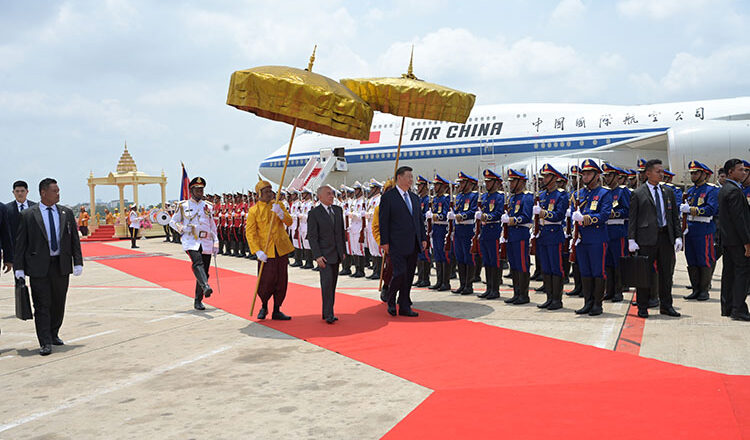 Chinese President Xi Jinping (R) inspects an honour guard alongside King Norodom Sihamoni at Phnom Penh International Airport on April 17. KT/Khem Sovannara
Synopsis: Cambodia’s first major airport shuts down, giving way to the new Techo International Airport in Kandal province.
Phnom Penh International Airport (PNH) closed its doors yesterday, spanning an eventful 66 years marked by headwinds and tailwinds in Cambodia’s aviation history.
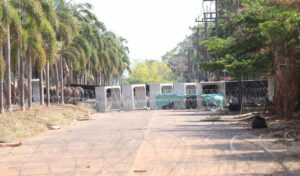
The bustle of crowds and the roar of jet engines gave way to an unexpected silence— with empty departure and arrival halls, quiet runways seemingly looking at more than six decades of poignant history. A handful of taxi and auto-rickshaw drivers milled outside for passengers who would no longer arrive.
The shuttered airport has been witness to smooth and turbulent times, from the Sangkum Reastr Niyum era to the Lon Nol regime, its eventual collapse, and the dark period of the ruthless Khmer Rouge regime, People’s Republic of Kampuchea, State of Cambodia, UNTAC, and the current Kingdom of Cambodia.
One of the most historic and celebrated arrivals at Pochentong Airport was that of French President Charles de Gaulle in 1966, during Cambodia’s Sangkum Reastr Niyum era—a period of national optimism and development.
In recent years, the tallest foreign leader to arrive at Phnom Penh International Airport has been Chinese President Xi Jinping, who touched down for a state visit on April 17.
Xi received a grand welcome, hosted by King Norodom Sihamoni, alongside Senate President Hun Sen, senior royal family members, and top government officials. The ceremony included a red carpet, military honour guard, jasmine garlands, and the traditional scattering of flower petals.
The last and final call for the airport—formerly Pochentong—hasn’t been tamped by the buzz over the opening of Techo International Airport in Kandal Stung district, about 20 kilometres south of the capital.
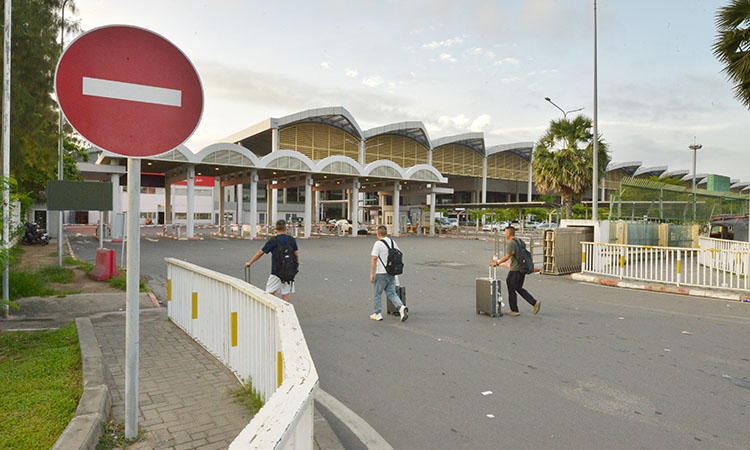
Poignant locals would want the old airport preserved because of its eventful history.
Phay Bunrith, a rickshaw driver who has been a witness to the portals of Phnom Penh International Airport for nearly 20 years, shared his sadness over the airport’s closure. Now in his 50s, Bunrith said the airport provided him with a livelihood and fond memories.
“I felt very sad when they closed it down completely, but we didn’t know what to do—it was bound to happen,” he said.
He hopes the government would preserve the airport in its original form or convert it into a historical site to commemorate the many chapters of Cambodia’s past.
While Bunrith hailed the opening of Techo International Airport—a new gateway connecting Cambodia to the world—he noted he may never fly from there due to his financial issue.
Sear Lien, 80, recounted memories of watching the old airport—then Pochentong International Airport—being built during his youth.
“From the beginning, I only used that airport. When I went to Vietnam, Laos, and France, I flew from there. But now they’ve built a new one. The old airport officially closes at midnight tonight.”
He supported keeping the old airport, suggesting it could still serve ASEAN dignitaries during major events or remain available for emergency landings.
The original airport was built by the French in 1957, officially inaugurated on January 19, 1959. Its terminal and control tower were designed by renowned French architect Pierre Dufau. In 1963, the VIP arrival pavilion, initially a lightweight steel-and-fabric structure designed by legendary Cambodian architect Vann Molyvann, was constructed. It was later rebuilt with reinforced concrete in 1966 to welcome French President Charles de Gaulle. The blade-like structure, designed by French engineer Guy Lemarchands, still stands and was used to receive VIP guests.
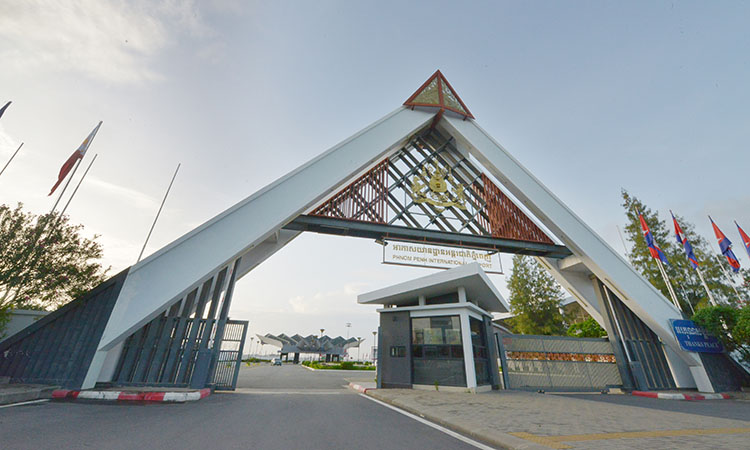
To meet growing demand, the airport underwent a major renovation that started in 1995, led by French firm SCA (Société de Concession de l’Aéroport). Completed in 2002, the upgraded facility could handle up to 5 million passengers annually. The facility was officially renamed Phnom Penh International Airport on January 15, 2003.
Vong Sotheara, a historian at the Royal University of Phnom Penh, affirmed the historical value of the airport.
He cited references to its construction during World War II under Japanese occupation, as described in the novel Kuli Kamnen (Conscripted Labourers). At the time, Cambodian labourers were conscripted to build the airport—then known as Pochentong—to support Japan’s war logistics.
It is Sotheara’s belief that many Cambodian children had never flown from Phnom Penh International Airport because their families were to poor to travel by air. Still, he sees the airport as a powerful symbol of Cambodia’s history and progress.
“The new airport reflects Cambodia’s economic growth and is something to be proud of,” he said. “But to avoid losing our historical legacy, the government should preserve Phnom Penh International Airport—especially parts like the southern fence area, where historical sites remain.”
He suggested the old airport continue as an air force base to retain its functional and historical relevance.
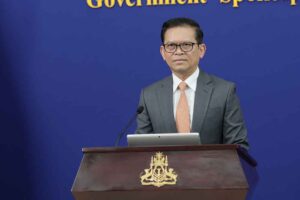
In May, Prime Minister Hun Manet had pledged not to sell or repurpose Phnom Penh International Airport, promising it would remain available for emergency landings and flights.
“I would like to briefly clarify to our citizens that the Royal Government, both during the previous mandate and under my current leadership has never had a policy to sell PPIA to any private company, neither in the past nor in the future. However, the airport will still be available for emergency landings,” he said.
Outlining three guiding principles for the future management of the site, Mr Hun Manet said: First, the airport holds historical significance, having been established under the leadership of King Father Norodom Sihanouk, and this legacy must be preserved.
Second, the facility should continue to serve the public interest, particularly benefiting the residents of Phnom Penh.
Third, while various models for future use—such as development and maintenance strategies—may be explored, the government will retain full legal ownership of the land and the airport infrastructure.
– Khmer Times-