The Lingering Lethality of Border Disputes: An Analysis of the Banteay Meanchey UXO Incident
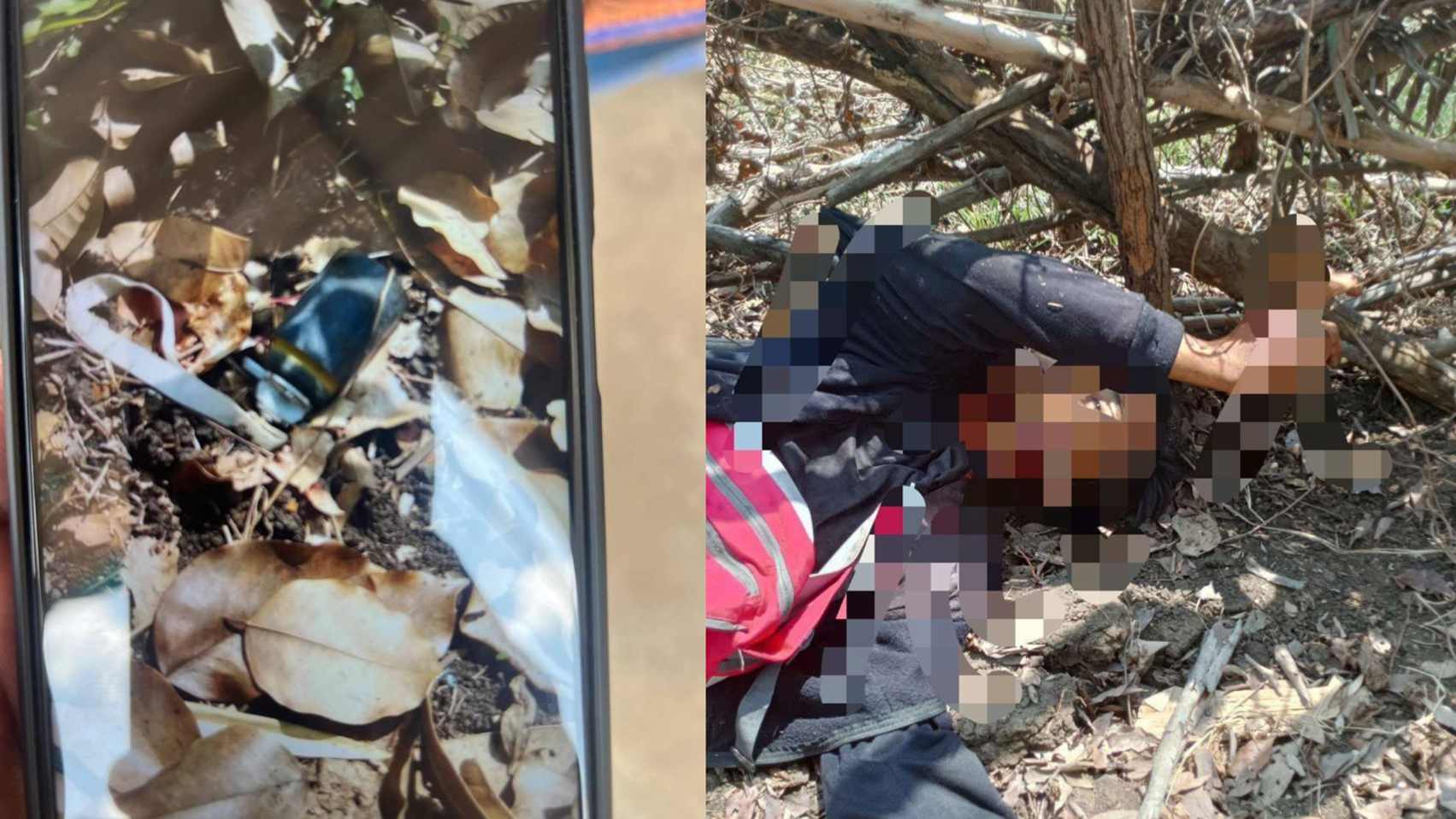 A 44-year-old man was killed after handling a Thai cluster munition in Banteay Meanchey province. Supplied
#opinion
The recent tragedy in Svay Chek district is not merely a localised accident; it is a textbook example of how tactical military decisions leave a lethal, multi-generational footprint. By examining the specific munitions involved, the socioeconomic fallout, and the gaps in international law, a much starker picture of the region’s post-conflict reality emerges.
1. Geopolitical Echoes of the Thai-Cambodian Border Clashes
The identification of the M46 submunition from a 155mm NR269 artillery projectile provides a critical forensic link to specific historical hostilities.
The 2011 Preah Vihear Clashes: During the severe border skirmishes between Thailand and Cambodia in 2011, the Cluster Munition Coalition (CMC) and the Cambodian Mine Action Centre (CMAC) documented Thailand’s use of Dual-Purpose Improved Conventional Munitions (DPICM) — specifically the 155mm NR269 projectiles containing M46 bomblets. Thailand cited “self-defence” at the time.
A Frozen Threat: While diplomatic tensions have ebbed and flowed in the years since, the unexploded ordnance (UXO) left behind respects no peace treaties. The incident in Banteay Meanchey demonstrates how the remnants of relatively brief border disputes simply transition the violence from active military engagements to passive, peacetime civilian casualties.
2. The Mechanics of the Threat: Why Cluster Munitions Endure
Cluster munitions are uniquely insidious because of their design and their failure rates.
De Facto Landmines: A single 155mm artillery shell scatters dozens of smaller bomblets over a wide radius (often several hectares). Because a significant percentage of these bomblets fail to detonate on impact — often due to soft soil or thick vegetation — they become volatile, de facto anti-personnel mines.
Indiscriminate by Nature: Unlike a targeted strike, the wide dispersal pattern of an M46 submunition means that the contamination zone is inherently broad and inaccurate, guaranteeing that post-conflict casualties will almost exclusively be civilians.
3. The Asymmetric Burden on Agrarian Communities
The human and economic cost of UXOs disproportionately affects rural, agricultural populations.
Economic Paralysis: The victims — men in their 40s — represent the core labour force and likely the primary breadwinners for their families. Their loss and injury instantly plunge surviving dependents into severe economic hardship.
Land Denial: In agrarian provinces like Banteay Meanchey, land is the primary engine of survival. The mere suspicion of UXO contamination renders fertile agricultural land unusable. This creates a secondary, invisible crisis: it stunts local economic development and traps communities in a persistent cycle of poverty and fear.
4. International Law and the Accountability Gap
The legal and diplomatic framework surrounding this incident is complex and, ultimately, lacking in enforcement teeth.
The Convention on Cluster Munitions (CCM): The CCM comprehensively bans the use, production, and stockpiling of cluster munitions. It entered into binding international law in 2010.
The Signatory Deficit: The glaring issue is that neither Thailand nor Cambodia are State Parties to the CCM. While Cambodia is a global leader in mine clearance advocacy, its non-signatory status, combined with Thailand’s, means there is no strict, legally binding international mechanism to force accountability or mandate bilateral cleanup funding for this specific border corridor. The pressure remains entirely diplomatic and moral.
5. The Universal Moral Imperative and Global Solidarity
Beyond the geopolitical manoeuvring and legal frameworks lies a profound human tragedy that demands the attention of the global conscience. The victims in Boeng Snao are not mere statistics of a bygone conflict; they are farmers, fathers and community members whose fundamental right to live and work in peace has been violently denied. When a community cannot till its soil or walk its paths without risking annihilation from a weapon fired decades ago, it exposes a collective failure of our global humanitarian commitments.
True international compassion requires looking past sovereign borders and recognising that healing these scarred landscapes is not merely a regional obligation, but a universal moral imperative. The global community must stand in active solidarity with the most vulnerable, proving through tangible support and unwavering empathy that the enduring value of human life outweighs the lingering shadows of past wars.
Commentary and Looking Forward
This incident is a grim reminder that the cessation of gunfire does not equal the return of peace. As long as M46 submunitions lie dormant in Cambodian soil, the war is effectively still ongoing for the villagers of Svay Chek.
Moving forward, the burden cannot rest solely on underfunded local authorities. It requires a sustained, well-financed international commitment to organisations like CMAC. Furthermore, true regional stability demands that neighbouring nations move beyond historical finger-pointing and establish cooperative, cross-border frameworks dedicated specifically to the remediation of explosive remnants of war.
Panhavuth Long is founder and attorney-at-law at Pan & Associates Law Firm. The views and opinions expressed are his own.
-Phnom Penh Post-
———————