Of war and fiscal buffers
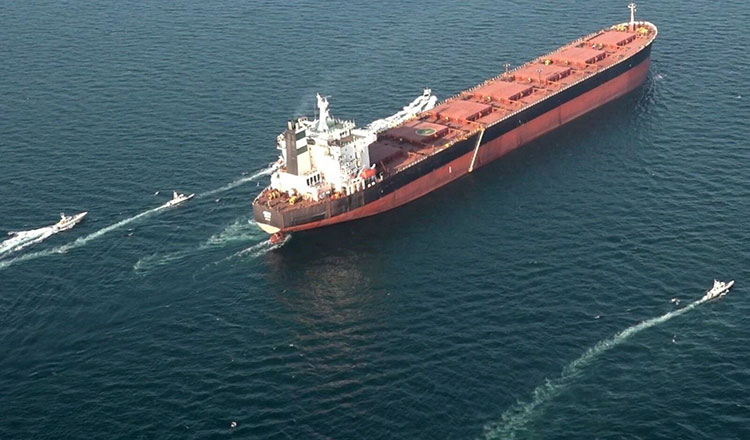 A fifth of the world’s crude oil and liquefied natural gas travels through the Strait of Hormuz. AFP
Fiscal buffers put in place during times of peace might help Malaysia weather the blows of war. No country is immune to the “shrapnel” of an unnecessary war. It is only the severity of the war’s impact on the economy that is different.
With the Israel-United States war on Iran already having triggered oil prices of more than $100 per barrel, economists are warning of a global economic shock.
Europe, which imports most of its oil, saw its petrol prices rise by 67% in the first week of the war, newspapers say. “Payback” for supplying rogue regime Israel with weapons to start a war of its choosing?
Prices at the pump in the US are spiking, too. Ditto Asia and elsewhere.
For sure, Malaysia is not immune to the economic shock of the Israel-US war on Iran. But previous policy decisions, particularly the rationalisation of the fuel subsidy and targeted subsidies, have strengthened the government’s fiscal position, giving Putrajaya more room to cushion the blow.
At press time, the benchmark Brent crude price has ballooned to $103.86, but Malaysia retains several buffers, such as being a net energy exporter, meaning higher oil prices can generate additional revenue.
Domestic fuel supply is also stable and adequate. But more importantly, the current global economic crisis illustrates why subsidy reform was necessary.
Fuel subsidy rationalisation— controversial when introduced— has effectively reduced blanket subsidies; improved fiscal discipline; and increased government revenues and flexibility.
That means when oil prices spike due to geopolitical shocks, the government now has more wiggle room to protect consumers without wrecking the national budget.
Without those reforms, the subsidy bill could have ballooned far beyond sustainable levels. Finance Minister II Datuk Seri Amir Hamzah Azizan told a press conference on Friday that the cost to subsidise petrol and diesel has more than quadrupled from RM700 million to RM3.2 billion, but three years of targeted reforms gave Putrajaya room to absorb the soaring bill.
Petrol subsidies under the Budi95 initiative account for RM2 billion a month, while diesel subsidies stand at RM1.2 billion.
He said domestic petrol and diesel supply remained sufficient until May, reflecting a similar assurance given by Prime Minister Datuk Seri Anwar Ibrahim on Wednesday following a review with Petronas.
What happens if oil prices remain elevated after May? As Amir told the press conference, the government might need to adopt a different approach.
Global conflicts can only be controlled by not starting them. Once set in motion, even those who started them have no control over them, as Israel and the US must have learnt by now.
They thought it would be over in days. Iran had other plans. Malaysia, too, cannot control global conflicts, but we can maintain fiscal discipline.
War may be driving oil markets into turmoil, but Malaysia’s experience shows the value of advance preparation.
First published in New Straits Times
-Khmer Times-
—————-